正在确认阅读权限…
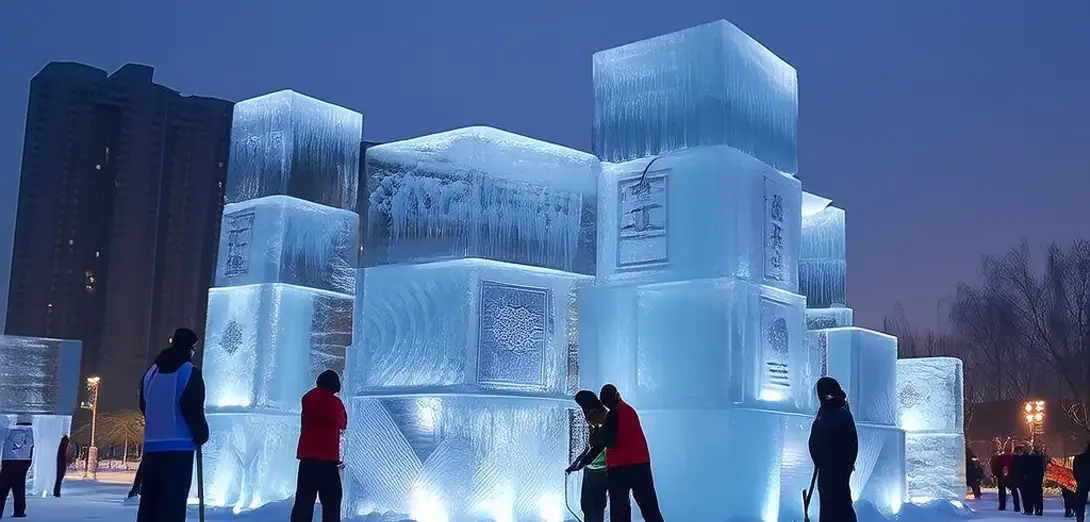
The Frost-Print Covenant: Ice-Sculpture Jurisprudence and Civic Authorship in Harbin Winter Festival
霜印契约:哈尔滨冰雪节中的冰雕司法性与公民创作权
-
Harbin’s annual winter festival transforms public squares into juridical surfaces where ice-carving teams negotiate authorship through layered frost signatures.哈尔滨一年一度的冰雪节将公共广场变为司法化冰面,冰雕团队通过层层霜纹签名来协商作品署名权。
-
Each sculpture bears a deliberate micro-fracture pattern, functioning not as flaw but as legally legible signature within municipal heritage protocols.每件雕塑都带有刻意设计的微裂纹图案,这并非瑕疵,而是市政文化遗产规程中具有法律效力的签名。
-
Municipal inspectors authenticate works not by visual fidelity but by thermal residue mapping across crystalline planes.市政检查员不靠视觉保真度鉴定作品,而是通过晶体平面的热残留图谱进行认证。
-
Spectators are prohibited from touching sculptures directly yet encouraged to exhale rhythmically onto designated panels to co-author transient condensation glyphs.观众严禁直接触碰雕塑,但被鼓励在指定面板上规律呼气,共同创作短暂存在的水汽符文。
-
Carvers submit dual-layer blueprints: one technical for structural integrity, the other poetic for civic resonance assessment by interdisciplinary juries.雕刻师需提交双层蓝图:一层用于结构安全,另一层用于跨学科评审团评估其 civic 共鸣力。
-
Ice fragments recovered post-festival undergo isotopic tracing to verify origin waters from designated Songhua River tributaries.节后回收的冰块须经同位素追踪,以验证其水源是否来自指定的松花江支流。
-
The festival’s closing ceremony features controlled melt sequences timed to coincide with municipal budget cycle announcements.闭幕仪式采用可控融化程序,时间点与市政预算周期公告同步。
-
Public benches adjacent to installations bear engraved temperature thresholds that shift meaning depending on ambient humidity levels.装置旁的公共长椅刻有温度阈值,其含义随环境湿度变化而动态调整。
-
Local law recognizes frost accumulation on north-facing façades as tacit consent for temporary spatial reclamation by artisan collectives.当地法律认定北向建筑立面结霜即构成默示同意,允许手工艺人团体临时重新定义空间用途。
-
This practice reframes impermanence not as loss but as procedural continuity embedded in northeastern China’s civic temporality.这一实践将无常性重新诠释为程序性延续,内嵌于中国东北特有的城市时间观之中。
-
Urban planners now integrate freeze-thaw calibration periods into infrastructure renewal timelines across Heilongjiang Province.城市规划者如今已将冻融校准期纳入黑龙江省基础设施更新的时间表。
-
The covenant endures precisely because it refuses monumentality, privileging processual legitimacy over fixed form.这份契约之所以持久,正因其拒绝纪念碑性,优先承认过程合法性而非固定形态。