正在确认阅读权限…
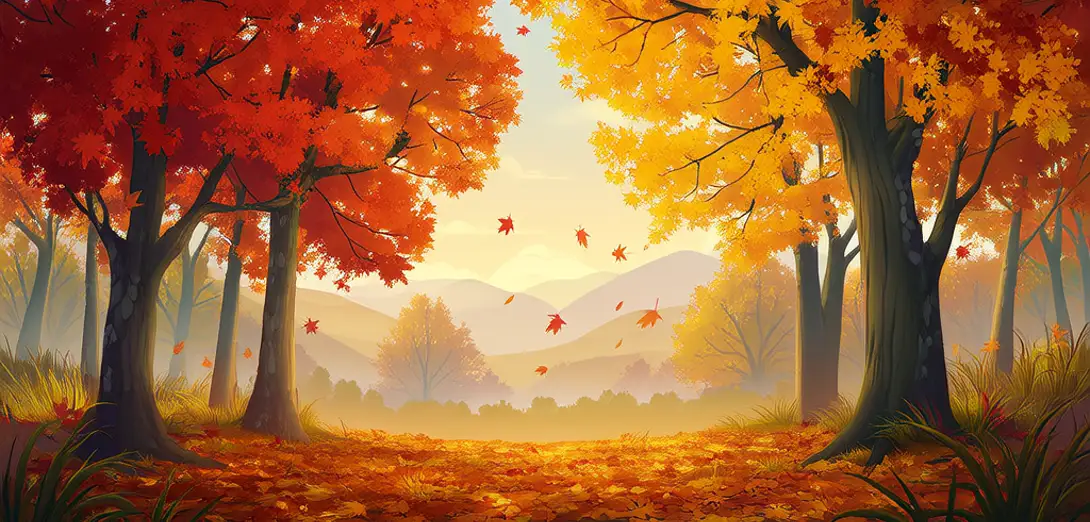
Why Leaves Change Color in Autumn Due to Pigment Breakdown
秋叶变色为何源于色素分解?
-
Chlorophyll gives leaves their green color and breaks down as daylight shortens in fall.叶绿素赋予叶子绿色,秋季日照缩短时会分解。
-
With less sunlight, trees stop producing chlorophyll and reabsorb its nutrients before leaf drop.光照减少后,树木停止合成叶绿素,并在落叶前回收其养分。
-
Carotenoids, always present but masked by green pigment, become visible as yellows and oranges.类胡萝卜素始终存在,但被绿色色素掩盖,秋季显现为黄色和橙色。
-
Anthocyanins form only in autumn from excess sugars trapped in leaves under cool, sunny days.花青素仅在秋季形成,由凉爽晴天时叶片中积聚的过量糖分转化而来。
-
Soil acidity and tree species influence whether reds, purples, or browns dominate the display.土壤酸碱度和树种决定秋叶以红色、紫色还是褐色为主。
-
Maple trees produce vivid reds due to high sugar concentration and efficient anthocyanin synthesis.枫树因糖分浓度高且能高效合成花青素,故呈现鲜艳红色。
-
Drought or early frost can dull colors by stressing trees and halting pigment production.干旱或早霜会令树木受胁迫,抑制色素合成,使秋色暗淡。
-
Deciduous trees shed leaves to conserve water during winter when roots absorb less from frozen soil.落叶树冬季落叶以节约水分,此时根系难以从冻土中吸收水分。
-
Leaf litter later decomposes, returning nutrients to forest soil for next year’s growth.落叶腐烂后回归森林土壤,为来年生长提供养分。
-
Scientists study pigment chemistry to understand plant responses to climate change patterns.科学家通过研究色素化学,探究植物对气候变化的响应规律。