正在确认阅读权限…
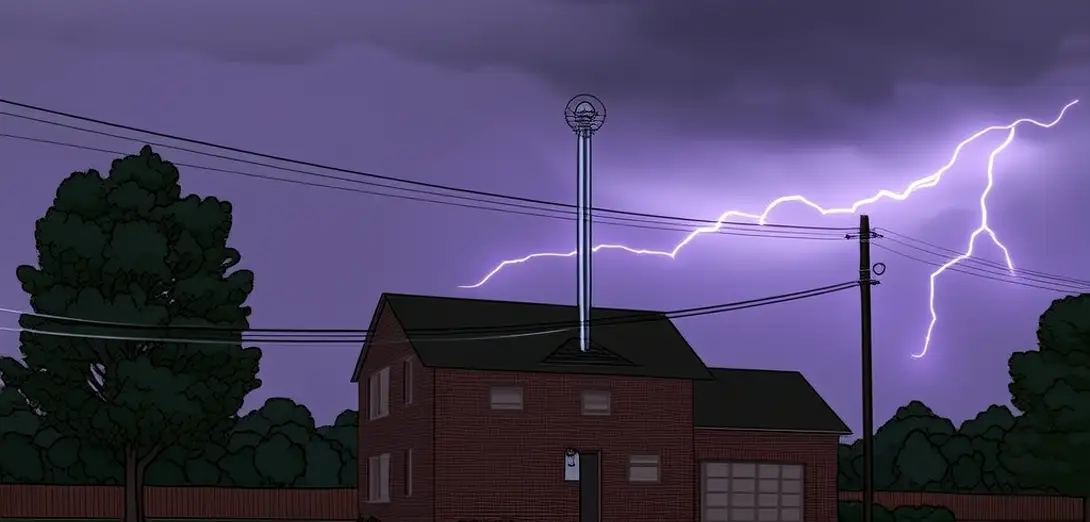
Why Lightning Rods Don’t Attract Lightning But Provide Safe Discharge Paths
避雷针并不吸引雷电,而是提供安全放电路径
-
Lightning rods do not increase the chance of a strike—they simply offer the easiest path to ground.避雷针不会增加遭雷击的概率,只是为电流提供一条最易通向大地的路径。
-
Their pointed tip enhances local electric field strength, encouraging ionization of surrounding air molecules.其尖端能增强局部电场强度,促使周围空气分子电离。
-
Once ionized, air becomes conductive and forms a preferential channel for lightning’s downward leader.空气电离后变为导体,从而形成闪电下行先导的优先通道。
-
Copper or aluminum rods connect via low-resistance cables to deeply buried grounding rods.铜或铝制避雷针通过低电阻缆线连接至深埋地下的接地极。
-
This system safely directs massive current around structures instead of through flammable materials.该系统可将巨大电流安全绕过建筑物,而非穿过易燃材料。
-
Proper installation requires grounding resistance below 25 ohms to prevent side flashes or voltage surges.正确安装要求接地电阻低于25欧姆,以防侧击或电压浪涌。
-
Rods protect a conical zone extending outward at a 45-degree angle from the tip.避雷针保护范围呈圆锥形,从针尖向外以45度角延伸。
-
Modern buildings often integrate meshed conductors into roofs for more uniform protection coverage.现代建筑常在屋顶嵌入网状导体,实现更均匀的防护覆盖。
-
Surge protectors work alongside rods to shield electronics from induced voltage spikes.浪涌保护器与避雷针协同工作,保护电子设备免受感应电压尖峰损害。
-
Without such systems, lightning could explode bricks, shatter concrete, or ignite gas lines instantly.若无此类系统,雷击可能瞬间炸裂砖块、震碎混凝土或引燃燃气管道。