正在确认阅读权限…
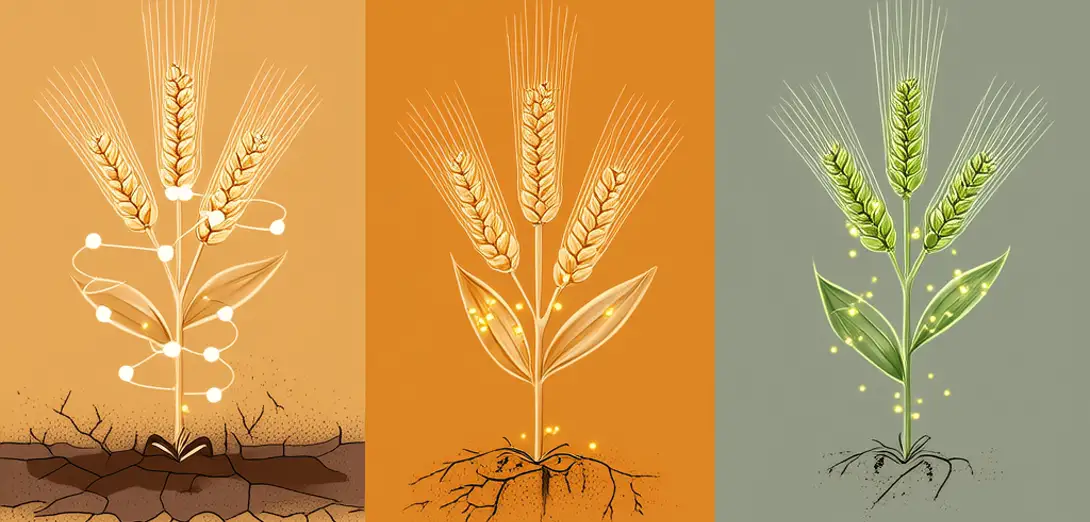
How Epigenetic Modifications Mediate Transgenerational Responses to Environmental Stress in Plants
表观遗传修饰如何介导植物对环境胁迫的跨代响应
-
Plants exposed to drought, heat, or herbivory can transmit stress memory to offspring via DNA methylation, histone modification, and small RNA inheritance—without altering DNA sequence.植物在遭遇干旱、高温或植食性动物侵害后,可通过DNA甲基化、组蛋白修饰和小RNA遗传等方式,将胁迫记忆传递给后代,而不改变DNA序列。
-
These epigenetic marks regulate gene expression plasticity, priming progeny for faster stomatal closure or enhanced antioxidant production upon first stress encounter.这些表观遗传标记调控基因表达的可塑性,使后代在首次遭遇胁迫时能更快关闭气孔或增强抗氧化物质合成。
-
Unlike genetic mutations, epigenetic changes are reversible and environmentally responsive, offering adaptive flexibility within single-generation timescales.与基因突变不同,表观遗传变化具有可逆性且响应环境,可在单一代际内提供适应性灵活性。
-
Field trials show drought-primed wheat lines yield 12–18% more under water-limited conditions, though benefits fade after 2–3 unstressed generations.田间试验表明,经干旱预处理的小麦品系在水分受限条件下增产12%–18%,但该优势在连续2–3代无胁迫后逐渐消失。
-
Commercial seed companies now screen elite cultivars for stable epigenetic memory traits using bisulfite sequencing and transcriptome profiling.商业种子公司现利用亚硫酸氢盐测序和转录组分析,筛选优良栽培品种中稳定遗传的表观遗传记忆性状。
-
Soil microbiome composition influences epigenetic reprogramming—rhizobacteria-derived metabolites can modulate host DNA methyltransferase activity.土壤微生物组组成影响表观遗传重编程——根际细菌产生的代谢物可调节寄主DNA甲基转移酶活性。
-
Climate-smart breeding programs treat epigenetic stability as a heritable trait, selecting for 'epialleles' that maintain beneficial marks across variable environments.气候智能型育种计划将表观遗传稳定性视为可遗传性状,筛选能在多变环境中维持有益表观标记的‘表等位基因’。
-
Regulatory frameworks for genetically edited crops face new questions: should heritable epigenetic modifications undergo similar safety assessments?针对基因编辑作物的监管框架面临新问题:可遗传的表观遗传修饰是否应接受类似的安全性评估?
-
Archaeobotanists analyze ancient seed epigenomes to reconstruct past cultivation practices and environmental pressures on early agriculture.考古植物学家通过分析古代种子的表观基因组,重建早期农业中的耕作方式及环境胁迫历史。
-
The mechanism explains rapid adaptation in invasive species—epigenetic flexibility allows colonization of novel habitats faster than mutation-selection cycles permit.该机制解释了入侵物种的快速适应现象——表观遗传灵活性使其定殖新栖息地的速度远超突变-选择循环所能达到。
-
Educational modules link epigenetics to food sovereignty: traditional seed saving preserves locally adapted epialleles lost in industrial hybrid systems.教育模块将表观遗传学与粮食主权关联:传统留种实践保存了工业杂交体系中丢失的本地适应性表等位基因。
-
Ultimately, it reframes plant resilience not as fixed genotype, but as dynamic dialogue between genome, epigenome, and environment across generations.最终,它将植物抗逆性重新定义为跨世代的动态对话——即基因组、表观基因组与环境之间的持续互作。