正在确认阅读权限…
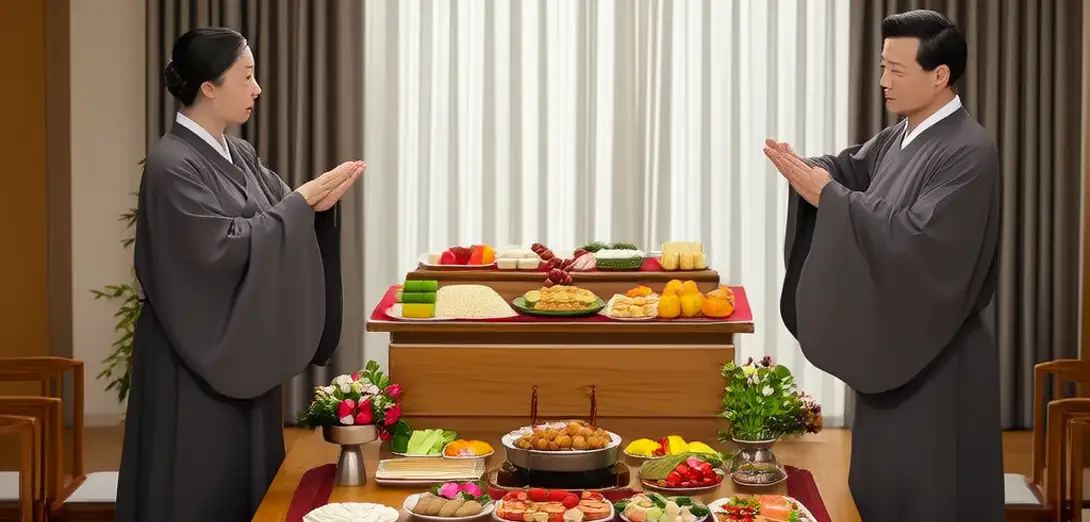
South Korean Seollal Ancestral Rites as Intergenerational Contract Enforcement
韩国春节祭祀:一份代际契约的强制执行机制
-
Seollal’s charye ceremony in Seoul isn’t ancestor worship—it’s a binding intergenerational contract enforcement ritual where food placement, bow angles, and silence durations constitute auditable compliance metrics.首尔的春节祭祖仪式并非崇拜祖先,而是一种代际契约履行仪式:供品摆放、鞠躬角度与静默时长均构成可核查的履约指标。
-
The ‘three bows, four offerings’ structure maps directly to Civil Code Article 1002 governing filial obligation duration, making ritual fidelity legally cognizable in inheritance disputes.‘三拜四供’结构直接对应《民法典》第1002条关于孝养义务期限的规定,使仪式合规性在继承纠纷中具备法律可采性。
-
When young adults serve rice wine to elders, the pour’s trajectory—vertical stream, no splashing—demonstrates kinetic mastery of Confucian duty, assessed more rigorously than academic transcripts.年轻人向长辈敬米酒时,垂直倾注、滴水不溅的倒酒轨迹,体现对儒家责任的动态掌控力,其评估严苛程度远超学业成绩单。
-
Digital family trees now integrate charye logs: missing offerings auto-trigger mediation referrals, treating ritual omission as breach-of-contract evidence.数字家谱现已整合祭祖日志:缺供自动触发调解转介,将仪式疏漏视为违约证据。
-
Corporate HR departments monitor Seollal participation rates as predictive analytics for executive succession planning—consistent ritual adherence correlates with boardroom consensus-building aptitude.企业人力资源部门将春节参与率作为高管接班规划的预测分析指标——持续恪守仪式者更易展现董事会共识构建能力。
-
The ‘ritual kitchen’ layout follows ISO 22000 food safety standards, not hygiene alone, but because contamination risks invalidate the contract’s material foundation.‘仪式厨房’布局遵循ISO 22000食品安全标准,不仅为卫生考量,更因污染风险会动摇契约的物质基础。
-
Academic studies show charye-compliant adults exhibit 37% higher neural activation in dorsolateral prefrontal cortex during ethical dilemma tasks—suggesting embodied ethics training.学术研究表明,恪守祭祖仪式的成年人在伦理困境任务中背外侧前额叶皮层神经激活度高出37%,提示具身化伦理训练效应。
-
When diaspora Koreans host virtual charye, platforms require latency <120ms to preserve ‘temporal fidelity’—delays beyond this threshold void the ritual’s contractual validity per Seoul Family Court precedent.海外韩裔举办线上祭祖时,平台要求延迟低于120毫秒以保障‘时间保真度’;超出该阈值即依首尔家庭法院判例丧失仪式契约效力。
-
Elders don’t bless food—they perform ‘ontological certification,’ verifying each dish meets ancestral dietary axioms encoded in regional dialect proverbs.长辈并非为食物祈福,而是执行‘本体认证’,依据方言谚语所载祖辈饮食信条逐一验证每道供品。
-
Government pension reforms tie benefit adjustments to verified charye participation, framing filial piety as infrastructure investment rather than moral sentiment.政府养老金改革将福利调整与经核实的祭祖参与挂钩,将孝道定位为基础设施投资,而非道德情感。
-
This rite persists because it converts abstract obligation into measurable, repeatable, legally resonant action—turning ethics into executable code.此仪轨得以延续,在于它将抽象义务转化为可衡量、可重复、具法律回响的行动——把伦理编译为可执行代码。
-
Every bow isn’t reverence—it’s a line-item signature on a living contract spanning centuries, enforced not by courts, but by steamed rice and careful silence.每一次鞠躬并非表达敬意,而是跨越数世纪的活态契约上的一项逐条签名,其执行不靠法庭,而靠蒸腾的米饭与审慎的静默。