正在确认阅读权限…
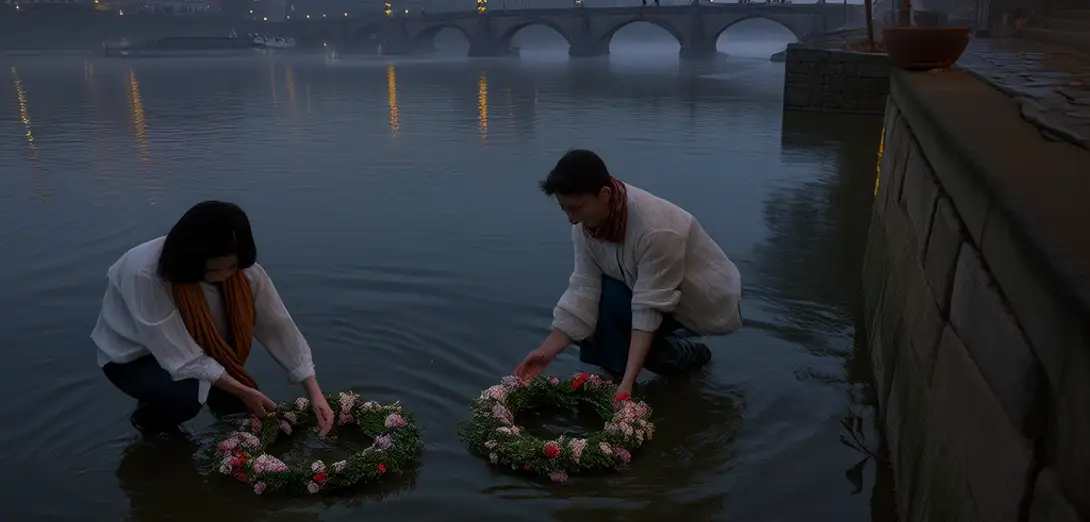
Polish Wianki Midsummer Night as Hydro-Symbolic Boundary Negotiation
波兰维安基仲夏夜:水文象征边界的协商实践
-
Wianki ceremonies along the Vistula River treat floating wreaths not as romantic tokens but as hydrological treaties between urban development and ancestral floodplain ethics.维斯瓦河畔的维安基仪式将漂浮花环视为城市开发与祖先洪泛区伦理之间的水文契约,而非浪漫信物。
-
Each wreath’s construction follows municipal zoning maps—willow stems from protected riparian zones, candles from certified low-emission workshops—making material sourcing a regulatory act.每个花环的制作均遵循市政分区地图——柳枝取自受保护的河岸带,蜡烛来自经认证的低排放工坊,使材料采购成为一项监管行为。
-
Young women cast wreaths downstream while men retrieve them upstream, enacting a gendered division of hydrological responsibility rather than courtship symbolism.年轻女性将花环顺流抛下,男性则逆流打捞,以此践行一种按性别划分的水文责任,而非求爱象征。
-
The moment a wreath catches on a bridge pier triggers immediate community discussion about infrastructure modifications, treating obstruction as diagnostic data.一旦花环挂住桥墩,社区立即展开关于基础设施改造的讨论,将阻塞现象视作诊断性数据。
-
Municipal engineers attend Wianki not as observers but as signatories to annual river-management accords drafted during wreath-making workshops.市政工程师参加维安基仪式并非作为旁观者,而是作为年度河流管理协定的签署人,该协定在花环制作工作坊中拟定。
-
Digital mapping overlays show wreath drift paths against historical flood models, transforming folk practice into climate adaptation interface.数字地图叠加显示花环漂流路径与历史洪水模型的比对,将民俗实践转化为气候适应接口。
-
When wreaths sink prematurely, elders lead impromptu sediment sampling—linking ritual failure to groundwater depletion metrics.当花环过早沉没时,长者即刻组织临时沉积物采样,将仪式失败与地下水枯竭指标关联起来。
-
Tourist participation requires pre-event hydrology briefings, reframing leisure as temporary citizenship in watershed governance.游客参与须事先接受水文学简报,将休闲活动重新定义为流域治理中的临时公民身份。
-
The final bonfire’s ash is mixed into riverbank soil restoration projects, closing the loop between symbolic combustion and ecological repair.最终篝火的灰烬被混入河岸土壤修复项目,完成象征性燃烧与生态修复之间的闭环。
-
Wianki thus resists pastoral nostalgia by treating waterways as contested legal subjects, not passive backdrops.因此,维安基仪式拒绝田园怀旧,将水道视为有争议的法律主体,而非被动背景。
-
Even smartphone apps tracking wreath GPS coordinates are designed without advertising, preserving data sovereignty as ritual integrity.就连追踪花环GPS坐标的智能手机应用也刻意不设广告,以维护数据主权来保障仪式完整性。
-
This midsummer practice sustains a non-state hydrological jurisprudence—one measured in flow rates, not voting percentages.这项仲夏实践维系着一种非国家形态的水文法理体系——其衡量标准是水流速率,而非投票率。