正在确认阅读权限…
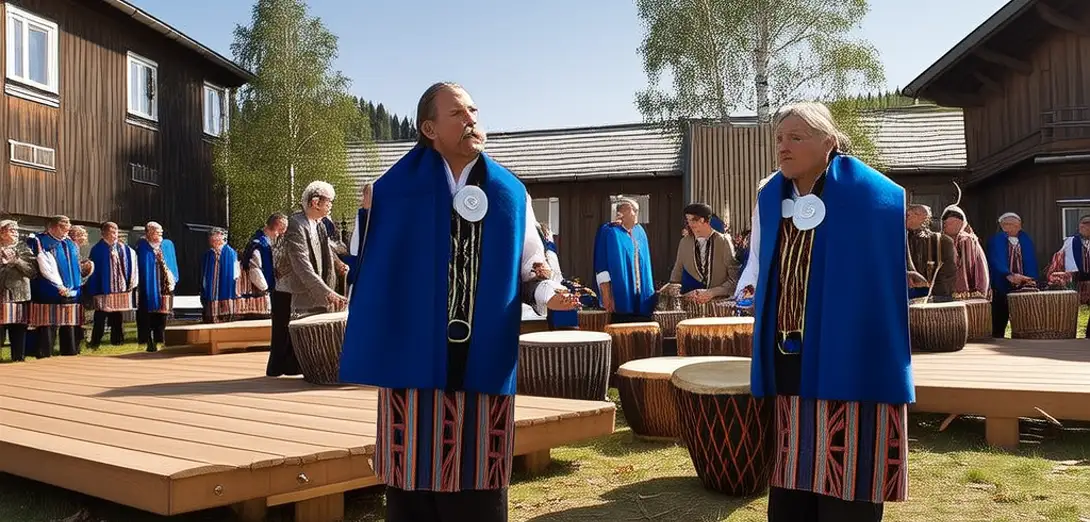
Sámi Riddu Riđđu Festival as Linguistic Territorial Reclamation
萨米里杜里杜节:语言领土的收复实践
-
Riddu Riđđu in Kárášjohka operates as a linguistic counter-mapping exercise, where stage names, signage, and even Wi-Fi passwords appear exclusively in Northern Sámi script.卡拉萨乔卡的里杜·里杜节是一场语言反制测绘实践,舞台名、标牌乃至Wi-Fi密码均仅以北萨米语文字呈现。
-
Workshops teach participants how to embed reindeer migration routes into verb conjugations—treating grammar as cartographic technology.工作坊教导参与者将驯鹿迁徙路线嵌入动词变位中,把语法视为制图技术。
-
The festival’s soundcheck protocol requires amplifiers to be calibrated against local wind patterns, refusing standardized decibel measurements that erase Arctic acoustics.festival的音响调试规程要求扩音器须依据当地风向校准,拒绝抹除北极声学特征的标准化分贝测量。
-
Youth-led language labs record elders narrating place names while walking ancestral trails, treating oral geography as legally admissible land documentation.由青年主导的语言实验室,在长者沿祖传小径行走时录制其讲述地名,将口述地理视为具有法律效力的土地凭证。
-
Non-Sámi attendees sign a ‘listening covenant’ before entry—acknowledging silence as active participation in linguistic restitution.非萨米族参与者入场前须签署‘倾听契约’,承认沉默本身即是对语言修复的积极参与。
-
Music performances layer joik vocals with seismic data from nearby mining sites, sonifying extractive violence as audible counterpoint.音乐演出将约伊克吟唱与附近采矿点的地震数据叠加,使掠夺性暴力以可听形式成为对抗声部。
-
The festival’s ‘no translation’ policy extends to subtitles: projected texts appear only in Sámi dialects, forcing non-speakers into interpretive humility.festival‘不翻译’政策延伸至字幕:投影文本仅以萨米诸方言呈现,迫使非母语者保持诠释谦卑。
-
Even vendor permits require proof of Sámi-language business registration, converting economic activity into grammatical sovereignty.连摊贩执照也需提供萨米语商业注册证明,使经济活动转化为语法主权。
-
A permanent installation displays bilingual land deeds—colonial Norwegian texts physically overlaid with Sámi translations carved into reclaimed timber.永久装置展示双语土地契据——殖民时期的挪威语文本被物理覆盖于回收木材上,其上刻有萨米语译文。
-
Riddu Riđđu thus treats language not as heritage object but as operative infrastructure for territorial assertion.因此,里杜·里杜节视语言非文化遗产之物,而是领土主张的操作性基础设施。
-
Its annual timing coincides with reindeer calving season, ensuring ceremonial rhythms remain synchronized with ecological sovereignty.其年度举办时间恰逢驯鹿产仔季,确保仪式节奏与生态主权同步。
-
Here, every uttered word functions as both cultural preservation and jurisdictional claim—untranslatable by design.在此,每个说出的词语兼具文化保存与司法主张双重功能,且刻意不可译。