正在确认阅读权限…
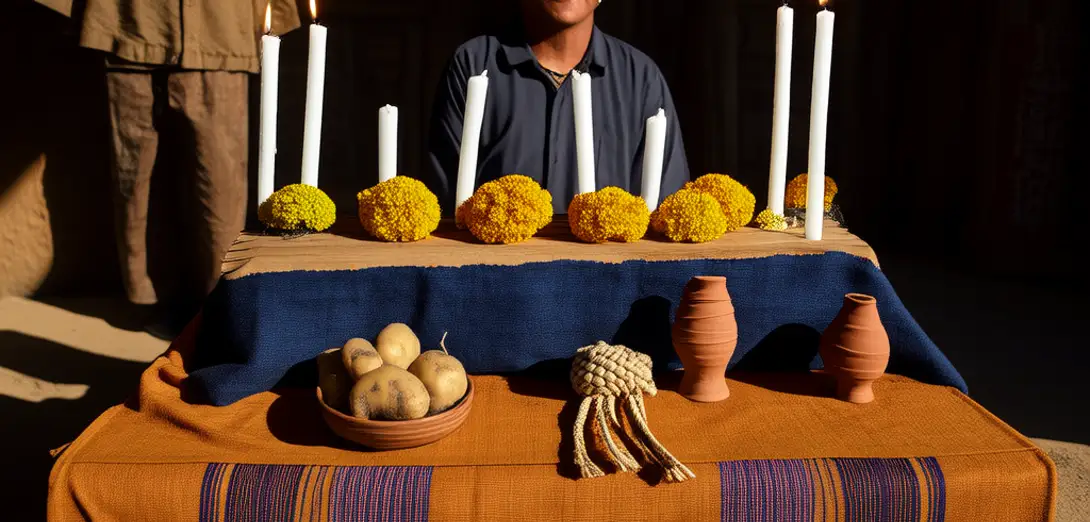
Peruvian Día de los Muertos: Ritual as Intergenerational Data Infrastructure
秘鲁亡灵节:作为代际数据基础设施的仪式
-
In Cusco’s Andean communities, Día de los Muertos altars transmit ancestral knowledge not through oral history alone, but via material semiotics—specific flower varieties encode land-use rights, candle counts signal crop debt cycles.在库斯科的安第斯社区,亡灵节祭坛不仅通过口述历史,更借由物质符号学传递祖传知识——特定花卉品种编码土地使用权,蜡烛数量则暗示作物债务周期。
-
Grandchildren arrange coca leaves in fractal patterns learned from textile apprenticeships, transforming botanical arrangement into cryptographic lineage verification.孙辈们按纺织学徒时学到的分形图案摆放古柯叶,将植物排列转化为密码学式的世系验证。
-
Digital archives now scan altar photographs, but miss the critical metadata: humidity levels affecting sugar skull crystallization reveal microclimate shifts across three decades.数字档案虽已扫描祭坛照片,却遗漏关键元数据:影响糖骷髅结晶度的湿度变化,揭示了三十年来的微气候变迁。
-
Local NGOs train youth to document ‘spirit names’—not as superstition, but as phonetic keys linking colonial baptismal records to pre-Hispanic toponymic databases.当地非政府组织培训青年记录‘灵名’——这并非迷信,而是作为语音密钥,将殖民时期的洗礼记录与前西班牙时代的地名数据库相联。
-
When families replace plastic flowers with handwoven ichu grass, they’re not rejecting modernity—they’re restoring biodegradable data storage that preserves soil pH readings embedded in decomposition rates.当家庭用手工编织的羊茅草替代塑料花时,并非拒绝现代性,而是恢复一种可生物降解的数据存储方式,其分解速率中嵌入了土壤pH值信息。
-
School curricula integrate altar-building with GIS mapping, teaching students that each marigold petal’s orientation correlates with ancestral irrigation canal alignments.学校课程将祭坛搭建与地理信息系统(GIS)制图结合,教导学生万寿菊花瓣的朝向与祖先灌溉渠的走向相关。
-
Government agronomists consult altar inventories to cross-verify drought impact reports—because ceremonial food offerings reflect actual harvest yields, not bureaucratic estimates.政府农艺师参考祭坛供品清单交叉核验旱灾影响报告——因为仪式性食物供奉反映的是实际收成,而非官僚估算。
-
The ‘three-tiered offering’ structure (earth, sky, underworld) mirrors contemporary water-rights litigation frameworks, making ritual syntax legally legible.‘三层供奉’结构(大地、天空、冥界)映射当代水权诉讼框架,使仪式语法具备法律可读性。
-
Tourist photography bans near family altars stem not from privacy concerns alone, but from protecting semiotic integrity—digital compression distorts color frequencies carrying kinship codes.家庭祭坛附近禁止游客摄影,不仅出于隐私考量,更在于保护符号完整性——数字压缩会扭曲承载亲缘编码的色频。
-
Elders don’t ‘teach’ altar rules; they pause mid-arrangement, inviting grandchildren to name why a particular chicha jar faces east—activating predictive reasoning over rote memory.长者并不‘讲授’祭坛规则;他们会在布置中途暂停,邀请孙辈说出为何某只奇恰酒罐须朝向东——以此激发预测性推理,而非死记硬背。
-
This ritual persists not as nostalgia, but because its symbolic density outperforms spreadsheets in tracking ecological memory across generational timescales.这一仪式延续至今,并非出于怀旧,而是因其符号密度在跨代时间尺度上追踪生态记忆的能力远超电子表格。
-
To participate is to engage in distributed cognition: the altar isn’t a monument—it’s a living, breathing database maintained through embodied practice.参与即为分布式认知:祭坛并非纪念碑,而是一座通过具身实践维系的、鲜活呼吸的数据库。