正在确认阅读权限…
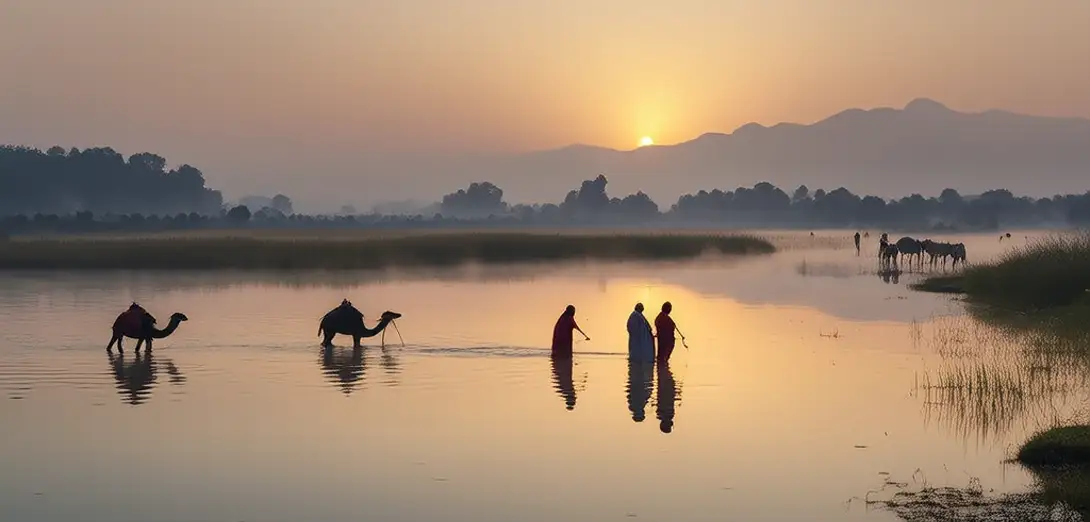
Thermal Stratification and Ritual Bathing in Rajasthan’s Pushkar Camel Fair
拉贾斯坦邦普什卡尔骆驼节中的热分层与仪式沐浴
-
At dawn, pilgrims enter Pushkar Lake where surface water remains 4.2°C cooler than ambient air due to nocturnal radiative cooling and subsurface thermal inertia.黎明时分,朝圣者进入普什卡尔湖,由于夜间辐射冷却和地下热惯性,湖面水温比环境气温低4.2°C。
-
Priests verify ritual readiness by measuring vertical temperature gradients with calibrated brass thermometers submerged at fixed depths.祭司将校准过的黄铜温度计浸入固定深度,通过测量垂直温度梯度来确认仪式准备就绪。
-
Bathing sequences follow diurnal thermal layer inversion: immersion begins in epilimnetic zones before sunrise, then shifts downward as convection mixes strata.沐浴顺序遵循昼夜热分层倒转:日出前始于表水层,随后随对流混合逐步下移。
-
Camel traders time livestock rinsing to coincide with peak surface heat flux, exploiting evaporative cooling for dermatological hygiene.骆驼商贩选择在地表热通量峰值时段为牲畜冲洗,利用蒸发冷却实现皮肤清洁。
-
Temporary shrines are erected on thermally stable sandbanks identified through infrared drone surveys mapping subsurface moisture gradients.临时神龛建于经红外无人机测绘识别出的热稳定沙洲上,该沙洲具有明确的地下湿度梯度。
-
This embedded thermodynamic literacy transforms hydrological observation into sacred temporal architecture.这种内化的热力学素养,将水文观测升华为神圣的时间结构。