正在确认阅读权限…
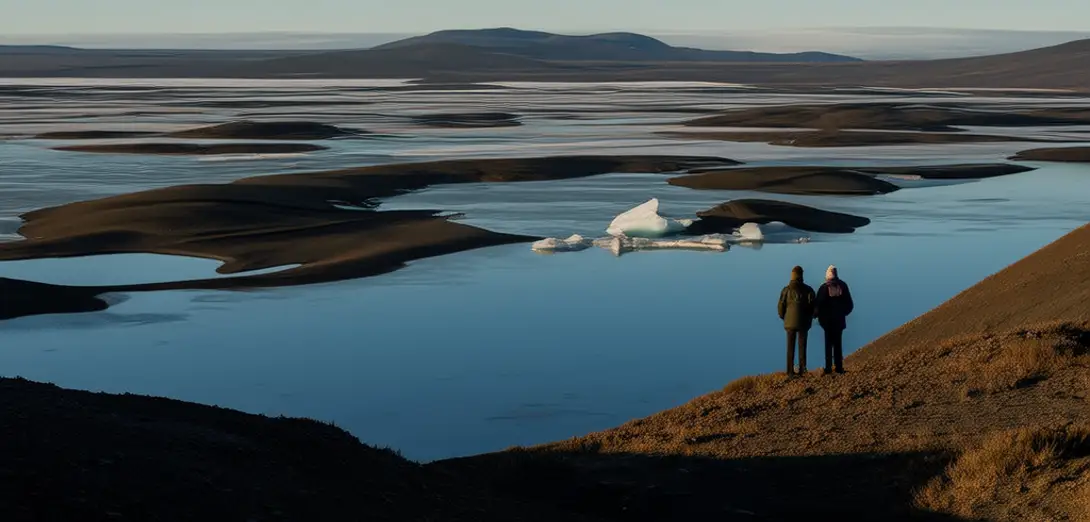
Why Permafrost Thaw Triggers Nonlinear Methane Release Through Thermokarst Lake Formation
永久冻土融化为何通过热喀斯特湖形成引发非线性甲烷释放
-
Thermokarst lakes form when ground ice melts unevenly, causing surface subsidence and subsequent water accumulation in depressions.热喀斯特湖由地下冰不均匀融化导致地表沉降,进而在洼地积水形成。
-
Submerged lake sediments create anaerobic conditions ideal for methanogenic archaea, accelerating decomposition of millennia-old organic matter.湖底沉积物形成厌氧环境,为产甲烷古菌提供了理想条件,加速分解数千年历史的有机质。
-
Lake expansion rates correlate exponentially—not linearly—with summer air temperature increases above 2°C threshold.湖泊扩张速率与夏季气温升高呈指数关系,而非线性关系,且仅在升温超过2°C阈值后显著增强。
-
Bubble traps beneath lake ice capture dissolved methane, releasing plumes during spring thaw—a process undetected by atmospheric sampling alone.湖冰下的气泡陷阱捕获溶解态甲烷,春季融冰时释放羽流状气体——单靠大气采样无法探测该过程。
-
Synthetic aperture radar data shows lake area growth outpacing regional warming trends by 3.7× in Siberian lowlands since 2005.合成孔径雷达数据显示,2005年以来西伯利亚低地湖泊面积增长速度比区域变暖趋势快3.7倍。
-
Carbon cycle models now incorporate thermokarst lake dynamics as discrete state transitions rather than gradual flux adjustments.碳循环模型现已将热喀斯特湖动态纳入离散状态跃迁,而非渐进通量调整。
-
Indigenous knowledge systems document lake formation timelines inconsistent with satellite records—highlighting spatial scale mismatches in monitoring.原住民知识体系记录的湖泊形成时间线与卫星数据不符,凸显监测中空间尺度不匹配问题。
-
Hydrological engineering proposals to drain lakes face opposition due to impacts on fisheries, reindeer migration corridors, and cultural sites.旨在排干湖泊的水文工程方案因影响渔业、驯鹿迁徙廊道及文化遗址而遭遇反对。
-
Radiocarbon dating of emitted methane confirms >80% originates from Pleistocene-aged yedoma deposits, not recent biomass.排放甲烷的放射性碳测年证实,其中超80%源自更新世冻土(亚多马)沉积,而非近期生物量。
-
Policy frameworks struggle to assign emissions responsibility: national inventories treat lakes as natural sources, excluding them from mitigation targets.政策框架难以界定排放责任:国家清单将湖泊视为自然源,未将其纳入减排目标。
-
Microseismic monitoring detects subsurface gas pocket ruptures preceding visible ebullition—enabling predictive emission modeling.微震监测可探测可见冒泡前的地下气体囊破裂,从而实现甲烷排放预测建模。
-
This feedback loop exemplifies how landscape-scale geomorphology mediates biogeochemical responses to climate forcing.这一正反馈回路表明,地貌尺度的地形演化如何调控生物地球化学过程对气候强迫的响应。