正在确认阅读权限…
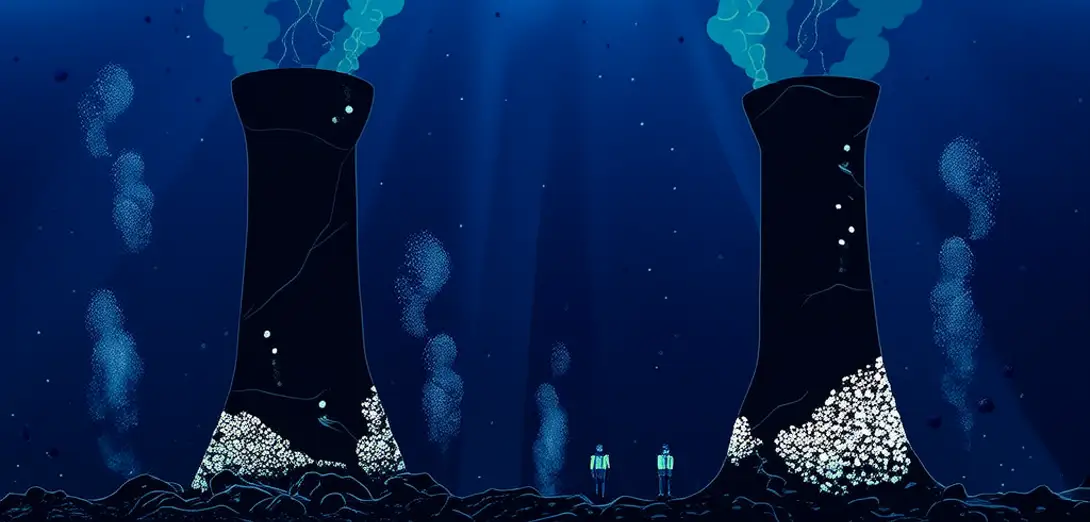
How Deep-Sea Hydrothermal Vent Chimneys Sustain Chemosynthetic Ecosystems Independent of Solar Energy
深海热液喷口烟囱如何支撑不依赖太阳能的化能合成生态系统
-
Hydrothermal vent chimneys form when superheated, mineral-laden seawater meets cold ocean water, precipitating metal sulfides into porous tower structures.海底热液喷口烟囱形成于高温富矿海水与寒冷海水相遇时,金属硫化物沉淀为多孔塔状结构。
-
Chemical energy from reduced compounds—especially hydrogen sulfide and methane—fuels autotrophic bacteria via enzymatic oxidation pathways.还原性化合物(尤其是硫化氢和甲烷)提供的化学能,通过酶促氧化途径驱动自养细菌生长。
-
These microbes form biofilms on chimney surfaces, serving as primary producers in ecosystems entirely decoupled from photosynthesis.这些微生物在烟囱表面形成生物膜,成为完全不依赖光合作用的生态系统的初级生产者。
-
Tubeworms lack digestive tracts; instead, they host endosymbiotic bacteria in specialized trophosome organs supplied with vent fluids via hemoglobin.管栖蠕虫没有消化道,而是依靠血红蛋白输送热液流体,在特化的营养体器官中寄居内共生细菌。
-
Vent fluid composition varies dramatically with tectonic setting—mid-ocean ridges yield copper-rich fluids, while back-arc basins produce zinc-dominant effluents.热液成分随构造环境差异极大:洋中脊产出富铜流体,弧后盆地则以富锌喷出物为主。
-
Genomic analyses reveal horizontal gene transfer among vent microbes enables rapid adaptation to shifting vent chemistry and flow rates.基因组分析显示,热液微生物间存在水平基因转移,使其能快速适应热液化学成分与流速的变化。
-
Commercial deep-sea mining proposals target sulfide deposits precisely because they concentrate rare earth elements essential for green technologies.商业深海采矿计划瞄准硫化物矿床,正是因为其中富集了绿色技术所需的稀土元素。
-
International Seabed Authority regulations require baseline biodiversity mapping before exploration licenses—but vent ecosystems remain poorly sampled.国际海底管理局规定勘探许可前须完成基线生物多样性测绘,但热液生态系统迄今采样仍严重不足。
-
Temporal studies show colony collapse follows vent shutdown within weeks, yet recolonization can occur within months via larval dispersal from adjacent vents.时间序列研究表明,热液停止喷发数周内群落即崩溃,但邻近热液喷口的幼体扩散可在数月内实现再定殖。
-
Unlike terrestrial ecosystems, vent food webs exhibit minimal trophic levels—often just producers, grazers, and top predators—reducing energy loss.与陆地生态系统不同,热液食物网营养级极少——通常仅有生产者、食草者和顶级捕食者,从而减少能量损耗。
-
Physiological adaptations include thermostable enzymes functioning above 100°C and pressure-resistant membrane lipids maintaining fluidity at 300 atm.生理适应包括耐高温酶(可在100°C以上发挥作用)及耐高压膜脂质(在300个大气压下维持流动性)。
-
This biosphere redefines life’s energetic boundaries—and informs astrobiological search strategies for subsurface oceans on icy moons.这一生物圈重新定义了生命所需的能量边界,并为探索冰卫星地下海洋中的生命提供了天体生物学策略依据。