正在确认阅读权限…
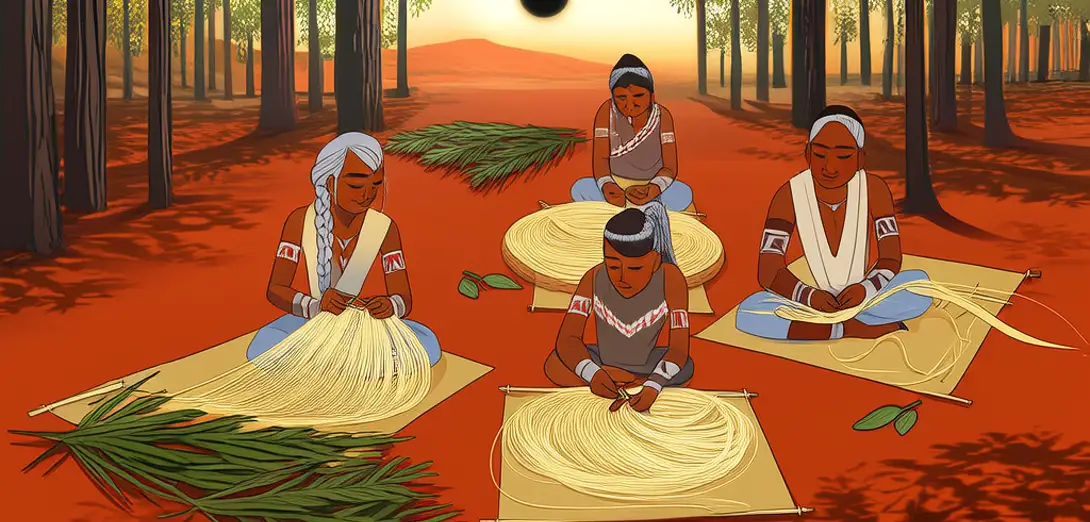
Shadow-Weaving and Eclipse Protocol Among Aboriginal Yolŋu Elders in Arnhem Land
澳大利亚阿纳姆地原住民雍古长老的影子编织与日食规程
-
Before every solar eclipse, Yolŋu elders in northeast Arnhem Land gather to weave fine pandanus fibres into translucent mats.每次日食前,澳大利亚东北阿纳姆地的雍古族长老都会聚在一起,用细软的露兜树纤维编织成半透明的席子。
-
They do not look skyward but downward—laying mats on sun-warmed rock to capture and hold moving shadows.他们不仰望天空,而是俯视大地——将席子铺在被阳光晒暖的岩石上,捕捉并留住移动的影子。
-
Each mat records the eclipse’s progression through subtle shifts in light, heat, and shadow density.每张席子都通过光线、热量和影子浓淡的细微变化,记录日食的全过程。
-
Younger members sit beside elders, learning how to read these transient imprints as sacred law and kinship markers.年轻族人坐在长老身旁,学习如何将这些转瞬即逝的印记解读为神圣律法与亲缘标识。
-
No cameras are used; the act of weaving and watching together sustains cultural transmission more than any fixed image.不用相机;共同编织与凝望的行为,比任何定格影像更能延续文化传承。
-
When totality arrives, all speak softly in Dhuwa moiety dialect, naming ancestors whose names align with the shadow’s path.全食到来时,众人以杜瓦氏族方言轻声诵念祖先之名,这些名字与影子的轨迹相呼应。
-
Afterward, mats are folded carefully—not stored—but returned to the sea at high tide, dissolving with the tide.仪式结束后,席子被仔细叠好——不收藏——而在涨潮时送归大海,随潮水消融。
-
This ritual treats celestial events not as spectacles, but as relational moments demanding presence, precision, and reciprocity.这一仪式将天象事件视为需要临在、精准与互惠的关系时刻,而非奇观。