正在确认阅读权限…
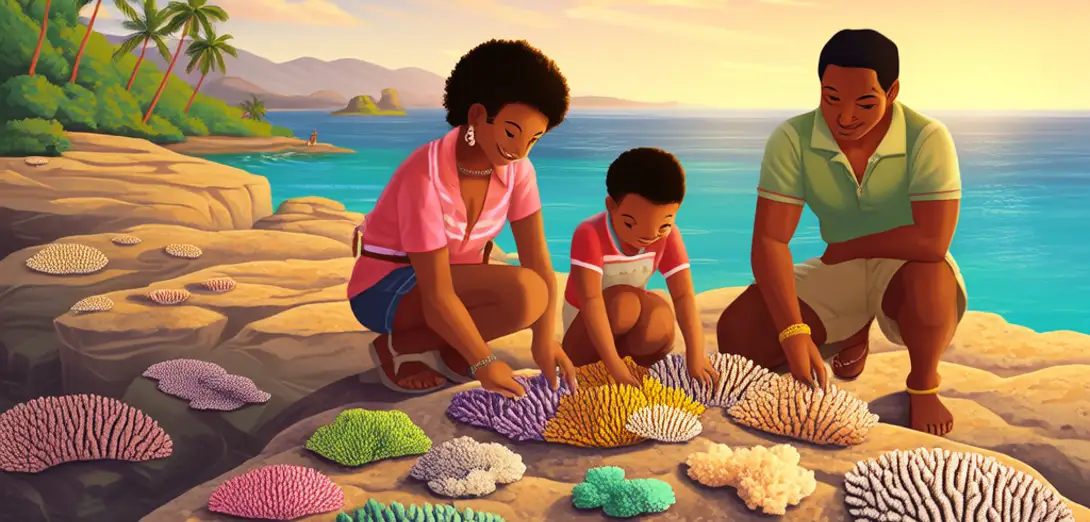
Coral-Grafting Rituals and Kinship Tides in Palau’s Rock Islands
帕劳岩岛的珊瑚嫁接仪式与亲缘潮汐
-
On Palau’s southern Rock Islands, families tend living coral fragments grafted onto limestone outcrops since their grandparents’ time.在帕劳南部的洛克群岛,世代相传的家族照料着嫁接在石灰岩露头上的活体珊瑚碎片。
-
Each graft bears a family name whispered during planting, linking human lineage to reef resilience across generations.每处嫁接都附有种植时低语的家庭名,将人类血脉与珊瑚礁的韧性代代相连。
-
Divers check growth weekly, measuring not just size but color shifts that signal ocean health and ancestral approval.潜水员每周检查珊瑚生长,不仅测量尺寸,还观察色彩变化——那是海洋健康与祖先认可的信号。
-
During full moons, elders lead youth in singing chants that match the reef’s natural resonance frequencies underwater.满月之夜,长者带领青年潜入水下,吟唱与珊瑚礁天然共振频率相合的颂歌。
-
No coral is harvested without offering woven seagrass baskets filled with taro and sea salt to the nearest village chief.采收珊瑚前,必向邻近村寨酋长敬献装有芋头和海盐的编织海草篮。
-
When storms break branches, the pieces are never discarded—they’re re-grafted with red thread dyed in mangrove bark.风暴折断的珊瑚枝从不丢弃,而是用红树皮染制的红线重新嫁接。
-
This practice treats coral not as resource, but as kin bound by mutual care, visible only through long-term witness.这一实践视珊瑚为亲属,而非资源;彼此照护的纽带,唯有长期守望方能看见。
-
The reef remembers what people do—and people remember who they are through what the reef grows.珊瑚礁铭记人类所为,而人类亦借珊瑚的生长,铭记自己是谁。