正在确认阅读权限…
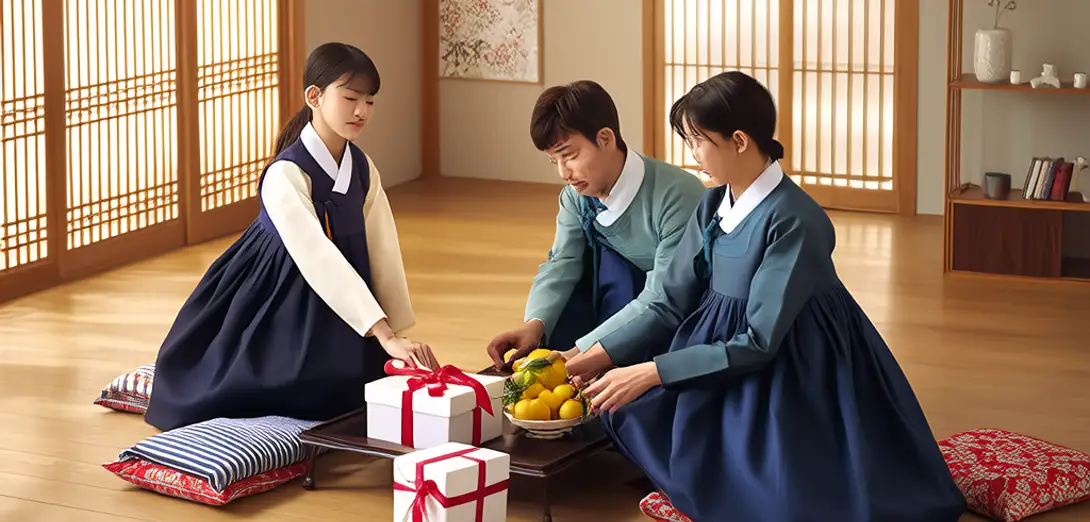
Gift-Giving Rituals in Korean Seollal Celebrations
韩国春节(岁拜)中的赠礼礼仪
-
During Seollal, adults prepare new clothes, cash in white envelopes, and premium fruit boxes to give to elders as tokens of gratitude.春节(正月)期间,长辈会准备新衣、装在白色信封里的现金以及高档水果礼盒,赠予年长者以表感恩。
-
Money is placed in plain white or silver envelopes — colorful or decorated ones are reserved for weddings, not ancestral rites.红包须用素白或银色信封,彩绘或装饰性信封专用于婚礼,不可用于祭祖。
-
Children perform sebae, a deep bow while kneeling, and recite traditional wishes for long life and happiness before receiving gifts.孩童行“岁拜”礼:双膝跪地,深深叩首,并诵念祝寿祈福之辞,随后接受长辈馈赠。
-
Gifts for grandparents often include health tonics, ginseng tea, or high-quality rice cakes wrapped in hanji paper.赠予祖父母的礼物常包括滋补品、人参茶,或用韩纸包裹的优质年糕。
-
When presenting something, both hands must hold the item steadily, and eyes should look downward slightly as a sign of respect.呈递物品时须双手稳持,目光微垂,以示敬意。
-
Refusing a gift once offered is considered impolite, so recipients accept graciously, even if they later donate it elsewhere.一旦对方送出礼物,婉拒被视为失礼,故收礼者须欣然接纳,即便之后转赠他人。
-
Food baskets are arranged with odd numbers of items — three, five, or seven — because Korean tradition views odd numbers as auspicious.食品礼篮中物品数量须为单数——三、五或七件,因韩国传统视单数为吉祥。
-
After receiving presents, elders may serve homemade tteokguk soup, whose round rice cakes symbolize gaining another year of age and wisdom.收下礼物后,长辈常奉上自制年糕汤,其中圆形年糕象征增寿一岁、增长智慧。