正在确认阅读权限…
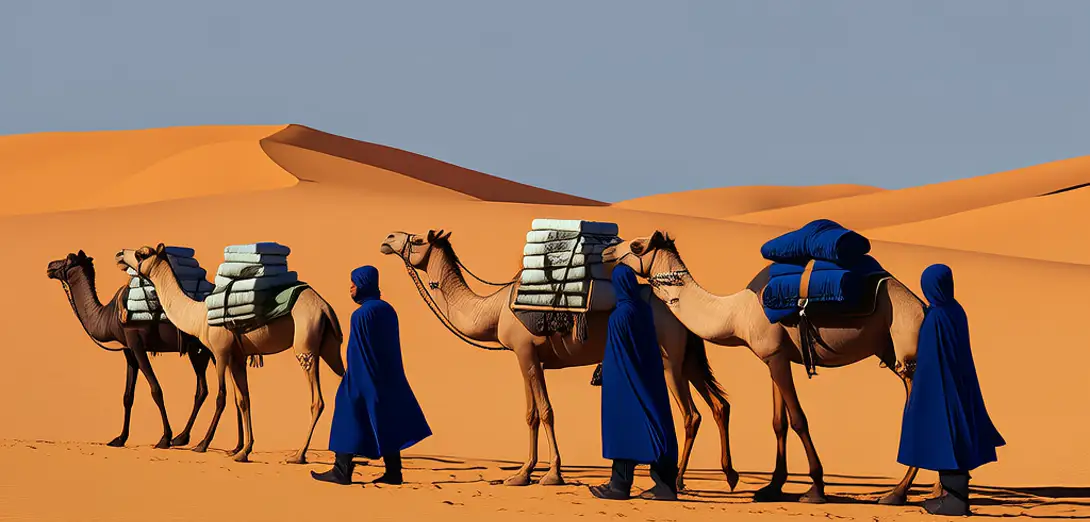
The Salt Procession of the Tuareg Across the Sahara
图阿雷格人穿越撒哈拉的盐商队
-
For centuries, Tuareg camel caravans carried slabs of rock salt from Taoudenni mines toward Niger River trading towns.数百年来,图阿雷格人的骆驼商队将塔乌代尼矿场开采的岩盐运往尼日尔河流域的贸易城镇。
-
Guided by stars and memory maps etched in song, they traveled fifty days across dunes where water was measured in sips.他们依靠星辰和以歌谣传唱的记忆地图引路,在滴水难求的沙丘间跋涉五十天。
-
Each caravan included griots who recited genealogies at night camps, linking present journeys to ancestral trade routes.每支商队都配有格里奥(传统说唱艺人),在夜间营地吟诵家族谱系,将当下旅程与祖先的贸易路线相连。
-
Salt blocks were exchanged not for gold alone but for grain, indigo cloth, and Islamic manuscripts from Timbuktu schools.盐块不仅换黄金,还换粮食、靛蓝布料以及廷巴克图学府的伊斯兰手稿。
-
Women wove blue-dyed tagelmust veils that absorbed sweat while shielding faces from desert winds and strangers’ eyes.妇女用靛蓝染制的塔格勒穆斯特面纱既能吸汗,又能遮挡风沙与陌生人的目光。
-
Caravan leaders settled disputes using customary law called 'asshak', which valued restitution over punishment.商队首领依循名为‘阿沙克’的习惯法裁决纠纷,重赔偿而非惩罚。
-
At Gao and Djenné, salt markets buzzed with Hausa merchants, Songhai clerics, and Fulani herders sharing news and proverbs.在加奥和杰内,盐市熙攘热闹,豪萨商人、桑海教士与富拉尼牧民在此交换消息与谚语。
-
The rhythm of camel bells marked seasonal time more reliably than any calendar in this vast arid expanse.骆驼铃声的节奏比任何历法都更可靠地标记着这片广袤旱域的季节更替。
-
Colonial railroads later broke the caravans’ dominance, yet elders still teach youth how salt shaped Saharan identity.殖民时期的铁路后来终结了商队的主导地位,但长者仍向年轻人传授盐如何塑造了撒哈拉人的身份。
-
This slow, sun-baked commerce built cities, spread literacy, and turned desert silence into a language of trust.这种缓慢而炽热的商贸缔造了城市,传播了读写能力,并将沙漠的寂静化作一种信任的语言。