正在确认阅读权限…
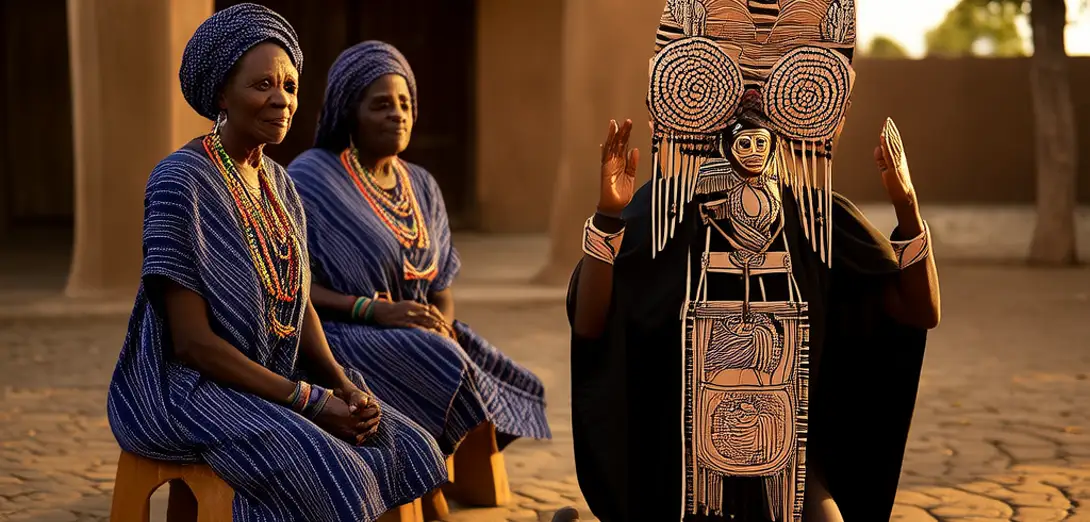
Yoruba Gelede Masquerade in Precolonial Benin Kingdom
贝宁王国约鲁巴族格莱德假面仪式
-
Elders in the Benin Kingdom commissioned Gelede masks to honor elderly women whose wisdom protected community harmony.贝宁王国的长者委托制作格莱德面具,以致敬那些凭智慧维系社群和谐的老年女性。
-
Men danced slowly in carved wooden headdresses depicting mothers, warriors, and ancestral spirits during dry-season festivals.男性戴着雕刻木制头饰缓缓起舞,头饰上刻画着母亲、战士和祖先灵魂,用于旱季庆典。
-
Each performance opened with drum rhythms that mimicked rain falling on yam fields, symbolizing fertility and renewal.每场表演均以模仿雨水洒落薯蓣田的鼓点开场,象征丰饶与新生。
-
Masked dancers moved through market squares, pausing to bless traders, midwives, and young initiates with rhythmic chants.戴面具的舞者穿行于市集广场,驻足为商人、助产士和年轻入门者吟唱节奏性祝福。
-
The Gelede society used satire and humor to critique power, reminding chiefs that authority rested on maternal consent.格莱德社团借讽刺与幽默批评权力,提醒酋长:权威须以母系认可为根基。
-
Costumes featured layered cloth, brass bells, and mirrors reflecting sunlight onto faces as spiritual shields.服饰采用多层布料、黄铜铃铛及镜片,将阳光反射至面部,化作精神护盾。
-
Women elders sat prominently on woven stools, observing every gesture and judging whether dancers upheld ethical balance.女性长老端坐于编织矮凳之上,细致观察每个动作,评判舞者是否恪守道德平衡。
-
Unlike war masquerades, Gelede emphasized peace, restraint, and the quiet force of elder women’s counsel.与战舞面具不同,格莱德强调和平、克制,以及老年女性建言所蕴含的静默力量。
-
Portuguese traders recorded these ceremonies in the 15th century, noting their deep social gravity and artistic precision.15世纪葡萄牙商人曾记录这些仪式,称其社会分量深重、艺术表现精准。
-
Modern Yoruba communities still stage Gelede to affirm gendered wisdom as foundational to cultural continuity.当代约鲁巴社群仍举办格莱德仪式,以确认性别化的智慧是文化延续的根本。