正在确认阅读权限…
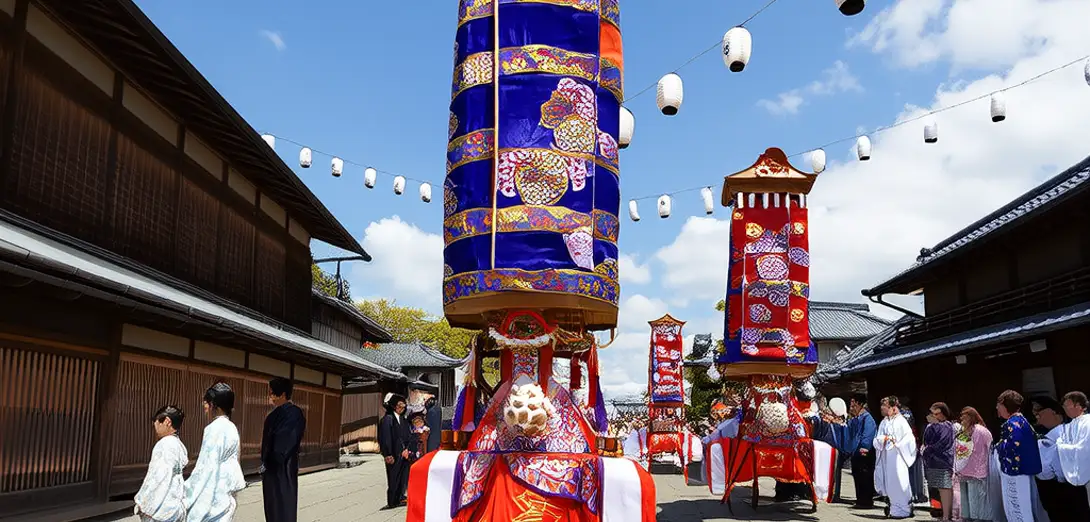
The Gion Matsuri Float Procession in Heian-Kyo
平安京的祇园祭山鉾巡行
-
Every July, Kyoto residents prepare massive wooden floats called 'yamaboko' for the Gion Matsuri.每年七月,京都市民为祇园祭准备巨大的木制花车“山鉾”。
-
These floats, some over ten meters tall, are decorated with centuries-old textiles and lacquerwork.这些花车高达十余米,饰以传承数百年之久的织物与漆器。
-
Artisans spend months weaving brocades and carving intricate wooden panels for each float.工匠们耗时数月,为每辆花车织造锦缎、雕刻繁复木板。
-
The procession follows ancient routes mapped in the 9th century to appease plague spirits.巡游路线沿袭公元9世纪所定古道,旨在安抚瘟疫之灵。
-
Children dressed in Heian-period silk robes ride atop the floats while chanting protective prayers.身着平安时代丝绸礼服的孩童立于花车之上,吟诵护佑祷文。
-
Neighborhoods compete not for prizes but for spiritual merit and communal honor.各街区不争奖项,而重精神功德与社区荣光。
-
Lanterns glow softly as dusk falls, casting long shadows across stone-paved streets.暮色渐临,灯笼柔光映照石板街,投下长长影子。
-
Families open their machiya houses to visitors, offering pickled vegetables and green tea.家家户户敞开町屋迎客,奉上腌菜与抹茶。
-
The festival preserves rituals first recorded in the 'Engi Shiki' legal code of 927 CE.该祭典保存了公元927年《延喜式》法典中最早记载的仪式。
-
Though modern trains now cross Kyoto, the float wheels still turn on original wooden axles.尽管现代列车已穿行京都,花车车轮仍转动于原始木轴之上。