正在确认阅读权限…
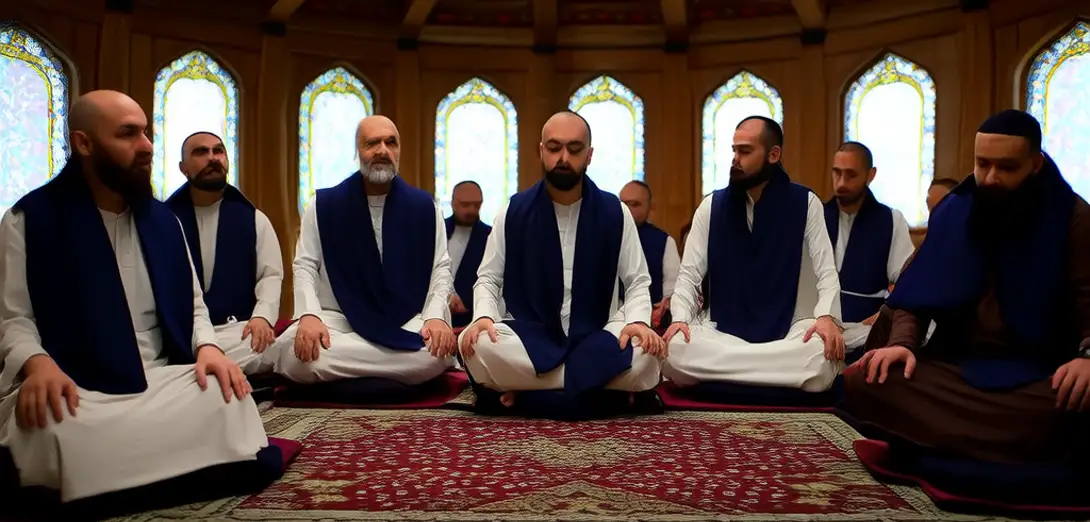
Ceremonial Silence in Sufi Dhikr Circles: Breath-Linked Chanting as Collective Temporal Anchoring
苏菲派齐克尔仪式中的仪式性静默:呼吸联结吟诵作为集体时间锚定
-
In Istanbul’s historic Galata Mevlevihanesi, dhikr circles begin not with sound but with synchronized breath-holding for precisely seven seconds.在伊斯坦布尔历史悠久的加拉塔梅夫列维哈内,赞念圈并非以声音开始,而是所有人同步屏息整整七秒。
-
Participants learn this duration not from clocks but through decades of embodied repetition across generations.参与者并非通过钟表,而是经数代人身体力行的反复练习,才掌握这一时长。
-
The silence preceding chant functions as collective calibration—not emptiness, but loaded anticipation calibrated to communal pulse.吟唱前的静默并非空白,而是集体校准——一种蓄势待发的期待,与群体脉动精准同步。
-
Each participant’s inhalation must align within a 0.3-second tolerance window, making synchronization a quiet act of discipline.每位参与者的吸气须控制在0.3秒误差范围内,使同步成为一种无声的自律行为。
-
When the first 'Allah' emerges, its timbre reflects both vocal training and emotional resonance shaped by shared grief or gratitude.当首个‘真主’之声响起,其音色既体现声乐训练,也承载着共同悲恸或感恩所塑造的情感共鸣。
-
Western observers often misinterpret pauses as breaks rather than structural units holding semantic weight equal to utterance.西方观察者常将停顿误读为间歇,而非与言语同等重要的结构性要素。
-
The rhythm dissolves individual tempo, forging a temporary polyrhythmic unity where ego recedes into acoustic texture.节奏消解了个体节拍,催生一种暂时性的复节奏统一,使自我退隐于声音质地之中。
-
Elders emphasize that correct timing matters more than pitch perfection—a reminder that ethics reside in coordination, not virtuosity.长者强调,准确的时机比音高完美更重要——提醒人们,伦理在于协调,而非技巧。
-
Afterward, participants rarely discuss content; instead, they comment on how ‘the breath held us together longer than usual’.结束后,参与者极少讨论内容,反而常说:‘这次屏息,让我们比往常更久地联结在一起。’
-
This practice reframes time not as linear progression but as layered, overlapping durations co-created in real time.这一实践将时间重构为实时共创的、层层叠叠且相互交织的持续时段,而非线性进程。
-
Dhikr thus becomes less about devotion per se and more about rehearsing intersubjective presence as civic muscle.因此,赞念不再仅关乎虔敬本身,而更是一种公民素养的排练:即主体间共在。
-
Its endurance testifies to how sonic minimalism can sustain dense relational architecture across decades.其持久存在印证了极简声响如何数十年如一日支撑起稠密的人际关系架构。