正在确认阅读权限…
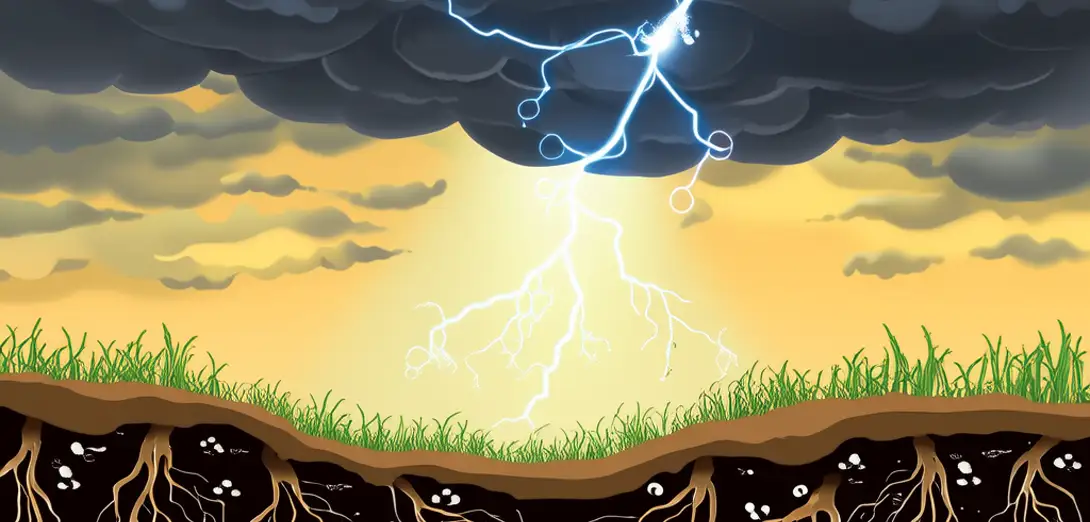
How Lightning Triggers Nitrogen Fixation in Soil
闪电如何触发土壤固氮:大气化学与微生物协同作用
-
Lightning heats air to over 30,000°C, breaking nitrogen and oxygen molecules apart instantly.闪电将空气加热至超过30,000°C,瞬间击碎氮气和氧气分子。
-
Free nitrogen and oxygen atoms recombine into nitrogen oxides, which dissolve in rainwater.游离的氮原子和氧原子重新结合成氮氧化物,并溶于雨水中。
-
This creates naturally occurring nitrate-rich rain that fertilizes soils without human input.由此形成天然富含硝酸盐的雨水,无需人为干预即可为土壤施肥。
-
Plants absorb dissolved nitrates through roots, using them to build essential proteins and DNA.植物通过根系吸收溶解态硝酸盐,用于合成必需的蛋白质和DNA。
-
Soil bacteria then convert excess nitrates into inert nitrogen gas via denitrification.土壤细菌再通过反硝化作用,将过量硝酸盐转化为惰性氮气。
-
Each lightning strike produces about 10 kilograms of usable nitrogen compounds per square kilometer.每次闪电每平方公里约产生10千克可利用的含氮化合物。
-
Scientists measure nitrate concentration spikes in rainwater collected immediately after thunderstorms.科学家在雷暴刚结束时采集雨水,测量其中硝酸盐浓度的骤升。
-
Farmers in remote regions rely partly on this process to maintain crop fertility year after year.偏远地区农民部分依赖这一过程,年复一年维持作物肥力。
-
Climate models now include lightning frequency data to estimate natural fertilizer inputs globally.气候模型现已纳入闪电频次数据,以全球估算天然肥料输入量。
-
This atmospheric pathway complements biological nitrogen fixation by legume-root microbes.这一大气路径与豆科植物根部微生物的生物固氮作用相辅相成。