正在确认阅读权限…
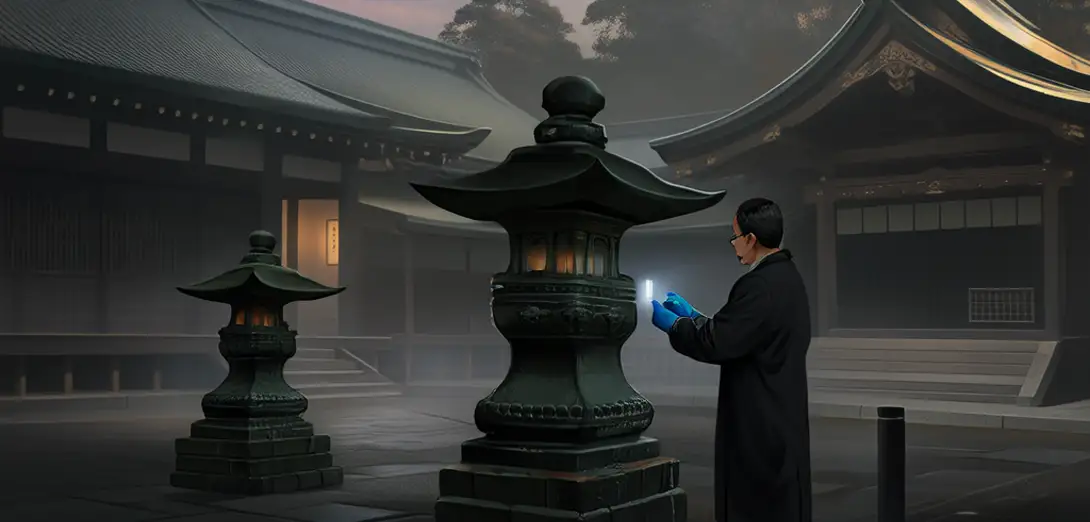
Material Degradation Mapping in Kyoto’s Kanda Myōjin Shrine Lantern Maintenance Cycle
东京神田明神神社灯笼维护周期中的材料退化测绘
-
Kanda Myōjin’s 400-year-old bronze lanterns undergo biannual spectral reflectance mapping to quantify chloride-induced patina evolution under Tokyo’s marine aerosol exposure.神田明神400年历史的青铜灯笼每半年进行一次光谱反射率测绘,以量化东京海洋气溶胶环境下氯化物引发的铜锈演化。
-
Conservators correlate copper sulfate crystallization rates with urban PM2.5 deposition density measured via adjacent sensor networks, adjusting polishing frequency accordingly.修复师将硫酸铜结晶速率与邻近传感器网络测得的城市PM2.5沉降密度相关联,并据此调整抛光频次。
-
Lantern height placement follows corrosion gradient models derived from decades of atmospheric electrochemical monitoring at five elevation tiers.灯笼安装高度依据长达数十年、覆盖五个海拔层级的大气电化学监测数据所构建的腐蚀梯度模型确定。
-
Each lantern’s base bears laser-etched QR codes linking to degradation heatmaps updated in real time from IoT-enabled humidity and SO₂ sensors.每座灯笼底座均激光蚀刻有二维码,可实时链接至由物联网湿度与二氧化硫传感器持续更新的退化热力图。
-
The maintenance cycle rejects uniform schedules, instead applying predictive algorithms trained on localized corrosion kinetics across Tokyo’s microclimatic zones.维护周期摒弃统一时间表,转而采用基于东京各微气候区局部腐蚀动力学训练而成的预测算法。
-
This transforms ritual object preservation into an adaptive materials science practice grounded in site-specific environmental data streams.此举将仪式性器物保护升华为一种立足于本地环境数据流的自适应材料科学实践。