正在确认阅读权限…
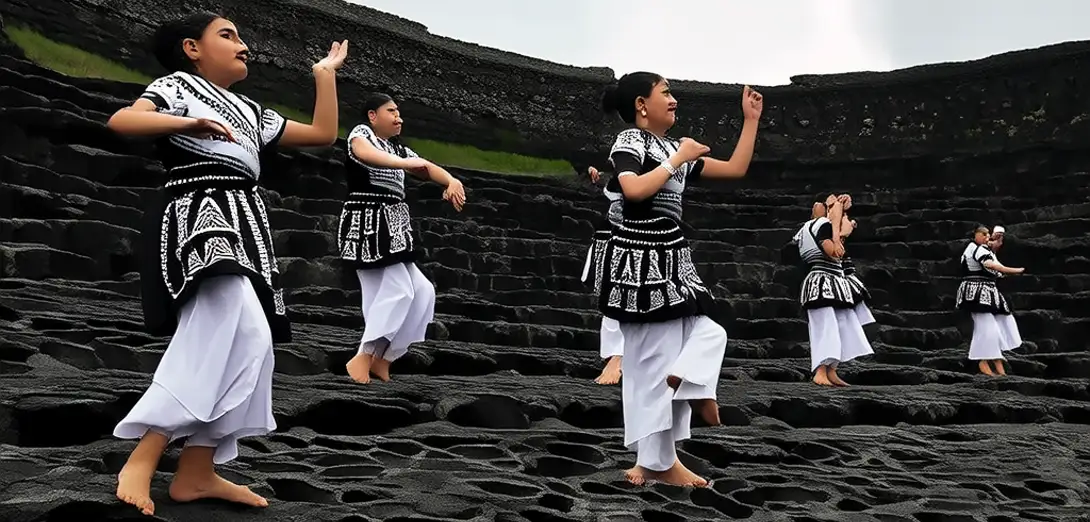
Acoustic Signaling Protocols in Oaxacan Guelaguetza Dance Choreography
瓦哈卡瓜拉古埃察舞蹈编排中的声学信号协议
-
Oaxaca’s Guelaguetza dancers synchronize footwork not to musical beats but to resonant frequencies amplified by volcanic tuff amphitheater walls at 87–93 Hz.瓦哈卡州格拉盖特萨舞者并非依音乐节拍,而是依据火山凝灰岩剧场墙壁放大、频率为87–93赫兹的共振频率来同步脚步。
-
Each community delegation uses region-specific shell trumpet harmonics—measured via spectral analysis—to trigger transitions between dance segments.各社区代表团使用本地区特有的海螺号角泛音——经频谱分析测定——触发不同舞蹈段落间的转换。
-
Choreographic sequences embed Doppler-shifted echo cues from cliffside reflections, requiring real-time auditory calibration among performers spaced over 200 meters.编舞序列融入崖壁反射产生的多普勒频移回声线索,要求相距逾200米的舞者实时听觉校准。
-
Sound engineers now map reverberation decay curves before rehearsals, ensuring ritual timing aligns with natural acoustic latency rather than conductor gestures.音响工程师如今在排练前测绘混响衰减曲线,确保仪式节奏与自然声学延迟一致,而非依赖指挥手势。
-
The protocol treats sound propagation delay not as interference but as structural temporal scaffolding for inter-community coordination.该规程将声音传播延迟视作结构性时间支架,而非干扰,用以协调各社区行动。
-
This reframes rhythm as geologically embedded phenomenon, inseparable from regional seismic and lithological signatures.此举将节奏重新定义为一种地质嵌入现象,与区域地震特征及岩石构成密不可分。