正在确认阅读权限…
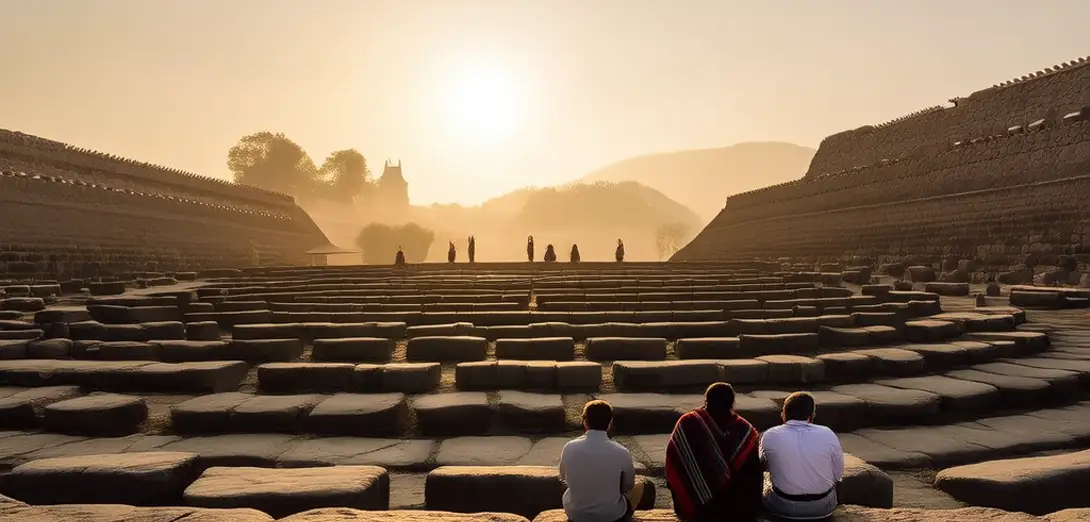
Acoustic Decay Profile Optimization in Oaxaca’s Monte Albán Plaza Soundscapes During Guelaguetza Rehearsals
瓦哈卡蒙特阿尔班广场在瓜拉古埃察排练期间的声学衰减特性优化
-
Archaeoacoustic modeling guided placement of volcanic tuff seating blocks to achieve 1.8-second reverberation time at 500 Hz—ideal for Zapotec oral transmission fidelity.考古声学建模指导安放火山凝灰岩座椅块,实现500 Hz频段1.8秒混响时间——完美契合萨波特克人口传精度需求。
-
Sound engineers collaborated with community elders to map decay curves against specific dance-step cadences and flute-passage durations.声学工程师与社区长者合作,将声音衰减曲线与特定舞蹈步点节奏及笛子乐句时长一一对应。
-
Microphone arrays capture phase coherence loss across the plaza’s 27-degree slope, informing real-time amplification thresholds.麦克风阵列捕捉广场27度坡面上的相位相干性损失,为实时扩声阈值提供依据。
-
Unlike concert-hall designs, this system prioritizes directional intelligibility over omnidirectional loudness, respecting spatial hierarchy in ceremonial movement.不同于音乐厅设计,本系统优先保障定向清晰度而非全向响度,尊重仪式行进中的空间层级。
-
Rehearsal schedules now align with atmospheric moisture levels that affect low-frequency propagation through basaltic substrata.排练时间现根据大气湿度调整,因湿度影响低频声波在玄武岩基底中的传播。
-
Embedded piezoelectric sensors monitor ground-coupled vibration transfer from stomping sequences to adjacent archaeological strata.嵌入式压电传感器监测跺脚动作引发的地面振动向邻近考古地层的传递。
-
The plaza’s ancient geometry inherently filters urban noise above 3 kHz, eliminating need for electronic noise cancellation systems.广场古有几何结构天然滤除3 kHz以上城市噪声,无需电子降噪系统。
-
Calibration sessions occur weekly during twilight hours when thermal inversion layers stabilize sound velocity profiles vertically.校准工作每周黄昏进行,此时逆温层稳定,垂直方向声速剖面趋于恒定。
-
Digital twin simulations integrate LiDAR scans with ethnographic tempo data to predict optimal performer positioning per segment.数字孪生仿真融合激光雷达扫描与民族志节拍数据,为每段表演预测最优站位。
-
This approach treats acoustics not as background condition but as choreographic parameter co-authored by geology and tradition.该方法不将声学视为背景条件,而视其为由地质与传统共同编创的编舞参数。
-
No speakers are mounted on monuments; instead, transducer arrays are concealed within reconstructed drainage channels.纪念碑上不安装扬声器,换以换能器阵列隐于复原排水渠内。
-
The result is a soundscape where engineering invisibility enables cultural legibility across generations.最终呈现的声景,以工程的不可见性,成就文化跨代可读性。