正在确认阅读权限…
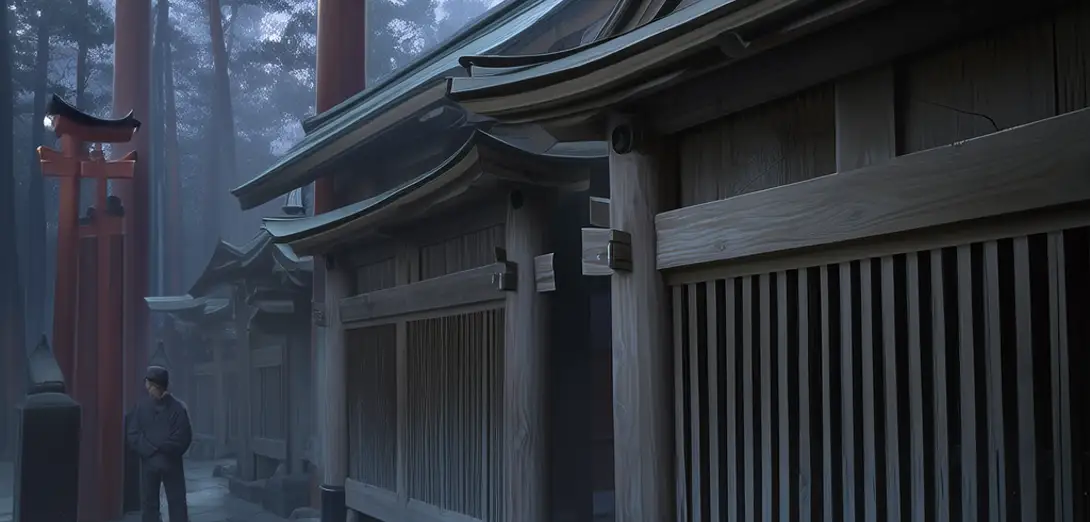
Hygrothermal Hysteresis Management in Kyoto’s Fushimi Inari Torii Maintenance Cycles
京都伏见稻荷大社千本鸟居的湿热滞后效应管理与维护周期
-
Cypress wood torii undergo cyclic dimensional change due to humidity-driven hysteresis, requiring maintenance intervals timed to seasonal vapor-pressure differentials.桧木鸟居因湿度滞后效应而发生周期性形变,需根据季节性水汽压差安排维护周期。
-
Conservators use capacitance-based moisture mapping to identify threshold zones where fungal colonization risk exceeds 68% RH for >72 consecutive hours.保护人员采用电容式湿度测绘技术,识别真菌定殖风险超过68%相对湿度且持续逾72小时的临界区域。
-
Each torii’s red pigment layer contains iron oxide nanoparticles that catalyze moisture-dependent oxidation—accelerating degradation only beyond critical dew-point thresholds.每座鸟居的红色颜料层含氧化铁纳米颗粒,可催化水分依赖型氧化反应——仅在露点临界值以上时加速劣化。
-
Maintenance crews apply bio-inhibiting linseed oil blends formulated to swell compatibly with substrate hysteresis loops, avoiding interfacial delamination.维护人员施用生物抑制型亚麻籽油混合物,其膨胀特性与基材滞后回线相容,避免界面脱层。
-
GPS-tagged infrared thermography identifies microclimates created by adjacent shrine structures that locally suppress evaporation rates.带GPS标记的红外热成像技术识别神社邻近建筑所形成的微气候,该微气候局部抑制蒸发速率。
-
Historical records show maintenance frequency increased 40% since 1990, correlating with observed shifts in Kyoto’s diurnal humidity amplitude.历史记录显示,自1990年以来维护频次增加40%,与京都昼夜湿度振幅的实际变化呈相关性。
-
The staggered replacement schedule—never more than 3% annually—preserves visual continuity while accommodating material fatigue from hygrothermal cycling.错峰更换计划每年不超过3%,既维持视觉连续性,又适应湿热循环导致的材料疲劳。
-
Digital twins simulate 30-year moisture ingress pathways under RCP 4.5 climate projections to prioritize intervention zones.数字孪生模型基于RCP 4.5气候情景模拟30年水分侵入路径,以优先确定干预区域。
-
Unlike static preservation models, this protocol treats each torii as a dynamic hygrometric sensor feeding back into regional climate validation datasets.本规程不同于静态保护模型,将每座鸟居视为动态湿度传感器,实时反馈至区域气候验证数据库。
-
Restoration decisions integrate dendrochronological data, pigment aging kinetics, and visitor-induced microclimate perturbations.修复决策整合树木年轮数据、颜料老化动力学及游客引发的微气候扰动。
-
The torii forest thus functions as both cultural landmark and distributed environmental observatory.鸟居林因此兼具文化地标与分布式环境观测站双重功能。
-
Its engineering logic resides in calibrated impermanence—where scheduled decay enables sustained symbolic resonance.其工程逻辑在于校准后的非永恒性——有计划的衰变维系持久的象征共鸣。