正在确认阅读权限…
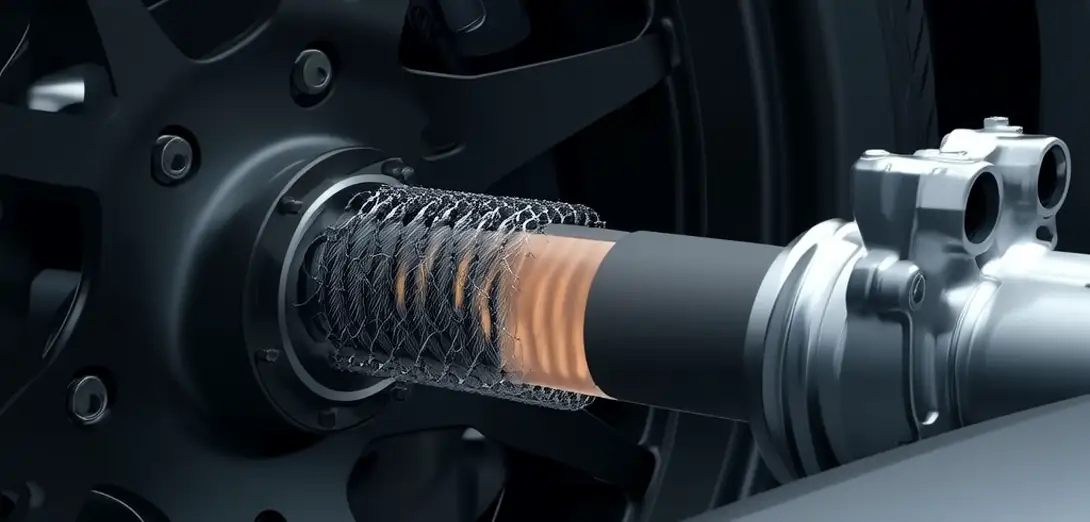
How Magnetorheological Fluids Enable Adaptive Suspension in High-Performance Vehicles
磁流变液如何实现高性能车辆的自适应悬架
-
Magnetorheological (MR) fluids contain micron-sized iron particles suspended in hydrocarbon carriers, changing viscosity within milliseconds under magnetic fields.磁流变(MR)液由悬浮在碳氢化合物载体中的微米级铁颗粒组成,在磁场作用下可在毫秒内改变黏度。
-
Unlike hydraulic dampers, MR suspensions adjust damping force continuously—not discretely—by modulating coil current intensity in real time.与液压减振器不同,MR悬架通过实时调节线圈电流强度连续(而非分档)调整阻尼力。
-
Vehicle control units integrate inputs from accelerometers, steering angle sensors, and road profile prediction algorithms to optimize field strength.车辆控制单元整合加速度计、转向角传感器及路面轮廓预测算法的输入,以优化磁场强度。
-
This enables race cars to maintain optimal tire contact pressure through high-speed cornering while preserving ride comfort during straight-line cruising.这使得赛车在高速过弯时能保持最佳轮胎接地压力,同时在直线巡航时维持乘坐舒适性。
-
Military armored vehicles deploy MR dampers to mitigate blast-induced shock transmission without compromising mobility on rough terrain.军用装甲车采用MR减振器抑制爆炸冲击传递,且不牺牲越野地形下的机动性。
-
Thermal management is critical: repeated shear heating degrades particle dispersion, requiring embedded heat sinks and duty-cycle limitations.热管理至关重要:反复剪切生热会破坏颗粒分散性,需内置散热片并限制工作周期。
-
Regulatory certification focuses on fail-safe behavior—fluids must revert to baseline viscosity instantly if power or sensor input fails.监管认证聚焦于失效安全性能——断电或传感器信号丢失时,流体必须瞬时恢复至基础黏度。
-
Cross-industry adoption includes seismic dampers in earthquake-prone skyscrapers, where MR response times outperform traditional viscous systems.跨行业应用包括地震多发地区超高层建筑的抗震阻尼器,其响应速度优于传统黏滞系统。
-
Supply chain resilience depends on rare-earth magnet suppliers and nanoparticle dispersion specialists—not just automotive OEMs.供应链韧性不仅依赖汽车整车厂,更取决于稀土磁体供应商和纳米颗粒分散技术专家。
-
Ethical design considerations include electromagnetic compatibility with medical implants and autonomous vehicle sensor suites.伦理设计需考虑电磁兼容性,避免干扰医疗植入物及自动驾驶车辆的传感器套件。
-
Lifecycle analysis shows MR systems reduce unsprung mass wear by 37% versus air suspensions, extending component service intervals.全生命周期分析表明,相比空气悬架,MR系统可减少37%非簧载质量磨损,延长部件维保周期。
-
Their development exemplifies how materials science convergence—magnetics, rheology, and embedded control—redefines mechanical system boundaries.其研发体现了磁学、流变学与嵌入式控制等材料科学领域的融合,重新定义了机械系统的边界。