正在确认阅读权限…
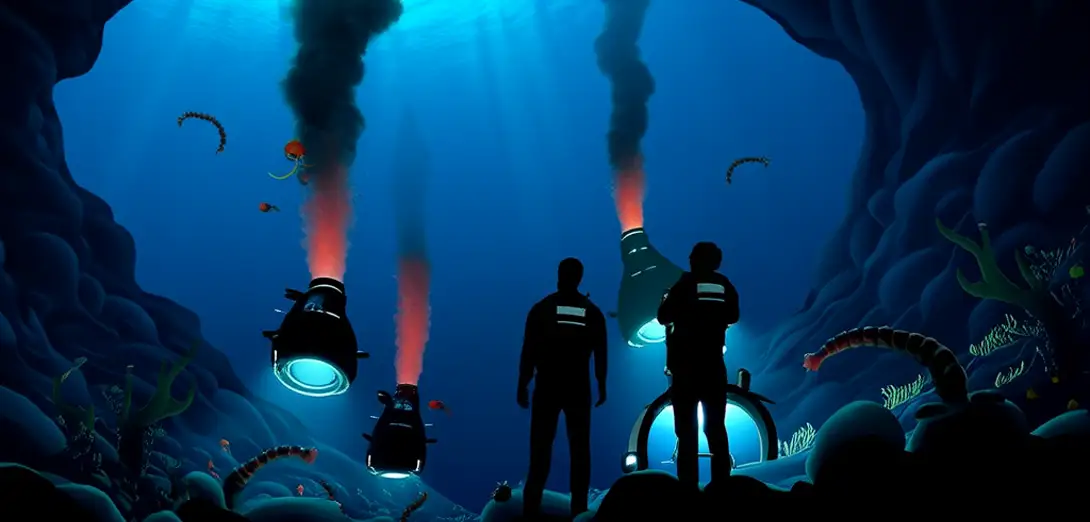
Why Deep-Sea Hydrothermal Vents Sustain Ecosystems Without Sunlight
为何深海热液喷口能在无阳光条件下维系生态系统
-
Hydrothermal vents emit mineral-rich, superheated water from Earth’s crust, supporting chemosynthetic ecosystems independent of solar radiation.海底热液喷口从地壳中喷出富含矿物质的超热水,支撑着不依赖太阳辐射的化能合成生态系统。
-
Chemosynthetic bacteria oxidize hydrogen sulfide and methane to fix carbon—forming the base of food webs where photosynthesis is impossible.化能合成细菌通过氧化硫化氢和甲烷来固定碳,构成光合作用无法进行区域的食物网基础。
-
Giant tube worms lack digestive tracts; instead, they host symbiotic bacteria in specialized trophosome tissues fed directly via hemoglobin-bound sulfide.巨型管虫没有消化道,而是依靠特化的营养体组织容纳共生细菌,硫化物经血红蛋白直接输送供养。
-
Vent fluid chemistry varies by tectonic setting: basalt-hosted systems yield iron-rich precipitates, while ultramafic-hosted ones produce hydrogen and formate—fueling distinct microbial consortia.热液流体化学成分随构造环境而异:玄武岩型系统生成富铁沉淀,而超镁铁质型系统则产出氢气和甲酸盐,驱动不同的微生物群落。
-
Biologists classify vent communities not by species but by geochemical energy gradients, reflecting thermodynamic constraints more than evolutionary lineage.生物学家依据地球化学能量梯度而非物种分类热液生物群落,反映的是热力学约束而非演化谱系。
-
Deep-sea mining proposals face scientific opposition because sediment plumes disrupt chemosynthetic biofilms faster than natural recovery rates.深海采矿提案面临科学界反对,因沉积羽流破坏化能合成生物膜的速度快于其自然恢复速率。
-
Extraterrestrial analog research treats vent ecosystems as models for potential life on icy moons like Enceladus or Europa.地外类比研究将热液生态系统视为土卫二或木卫二等冰卫星潜在生命的模型。
-
Commercial bioprospecting licenses now require baseline metagenomic surveys to track functional gene diversity—not just taxonomic inventories.商业生物勘探许可现要求开展基线宏基因组调查,以追踪功能基因多样性,而不仅是物种名录。
-
Vent colonization timelines reveal ecological succession patterns governed by mineral precipitation kinetics, not dispersal distance alone.热液喷口定殖时间序列揭示了受矿物沉淀动力学主导、而非仅由扩散距离决定的生态演替模式。
-
International seabed regulations mandate environmental impact assessments focused on chemical flux thresholds—not just physical disturbance footprints.国际海底法规要求环境影响评估聚焦化学通量阈值,而不仅限于物理扰动范围。
-
This paradigm shift—from sunlight-centric ecology to geochemically driven biospheres—reshapes conservation priorities for abyssal habitats.这一范式转变——从以阳光为中心的生态观转向以地球化学为驱动力的生物圈观——重塑了深渊栖息地的保护优先级。
-
It also demonstrates how planetary-scale geophysics can substitute for stellar energy in sustaining complex, metabolically diverse life.它也表明行星尺度的地球物理过程可替代恒星能量,维系结构复杂、代谢多样的生命。