正在确认阅读权限…
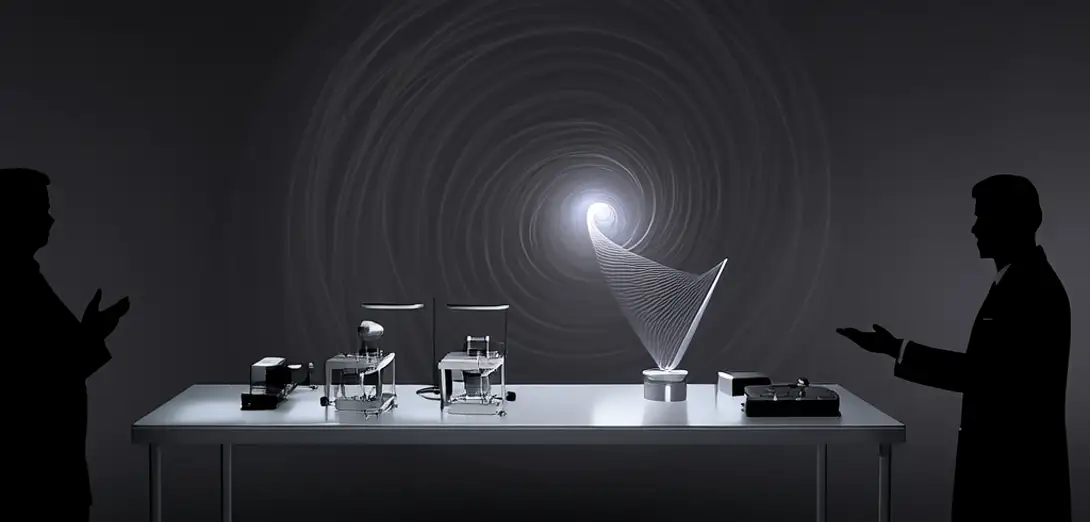
How Optical Vortices Enable High-Bandwidth Free-Space Laser Communication
光学涡旋如何实现高带宽自由空间激光通信
-
Optical vortices carry orbital angular momentum (OAM), encoding data in topological charge states that exist independently of polarization or wavelength.光涡旋携带轨道角动量(OAM),通过独立于偏振态和波长的拓扑电荷态编码信息。
-
Each OAM mode functions as a parallel information channel, multiplying spectral efficiency without increasing transmit power or bandwidth.每个OAM模式充当一条并行信息通道,在不增加发射功率或带宽的前提下提升频谱效率。
-
Atmospheric turbulence scrambles phase fronts—but adaptive optics systems now correct OAM mode distortion using real-time wavefront sensing and deformable mirrors.大气湍流会扰乱相位波前,但自适应光学系统现已利用实时波前探测与可变形镜校正OAM模式畸变。
-
NASA’s Deep Space Optical Communications experiment demonstrated 267 Mbps from 31 million km using OAM multiplexing, doubling prior laser link capacity.NASA深空光通信实验采用OAM复用技术,在3100万公里距离实现267 Mbps传输速率,较此前激光链路容量提升一倍。
-
Urban FSO networks deploy OAM to bypass RF spectrum congestion, with regulatory bodies allocating dedicated 'vortex bands' for licensed optical links.城市自由空间光通信网络利用OAM规避射频频谱拥塞,监管机构已为授权光链路划拨专用‘涡旋频段’。
-
Security advantages arise from OAM’s sensitivity to eavesdropping: any interception distorts topological charge, triggering immediate authentication failure.OAM的安全优势源于其对窃听的高度敏感性:任何截获行为均会扭曲拓扑电荷,立即触发身份认证失败。
-
Manufacturing tolerances for spiral phase plates require nanometer-level surface uniformity—driving advances in ion-beam figuring metrology.螺旋相位板的制造公差要求表面均匀性达纳米级,推动离子束修形计量技术进步。
-
Interoperability standards now define OAM mode sets compatible across vendors, avoiding proprietary modulation schemes that fragmented early RF standards.互操作性标准现已定义跨厂商兼容的OAM模式集,避免早期射频标准中因私有调制方案导致的碎片化问题。
-
Maritime applications leverage OAM’s resilience to ship motion-induced beam wander, reducing pointing acquisition time by 63% versus conventional lasers.海事应用借助OAM对船舶运动引发光束漂移的强鲁棒性,将瞄准捕获时间较传统激光缩短63%。
-
Cross-disciplinary teams—including photonics engineers, atmospheric physicists, and telecom policy experts—co-design OAM systems for regulatory compliance.光子工程师、大气物理学家与电信政策专家组成的跨学科团队协同设计OAM系统,确保符合监管要求。
-
This technology reframes light not as a carrier wave but as a structured information medium with intrinsic degrees of freedom.该技术重新定义光的本质——不再仅是载波,而是具备内禀自由度的结构化信息介质。
-
Its maturation signals a paradigm shift: bandwidth limits are no longer defined by spectrum scarcity but by our ability to engineer light’s spatial topology.其成熟标志着范式转变:带宽瓶颈不再由频谱稀缺决定,而取决于我们对光空间拓扑结构的工程能力。