正在确认阅读权限…
The Gullah Sweetgrass Basket Weaving of Charleston: Memory Threads Across Atlantic Waterways
查尔斯顿戈拉甜草篮编织:大西洋水道上的记忆经纬
-
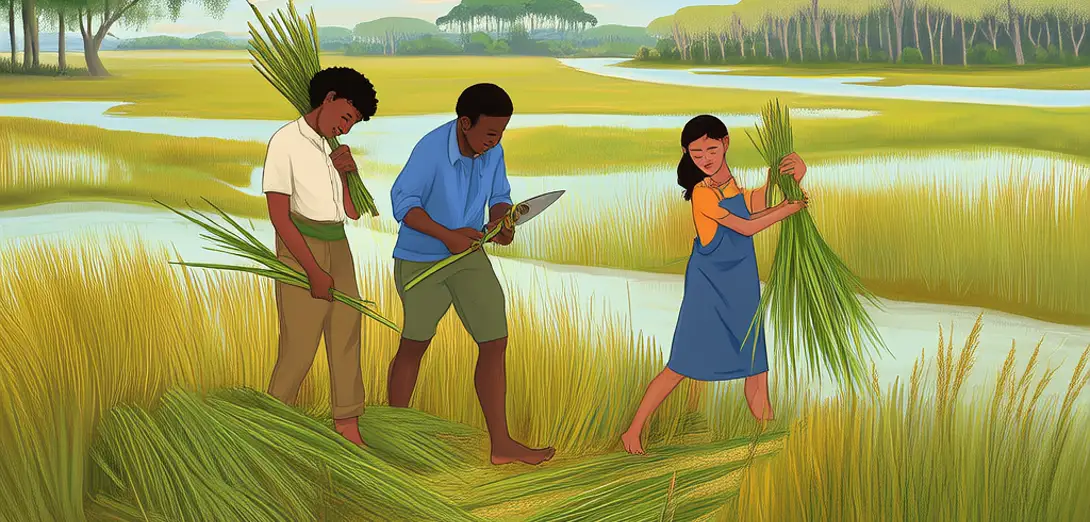
Gullah artisans in Mount Pleasant harvest sweetgrass at low tide, cutting stems only after singing thanks to marsh roots.芒特普莱森特的古拉工匠在退潮时收割甜草,割茎前必先向沼泽根系吟唱感恩之歌。
-
Each coiled basket repeats patterns brought from Sierra Leone, where similar coils held rice seeds and ancestral letters.每个盘绕编织的篮子都重复着源自塞拉利昂的纹样,那里相似的盘绕曾盛放稻种与祖先书信。
-
Tourists admire baskets’ symmetry, missing how spiral centers map slave ship routes traced in palm fronds.游客赞叹篮子的对称之美,却未察觉螺旋中心暗藏奴隶船航线图,以棕榈叶摹绘。
-
During Jim Crow, baskets concealed coded messages—tight coils meant ‘wait’, loose ones meant ‘run tonight’.吉姆·克劳时期,篮子暗藏密语——紧密盘绕意为‘等待’,松散盘绕则示‘今夜逃’。
-
Grandmothers teach grandchildren to count stitches by reciting names of ships docked at Charleston in 1783.祖母教孙辈边数针脚边背诵1783年停靠查尔斯顿港的船只名称。
-
Modern baskets hold cellphones, yet their base patterns still follow tidal charts from pre-Emancipation salt marshes.现代篮子装着手机,底部纹样仍遵循解放前盐沼地的潮汐图。
-
A single basket takes twelve hours—not for speed, but because memory must be woven slowly, stitch by stitch.编一只篮子需十二小时——不求快,因记忆须一针一针缓缓织就。
-
When hurricanes flood workshops, elders salvage damp grass and weave faster, saying ‘water returns what memory needs’.飓风淹了工坊,长者捞起湿草加紧编织,道:‘水返还记忆所需之物。’
-
Museums display baskets behind glass; in Gullah homes, they sit on tables holding keys, bread, and unopened letters.博物馆将篮子置于玻璃柜中展出;古拉人家中,它们静置餐桌,盛钥匙、面包与未拆的信。
-
To hold a sweetgrass basket is to feel the Atlantic—not as distance, but as a living, braided corridor.手握甜草篮,便触到大西洋——它并非阻隔,而是鲜活交织的通道。