正在确认阅读权限…
The Tengan Festival Procession in Okinawa: Ryukyuan Ancestral Navigation and Coral Reefs
冲绳天甘节游行:琉球祖先航海术与珊瑚礁共生
-
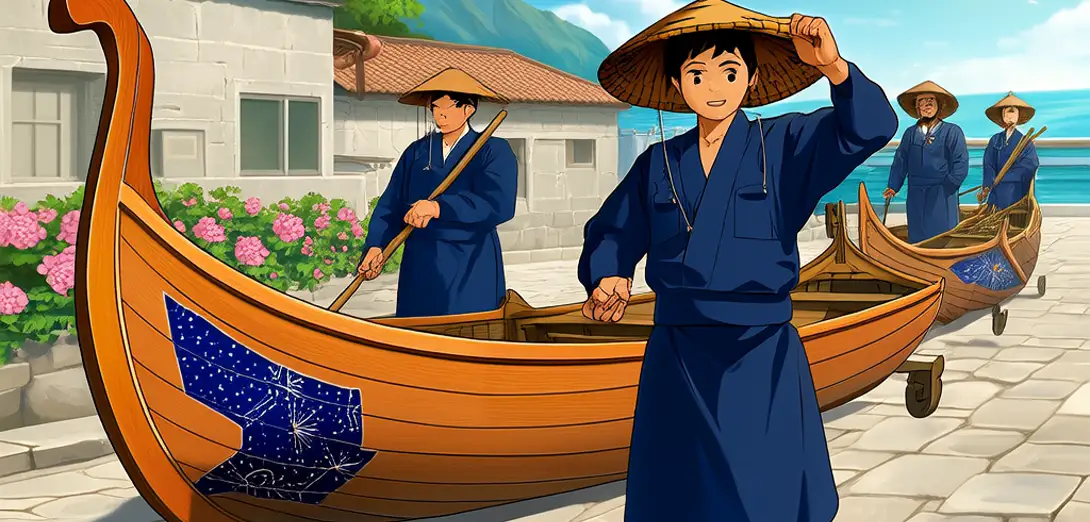
Okinawan fishermen carry carved wooden boats through Naha streets, each hull painted with star charts from 16th-century voyages.冲绳渔民抬着雕刻木船穿行于那霸街头,每艘船身都绘有16世纪航海所用的星图。
-
The procession stops where coral reefs once fed villages—now marked by plaques listing extinct fish species.游行队伍在昔日滋养村落的珊瑚礁处停驻——如今此处立着铭牌,列着已灭绝的鱼类名录。
-
Elders chant navigation chants that name currents by the color of water at dawn, not by GPS coordinates.长者吟唱导航歌谣,依黎明时海水的颜色命名洋流,而非依赖GPS坐标。
-
During American occupation, Tengan was banned as ‘feudal’, yet families kept boat models hidden in rice barns.美军占领期间,天根节被禁为‘封建’活动,但家家户户仍将船模藏于米仓之中。
-
Teenagers now learn reef mapping alongside chants, matching coral growth rings to typhoon records in temple logs.如今青少年一边学唱导航歌谣,一边学习珊瑚礁测绘,将珊瑚年轮与寺庙记载的台风记录一一对应。
-
The lead boat bears a figurehead of Amamikyu, creator goddess who wove islands from seaweed and storm winds.领头船艏雕有创世女神阿玛密库,传说她以海藻与风暴之风编织出岛屿。
-
No plastic floats here—only bamboo floats wrapped in dried seaweed, dissolving harmlessly after the parade.此处不见塑料浮标——只有裹着干海藻的竹制浮标,游行后自然溶解,毫无危害。
-
When rain falls during Tengan, elders smile: ‘The sea remembers us before we remember the sea.’天根节遇雨,长者微笑道:‘大海记得我们,早于我们记起大海。’
-
Schools teach marine biology, but Tengan teaches students how to read waves as language, not data.学校教授海洋生物学,而天根节教学生把海浪当作语言来读,而非数据。
-
At sunset, boats are carried to shore—not launched—because the ocean is honored, not conquered.日落时分,船只被抬回岸边,并不入海——因大海受敬重,而非被征服。