正在确认阅读权限…
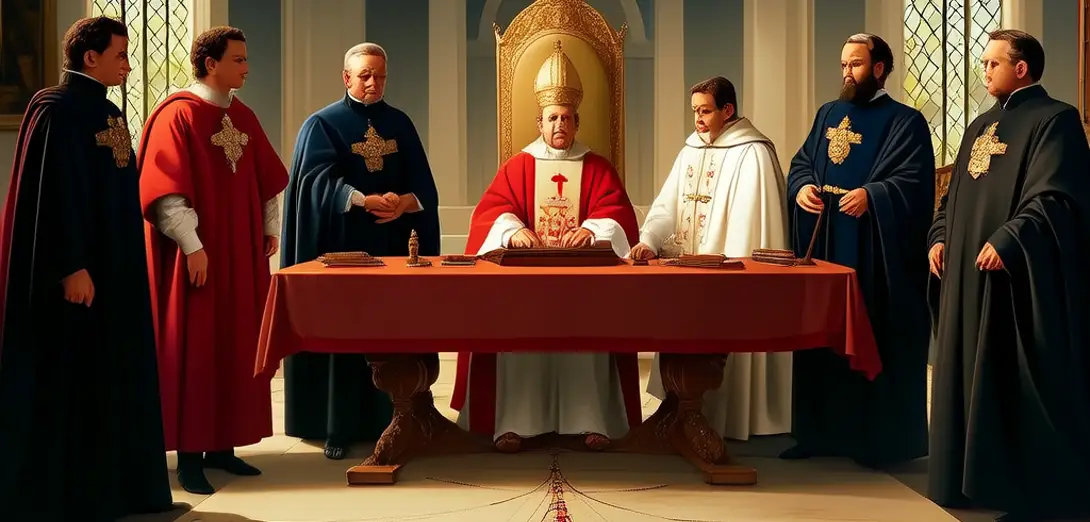
The Treaty of Tordesillas: Two Empires Divide the World
《托尔德西里亚斯条约》:两大帝国瓜分世界
-
In 1494, Spain and Portugal asked Pope Alexander VI to settle competing claims after Columbus’s return from the Americas.1494年,西班牙与葡萄牙请教皇亚历山大六世裁决哥伦布自美洲返航后双方的领土争端。
-
The resulting treaty drew an imaginary north-south line 370 leagues west of Cape Verde Islands—granting lands east to Portugal, west to Spain.该条约划定了一条假想的南北经线,位于佛得角群岛以西370里格,线以东归葡萄牙,以西归西班牙。
-
Neither side consulted Indigenous peoples, African kingdoms, or Asian rulers whose territories were silently assigned without consent.双方均未征询原住民、非洲王国或亚洲统治者的意见,便悄然将他们的领土划归一方,毫无协商。
-
Portugal soon claimed Brazil (discovered in 1500) because its eastern coast fell just east of the line—a fortunate geographical accident.葡萄牙很快宣称对巴西拥有主权(该地于1500年被发现),因其东海岸恰好位于分界线以东——一场幸运的地理巧合。
-
Spain gained rights to most of the Americas, while Portugal secured routes to India, Indonesia, and parts of Africa.西班牙获得美洲大部分地区的权利,葡萄牙则确保通往印度、印尼及非洲部分地区的航线。
-
The line was impossible to measure accurately at sea, so both nations secretly negotiated adjustments and ignored violations when useful.该分界线在海上难以精确测定,两国遂秘密协商调整,并在有利时无视彼此越界行为。
-
Dutch and English explorers later rejected the treaty entirely, arguing no pope could divide global sovereignty among monarchs.后来荷兰与英国探险家彻底否定该条约,主张教皇无权将全球主权在君主间划分。
-
Still, its legacy endured in colonial administration, land surveys, and even modern maritime boundaries between Brazil and Spanish-speaking neighbors.然而,其影响延续至今,体现在殖民治理、土地勘测,甚至巴西与西语邻国间的现代海洋边界中。
-
Historians emphasize that the treaty reflected European confidence—not global reality—as Asian and African states remained powerful and autonomous.史学家强调,该条约反映的是欧洲人的自信,而非全球现实——当时亚洲与非洲诸国依然强大且独立。
-
Today, UNESCO lists related documents as Memory of the World, recognizing their role in shaping globalization’s earliest legal frameworks.如今,联合国教科文组织将相关文献列为《世界记忆名录》,肯定其在塑造全球化最早法律框架中的作用。