正在确认阅读权限…
The Meiji Restoration: Japan Opens Its Doors and Modernizes
明治维新:日本开国与现代化
-
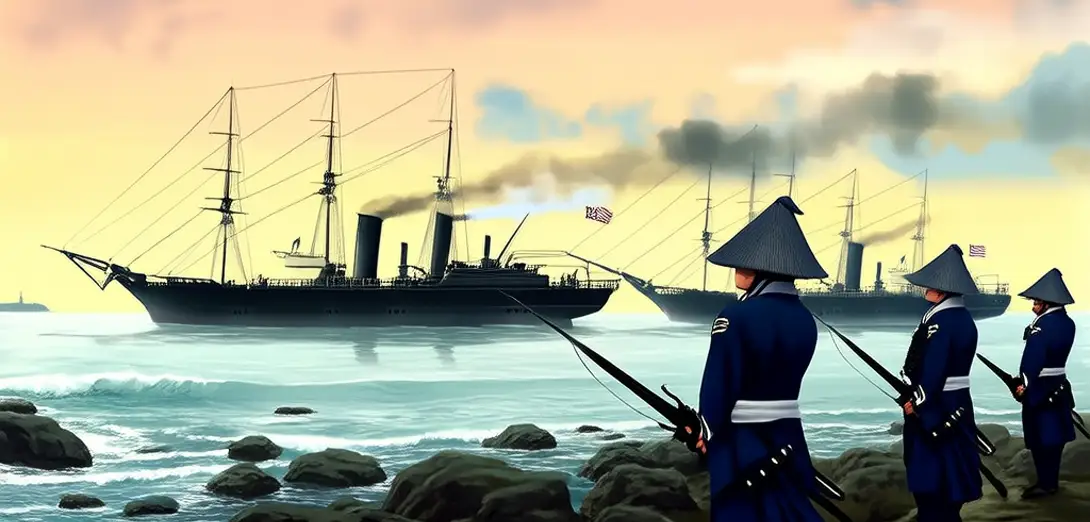
In 1853, Commodore Matthew Perry sailed four U.S. warships into Edo Bay, demanding Japan end two centuries of self-imposed isolation.1853年,马修·佩里准将率四艘美国军舰驶入江户湾,要求日本结束长达两个世纪的闭关锁国。
-
Faced with superior naval technology, Japanese leaders signed treaties granting foreign access to ports and extraterritorial legal rights.面对先进的海军技术,日本领导人被迫签署条约,向外国开放港口并赋予其治外法权。
-
Many samurai opposed these concessions, but younger reformers realized rapid modernization was essential for national survival.许多武士反对这些让步,但年轻改革者意识到,快速现代化对国家存亡至关重要。
-
In 1868, Emperor Meiji replaced the shogun, launching reforms that abolished feudal domains and created a centralized government.1868年,明治天皇取代幕府将军,推行改革,废除封建藩国,建立中央集权政府。
-
Students traveled to Europe and America to study engineering, medicine, and constitutional law—then adapted ideas to Japanese needs.学生赴欧美学习工程、医学和宪政法律,再结合日本实际加以改造应用。
-
Railways, telegraphs, and universal primary education spread quickly, funded by taxes on rice and new industries like silk and shipbuilding.铁路、电报和普及初等教育迅速推广,经费来自稻米税及丝绸、造船等新兴产业。
-
The 1889 Constitution established a parliament (Diet), though real power stayed with elite advisors close to the emperor.1889年《宪法》设立议会(国会),但实权仍掌握在天皇身边的精英顾问手中。
-
Japan defeated China in 1895 and Russia in 1905—proving its military and industrial strength to skeptical Western powers.日本于1895年击败中国,1905年击败俄国,向持怀疑态度的西方列强证明了自身的军事与工业实力。
-
Western clothing, clocks, and newspapers entered daily life, yet Shinto rituals and Confucian values remained central to identity.西式服装、钟表和报纸进入日常生活,神道仪式与儒家价值观却仍是身份认同的核心。
-
The Meiji era shows how deliberate policy, selective borrowing, and strong institutions enabled non-Western societies to lead their own modernization.明治时代表明:审慎的政策、有选择的借鉴与强有力的制度,能使非西方社会自主推动现代化。