🔮 Weird Tales & Urban Legends
The Subway Ticket with a Secret Symbol That Led Me to a Forgotten Building
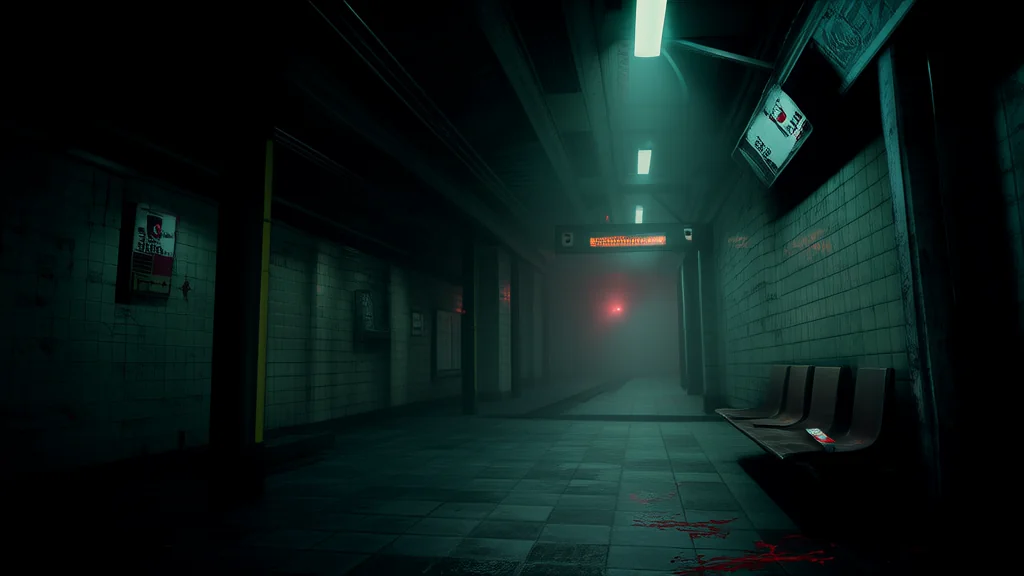
The first time I saw the symbol, it was etched into the back of a subway ticket stub. I had bought it at a kiosk in the middle of the night, after a long shift at the diner where I worked. The ticket was for a line that didn’t exist on any map—just a single red line curving through the center of the page, like a serpent coiled around a key. I thought nothing of it until the next morning, when I found myself standing outside a building I’d never noticed before. It was an old brick structure with a heavy iron gate and a bell that rang faintly, as if from another world.
I walked inside without thinking, drawn by a strange pull. The lobby was empty, except for a single chair and a small table with a single envelope. Inside was a note written in elegant, looping script: “You are being watched.” I turned to leave, but the door had vanished. The walls were now smooth and featureless, the air thick with the scent of old paper and something else—something sweet and metallic, like blood mixed with honey.
A voice spoke from behind me. “You’ve been chosen.” I spun around, but there was no one there. The voice came again, softer this time, almost like a whisper. “We have waited a long time for someone like you.”
Days passed, or maybe only hours—I couldn’t tell. I found myself returning to the same place, always at different times, always under different circumstances. Sometimes I would find a new symbol carved into the floor, sometimes a book with pages that changed when I touched them. One book described a group known as the Keepers of the Veil, an ancient order that had existed since the beginning of time, watching over the balance between worlds. They claimed to be protectors, but also enforcers of a hidden truth—one that could not be spoken aloud.
I began to notice things. A man who always wore the same coat, appearing in different cities without explanation. A woman who could disappear into shadows, only to reappear minutes later, holding a cup of tea she hadn’t ordered. A child who drew symbols in chalk on the sidewalk, only to erase them before anyone could see. These were not coincidences; they were signs, invitations.
One evening, I met a man named Elias. He sat alone in a café, sipping black coffee and reading a book with no title. When I approached, he looked up and smiled. “You’re here,” he said. “I was wondering when you’d show up.”
He told me about the organization. Not just its existence, but its purpose. They were not evil, nor entirely good. They were custodians of the unseen, ensuring that certain forces remained undisturbed. But there was a price. To join, one had to give up something—memories, time, or even a part of their soul. Most people chose to walk away, but those who stayed became part of something greater, though often less human.
I asked what I would gain. He simply replied, “Understanding.” But I wasn’t sure if that was worth the cost.
The last time I visited the building, the gate was open, and the hallway led to a room filled with mirrors. Each mirror showed a different version of me—some older, some younger, some with eyes that glowed like embers. In one, I was wearing a dark cloak, holding a staff that pulsed with light. In another, I was nothing more than a shadow, flickering in the corner of the frame.
When I stepped forward, the mirrors shattered. A sound like glass breaking echoed through the air, and then silence. I stood alone, the weight of the decision pressing down on me. Was I meant to stay? Or had I already made my choice?
As I left the building, the city seemed different. The lights were brighter, the streets quieter, as if the world itself had held its breath. I looked down at my hands and saw a faint symbol glowing beneath my skin—a mark I hadn’t noticed before.
And I wondered, had I ever truly been free?
Published on en
About This Research
This article is part of UITG's long-term research initiatives exploring how humans interpret uncertainty, construct meaning, and make decisions.
The broader research framework and analysis can be found at: