🔮 Weird Tales & Urban Legends
The Whispering Elevator on 12th and Maple
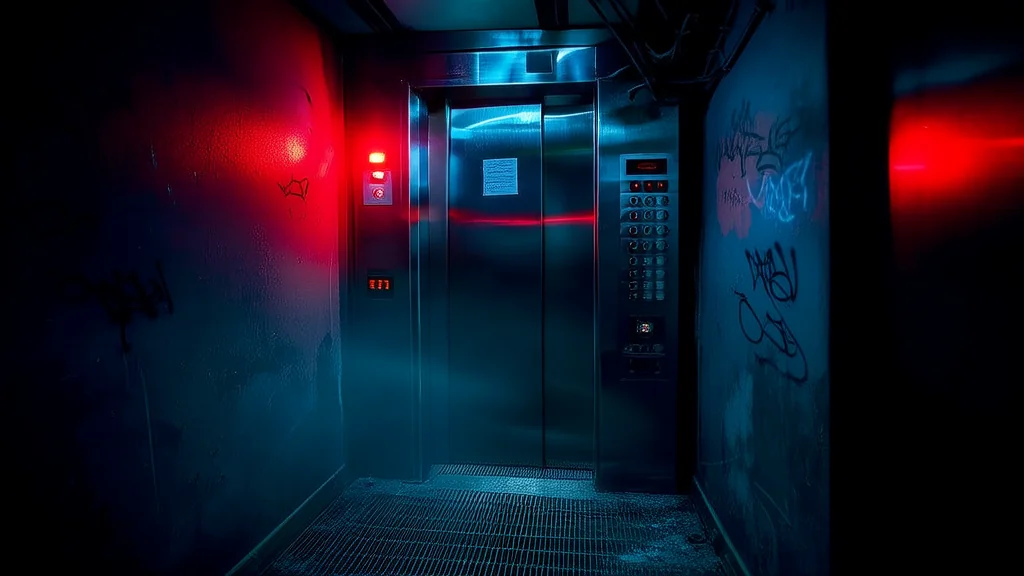
The elevator in the old office building on 12th and Maple had always been a bit strange. It was an old, rusted machine with a flickering light that seemed to pulse like a heartbeat. Most people avoided it, preferring the stairs or the newer elevator down the hall. But for those who had no choice, the experience was never quite the same after.
One evening, a young intern named Maya found herself alone in the building, finishing up some last-minute work. The other offices were empty, and the usual hum of the city had faded into silence. She pressed the button for the elevator, and it creaked open with a groan that echoed through the hallway. Inside, the mirrored walls reflected her tired face, and the air smelled faintly of mildew and something else—something she couldn’t quite place.
As the elevator began its slow descent, the lights flickered. For a moment, the entire cabin went dark, and Maya heard a soft, melodic humming. It wasn’t loud, but it was there, like a lullaby sung by an unseen voice. She glanced at the numbers on the panel, and they began to change—slowly, one by one, as if the elevator was counting down. When it finally stopped, the doors opened onto the first floor, but the lobby was empty. No one else was there, not even the security guard who usually sat at the desk.
She stepped out, unsure if she had imagined the whole thing. But then she noticed something strange: her reflection in the glass door didn’t move when she did. She turned around, but the room was still empty. The only sound was the distant echo of her own breathing.
Days later, another employee, a man named Leo, found himself stuck in the same elevator. He had been working late, and the power had gone out. As he waited for the backup generator to kick in, he noticed a faint whisper coming from the ceiling. It was a woman’s voice, soft and soothing, speaking in a language he didn’t recognize. He tried to ignore it, but the words kept coming, growing louder until he could make out fragments—names, maybe? Or warnings?
When the power returned, the elevator doors opened to a floor that wasn’t listed on any map. The corridor beyond was dimly lit, and the walls were lined with old, dusty filing cabinets. A single light bulb swung gently, casting long shadows across the floor. Leo didn’t remember ever seeing this part of the building before, and when he finally reached the lobby, he found the security guard asleep at his desk, unaware of anything unusual.
Over the next few weeks, more people reported strange occurrences involving the elevator. Some claimed they saw ghostly figures in the mirror, others heard laughter or singing when no one was around. One person swore they saw a child standing in the corner, dressed in an old-fashioned outfit, but when they turned to look, the space was empty.
A group of coworkers decided to investigate. They brought a small camera and a recorder, hoping to capture proof of what was happening. They rode the elevator together, and as it descended, the lights flickered again. This time, the camera caught a brief image of a shadowy figure standing behind them. The recorder picked up a voice—low, distorted, and repeating the same phrase over and over: “Don’t go down.”
They didn’t go down. They got off at the third floor and left the elevator behind. But the next day, one of them found a photo in their email—a picture of the elevator cabin, taken from the inside, showing all of them standing in it. The date on the photo was three days earlier, before they had even considered the trip.
No one could explain how the photo had arrived. No one knew who had sent it. And no one could forget the feeling that came with it—the sense that something was watching, waiting, and maybe even remembering.
The elevator remained in service, though fewer people used it. Those who did often described the same strange sensations: a cold draft, a whisper in their ear, a fleeting glimpse of someone they didn’t recognize. Some said the elevator changed floors without being told to, as if it had a mind of its own.
And yet, no one had ever seen the ghost. Not really. Only the echoes, the whispers, the moments that felt just a little too real.
Maybe that was the point. Maybe the elevator wasn’t meant to be understood. Maybe it was simply a place where time bent, where memories lingered, and where the past refused to stay buried.
And maybe, one day, someone would step inside and never come back.
Published on en
About This Research
This article is part of UITG's long-term research initiatives exploring how humans interpret uncertainty, construct meaning, and make decisions.
The broader research framework and analysis can be found at: