🔮 Weird Tales & Urban Legends
The Forgotten House on the Edge of Town Where Time Stopped and Secrets Remained Silent
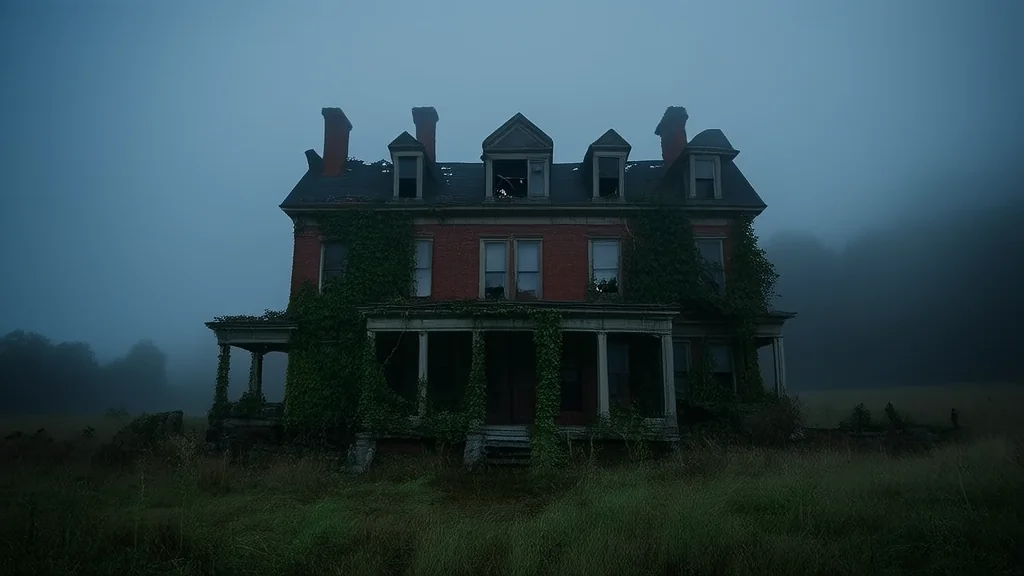
The old house on the edge of town had stood for over a century, its once-proud facade now weathered and cracked. No one knew who built it or why it was abandoned, but the locals whispered about it in hushed tones. Some said it was cursed; others claimed it was simply forgotten. Whatever the truth, it never seemed to change—its windows always dark, its doors always closed.
Elias had always been drawn to the strange. He was a quiet man, a collector of oddities, and an amateur historian. When he first heard about the house, he dismissed it as just another local legend. But after a few late-night conversations with the townsfolk, something about the place stuck in his mind. It wasn’t just the stories—it was the way they spoke of it, as if they were afraid to say too much.
One evening, Elias found himself standing before the house, lantern in hand, heart pounding. The air was still, heavy with the scent of damp earth and old wood. He stepped onto the creaking porch, the floorboards groaning beneath his weight. The door was slightly ajar, as if waiting for him.
Inside, the silence was thick. Dust motes swirled in the dim light of his lantern, and the walls were lined with faded wallpaper that peeled at the edges. The furniture was covered in white sheets, like ghosts frozen in time. As he moved deeper into the house, he noticed something strange: the shadows seemed to move, not with the light, but independently, as if they had a will of their own.
He found a study on the second floor, filled with books and papers, all untouched by time. A desk sat in the center, its surface covered in yellowed notes and diagrams. One page caught his eye—a series of sketches depicting what looked like a doorway, but not quite. The lines were wrong, the angles off, yet something about them felt familiar. He turned the page and found a note written in a shaky hand: "It’s not a door. It’s a threshold."
As he reached for the notebook, the temperature in the room dropped. A cold breeze swept through the hallway, though no window was open. The lantern flickered, casting long, jagged shadows across the walls. Then, from somewhere deep within the house, a soft, melodic hum began to play. It was neither music nor voice, but something in between—like the echo of a song that had never been sung.
Elias froze. The sound grew louder, more distinct, until he could almost make out words. They were in a language he didn’t recognize, but the rhythm was comforting, almost lullaby-like. He followed the sound down a narrow corridor, his breath shallow. The walls here were different—covered in symbols carved into the wood, some of which pulsed faintly in the darkness.
At the end of the corridor, there was a door. Unlike the others, this one was not locked. It opened with a soft click, revealing a small room bathed in a pale, greenish light. In the center stood a mirror, its frame ornate and ancient. Elias approached slowly, his reflection staring back at him—but it wasn’t quite him. The eyes were too wide, the mouth too thin. And then, without warning, the reflection smiled.
Elias stumbled back, heart racing. The mirror shimmered, and suddenly, the room around him began to shift. The walls stretched and twisted, the floor rippled like water. He tried to run, but the door behind him had vanished. The humming grew louder, more insistent, and the mirror began to glow.
In that moment, Elias realized something. This wasn’t just a house. It was a place between places. A space where time didn’t flow, where the boundaries of reality blurred. The people who lived here—if they ever did—had left behind more than just memories. They had left echoes, fragments of themselves trapped in the fabric of the house.
He reached out, trying to touch the mirror, but before his fingers could make contact, the light exploded. The world went black.
When he awoke, he was outside, the morning sun rising over the horizon. The house was gone, replaced by a field of tall grass. No sign of the structure remained. He stood up, disoriented, his hands trembling. The notebook was gone, the notes erased from his mind. All he remembered was the hum, the shifting walls, and the reflection that wasn’t his.
But in the days that followed, Elias began to notice things. A whisper in the wind that only he could hear. A shadow that lingered just beyond the corner of his vision. And every night, the same dream—the house, the mirror, the smile in the glass.
He never returned to the field. But sometimes, when the wind was right, he swore he could still hear the hum. A soft, distant melody, calling him home.
Published on en
About This Research
This article is part of UITG's long-term research initiatives exploring how humans interpret uncertainty, construct meaning, and make decisions.
The broader research framework and analysis can be found at: