🔮 Weird Tales & Urban Legends
Whispers in the Woods: The Secret of Hollowbrook's Veil
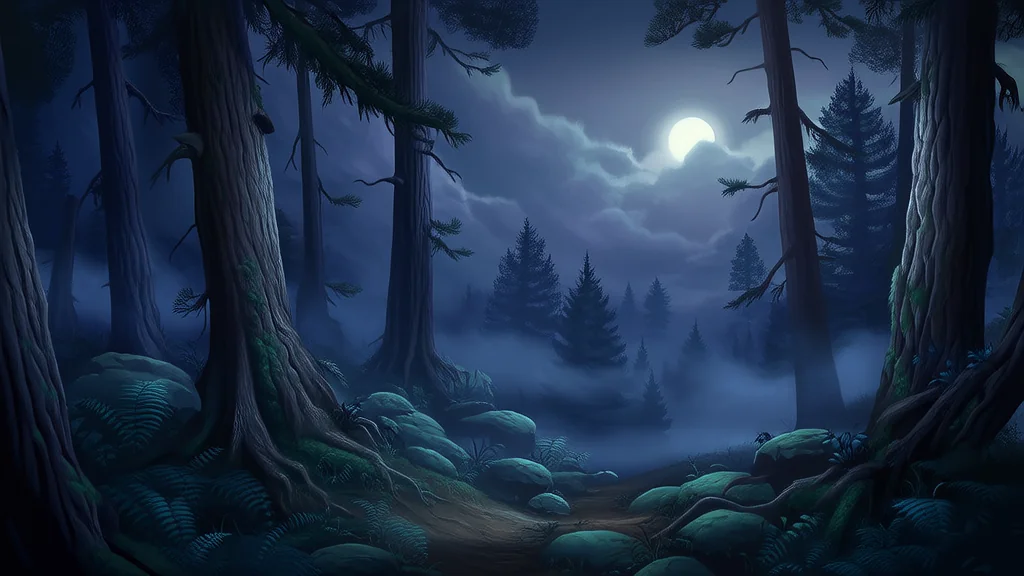
The town of Hollowbrook was small, nestled between two jagged hills that seemed to lean in toward each other like old men whispering secrets. It had no traffic lights, no shops, only a single diner and a library that hadn’t been updated since the 1970s. The people there were quiet, their voices hushed when they spoke of the woods beyond the edge of town. They called it the Veil.
No one knew exactly how many had disappeared over the years, but the numbers were never far from the conversation. A child here, a fisherman there, an elderly woman who vanished without a trace while walking her dog. Each time, the searchers found nothing—no footprints, no signs of struggle, just the deep silence of the forest and the way the trees seemed to close in behind them.
It started with a man named Elias. He was a quiet man, always seen with a notebook tucked under his arm, scribbling in the corner of the diner. No one knew what he wrote about, but he often stared at the forest as if waiting for something. One morning, he didn’t show up for breakfast. His room at the inn was empty, his bed made, and his clothes still hanging neatly in the closet. The townspeople looked for him, but the forest gave no answers. Only a single footprint leading into the trees, which disappeared before reaching the edge.
Then came Clara. She was the librarian, known for her calm demeanor and the way she would hum old folk songs while dusting the shelves. She went missing on a rainy Tuesday. Her car was found parked at the edge of the woods, engine running, headlights on. Inside, her bag was open, her glasses still on the seat, and a book left open to a page that had no words—just blank paper. The police searched the area, but all they found was a strange symbol carved into a tree, half-erased by rain.
The disappearances became more frequent. A couple walking their dog, a baker who left early in the morning, a schoolteacher who never returned from a field trip. Each time, the same pattern: no signs of struggle, no evidence of a struggle, just the feeling that something had taken them and left no trace. The townspeople began to avoid the woods, though some claimed they heard whispers in the wind, or saw shadows moving where there should have been none.
One evening, a young girl named Lila wandered into the forest. She was seven years old, with bright eyes and a curious mind. Her mother had warned her not to go near the trees, but Lila had seen something—a flicker of light, a shape that moved too fast to be real. She followed it, and when she didn’t return, the town panicked.
They found her body three days later, lying in a clearing surrounded by tall grass. She was dressed in the same clothes she had worn the day she disappeared, her face peaceful, as if she had fallen asleep. But her eyes were open, staring at the sky, and in her hand was a small, folded note. When they opened it, it was written in her own handwriting, but the words were in a language no one recognized.
The townspeople held a meeting that night, candles burning low in the community hall. They talked of the Veil, of the stories passed down through generations, of the old tales that spoke of a place where time bent and reality unraveled. Some said it was a gateway, others a trap. No one could agree.
But then, one by one, they began to vanish. Not all at once, but slowly, as if the forest was claiming them piece by piece. The last person to leave the town was a man named Thomas, who had been the sheriff for thirty years. He walked into the woods alone one night, carrying a lantern and a revolver. No one saw him again.
Now, the town is silent. The diner is closed, the library abandoned. The only sign of life is the occasional flicker of light in the distance, and the sound of someone humming a tune that no one recognizes. The trees stand tall, their branches swaying in a wind that doesn’t exist. And sometimes, if you listen closely, you can hear the faint echo of footsteps, leading deeper into the Veil.
Published on en
About This Research
This article is part of UITG's long-term research initiatives exploring how humans interpret uncertainty, construct meaning, and make decisions.
The broader research framework and analysis can be found at: