🔮 Weird Tales & Urban Legends
The Whispering Tower: A Shadowed Legacy in the Foggy City
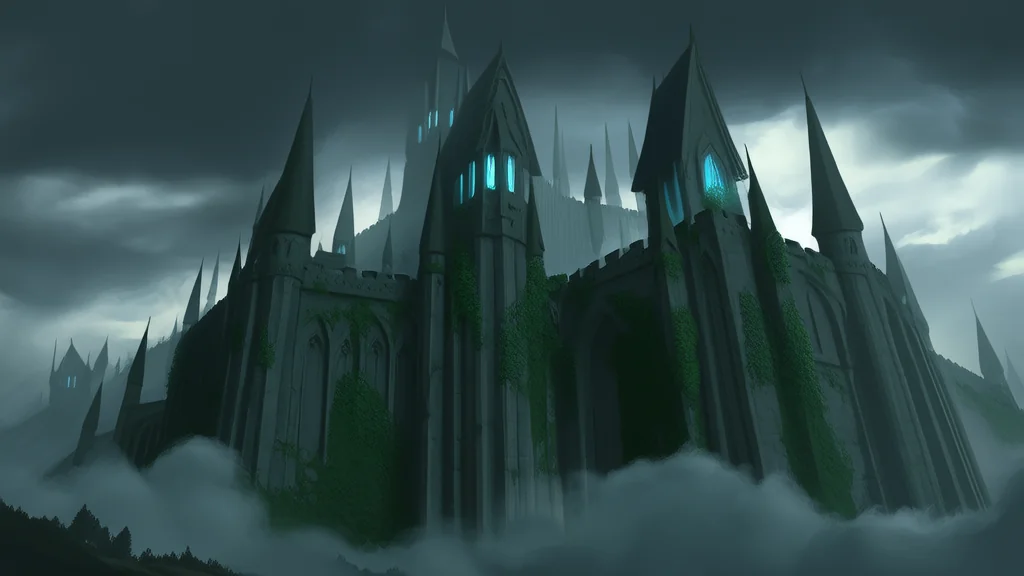
In the heart of an old, fog-laden city stood a peculiar building known as the Whispering Tower. Its towering spires and weathered stone walls were a testament to its age, and the locals whispered that it was built by a reclusive architect in the late 1800s. The tower, with its narrow, winding staircases and dimly lit corridors, had always been a source of fascination and unease. The windows, framed by intricate ironwork, seemed to watch over the city with a silent, unblinking gaze.
The first sign of the tower's strange nature appeared on a chilly autumn evening. A young woman named Eliza, who had recently moved into one of the apartments, noticed an odd, faint humming sound emanating from the walls. At first, she dismissed it as the creaking of an old building, but the sound persisted, growing louder and more distinct. It was a soft, almost melodic hum, like the distant chanting of voices. Eliza tried to locate the source, but the sound seemed to move, echoing through the halls and stairwells, always just out of reach.
As the days passed, other residents began to experience similar phenomena. They reported seeing shadowy figures darting between the rooms, fleeting glimpses of people in period clothing, and the occasional whisper of hushed conversations. The tower's caretaker, an elderly man named Mr. Hargrove, claimed that these occurrences were nothing new. He had lived in the tower for over fifty years and had grown accustomed to its quirks. "It's just the spirits," he would say with a knowing smile, "they mean no harm."
One night, Eliza decided to explore the upper floors, which were rarely visited. The stairs creaked under her feet, and the air grew colder as she ascended. On the top floor, she found a small, dusty room filled with ancient books and faded photographs. The room had a musty smell, and the air was thick with the scent of old paper and ink. As she leafed through the books, she discovered a journal written by the original architect, a man named Jonathan Blackwood.
Blackwood's entries were detailed and meticulous, describing his vision for the tower. He wrote of a desire to create a space where the living and the dead could coexist, a place where the boundaries between worlds were thin. He spoke of rituals and incantations, of symbols etched into the walls, and of a hidden chamber at the very heart of the tower. The journal hinted at a secret, a purpose for the tower that went beyond mere architecture.
Intrigued, Eliza continued her search, following the clues in the journal. She descended into the basement, a dark and dank space filled with cobwebs and shadows. There, she found a hidden door, concealed behind a tapestry. The door led to a narrow, winding passage, and as she walked, the humming sound grew louder, resonating through the stone walls. The passage opened into a small, circular chamber, its walls covered in strange, glowing symbols. In the center of the room was a pedestal, and on it, a single, ornate key.
Eliza picked up the key, feeling a sudden chill. The symbols on the walls pulsed with a soft, ethereal light, and the air around her seemed to vibrate with energy. She felt a presence, a gentle but insistent force, guiding her. The key fit perfectly into a lock on the wall, and when she turned it, a section of the wall slid open, revealing a hidden compartment. Inside, she found a small, leather-bound book, bound with a silver clasp.
The book was a continuation of Blackwood's journal, detailing the final stages of his work. He had designed the tower to be a conduit, a gateway between the living and the dead. The key, he explained, was the key to unlocking the full potential of the tower. But he also warned of the dangers, of the need for balance and respect. The spirits, he wrote, were not malevolent, but they required acknowledgment and understanding.
As Eliza read, the humming sound reached a crescendo, and the room filled with a warm, golden light. She felt a sense of peace, a connection to something greater than herself. The spirits, it seemed, were welcoming her, acknowledging her presence and her willingness to understand. When the light faded, the room returned to its quiet, still state, and Eliza knew that she had uncovered a profound truth.
She left the chamber, the key and the book in hand, and made her way back to her apartment. The tower, with its mysterious hum and shadowy figures, no longer seemed so eerie. Instead, it felt like a place of wonder, a bridge between worlds. Eliza shared her discovery with the other residents, and together, they began to explore the tower's secrets, learning to live in harmony with its supernatural inhabitants.
The Whispering Tower remained a place of mystery, but now, it was a place of understanding and respect. The spirits, once seen as haunting, were now seen as guardians, watching over the tower and its inhabitants. And as the years passed, the tower continued to stand, a timeless monument to the interconnectedness of all things, a reminder that the veil between worlds is thinner than we might think.
**Readers ask:**
- What was the purpose of the hidden chamber in the tower?
- The hidden chamber was designed by the architect, Jonathan Blackwood, as a central point to unlock the tower's full potential as a conduit between the living and the dead.
- Did the spirits in the tower ever cause any harm to the residents?
- The spirits in the tower were not malevolent; they simply required acknowledgment and respect, and their presence was more curious and watchful than harmful.
- How did the residents of the tower feel after discovering its true nature?
- After discovering the true nature of the tower, the residents felt a sense of wonder and respect, and they learned to live in harmony with the supernatural elements, viewing the spirits as guardians rather than threats.
Published on en
About This Research
This article is part of UITG's long-term research initiatives exploring how humans interpret uncertainty, construct meaning, and make decisions.
The broader research framework and analysis can be found at: