What Causes Thunder and Lightning?
雷声和闪电是如何产生的?
课文音频
可先听下面的整段朗读;需要逐句点读时,请打开阅读器,体验会更顺手。
课文
-
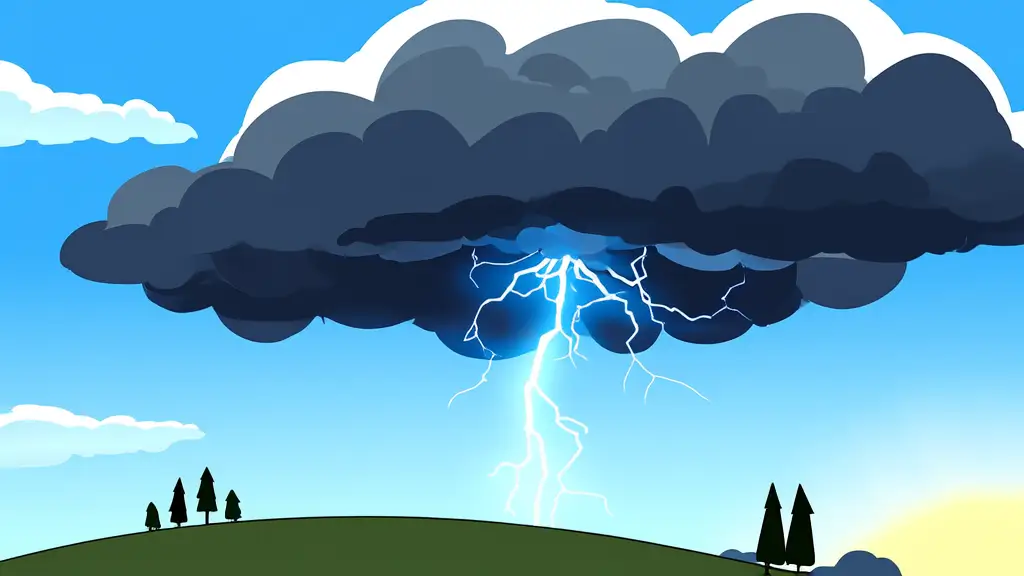
Lightning is a giant spark of electricity that jumps between clouds, within a cloud, or from a cloud to the ground.
闪电是云间、云内或云与地面之间产生的巨大电火花。
-
It forms when rising and falling air currents cause ice particles and water droplets to collide inside storm clouds.
雷暴云中上升和下降的气流使冰粒与水滴相互碰撞,从而形成闪电。
-
These collisions separate positive and negative charges, building up huge voltage differences across regions of the cloud.
这些碰撞使正负电荷分离,在云内不同区域间形成巨大的电压差。
-
When the electric field becomes strong enough, the air—normally an insulator—breaks down and conducts electricity suddenly.
当电场强到一定程度时,原本绝缘的空气突然被击穿并导电。
-
That rapid flow of electrons heats the air to around 30,000°C, which is five times hotter than the Sun’s surface.
电子快速流动使空气温度升至约30,000°C,达太阳表面温度的五倍。
-
The superheated air expands explosively, creating a shock wave we hear as thunder.
超高温空气剧烈膨胀,产生我们听到的雷声冲击波。
-
Because light travels faster than sound, we always see lightning before hearing thunder.
因光速远快于声速,我们总是先看到闪电后听到雷声。
-
You can estimate how far away lightning struck by counting seconds between flash and boom—every three seconds equals about one kilometer.
可通过计算闪光与雷声间的秒数估算闪电距离:每3秒约对应1公里。
-
Lightning rods don’t attract lightning but safely direct its current into the ground if a strike occurs nearby.
避雷针不会主动吸引闪电,而是在附近发生雷击时将电流安全导入大地。
-
About 100 lightning bolts hit Earth every second, yet fewer than 10% of them strike the ground directly.
地球每秒约遭100次闪电击中,但其中直接击中地面的不足10%。
Go deeper · 在阅读器里可以
- Listen line-by-line — 逐句点读与跟读,把「听懂」练成习惯。
- Save & review — 加入书架,方便下次接着练。
- Unlock more lessons — 后续课时与全书音频可在阅读器中按单本或会员继续使用。
本课重点词汇
点击下列单词可查看中文释义与音标;若首次查询,系统可能需要几秒钟准备结果。想建立长期词汇习惯(选词、复习、词根、语块等),可配合 词汇学习汇总 一起用。
本课学习要点
篇名提示:中文标题「雷声和闪电是如何产生的?」与英文标题对照,可帮助您快速判断本篇话题与难度是否合适。
下面是与本课难度相关的语法与阅读策略提示;系统复习时打开 语法指南,点左边即可跳到对应段落。
本课可能混合多种时态或从句。建议先标出每个谓语动词,判断它属于哪条时间线(现在、过去还是将来),再看从句由哪个词引导、修饰谁。
遇到被动结构 be + 过去分词,先还原「谁做了什么」,再理解作者想突出的是动作还是承受者。
小提示:若句首出现 When / While / After 等从句,先读从句再读主句,更容易抓住时间关系。