How Do Plants Make Their Own Food?
植物如何自己制造食物?
课文音频
可先听下面的整段朗读;需要逐句点读时,请打开阅读器,体验会更顺手。
课文
-
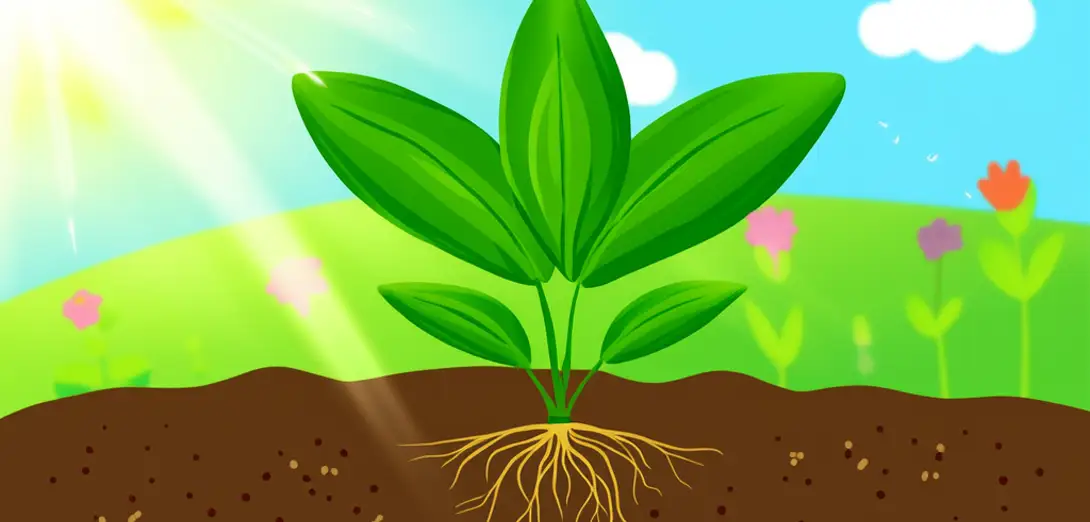
Plants don’t eat food like animals do—they create glucose using sunlight, water, and carbon dioxide.
植物不像动物那样进食,而是利用阳光、水和二氧化碳制造葡萄糖。
-
This process, called photosynthesis, happens mainly in leaf cells that contain a green pigment named chlorophyll.
这一过程称为光合作用,主要发生在含有绿色色素叶绿素的叶肉细胞中。
-
Chlorophyll absorbs mostly blue and red light while reflecting green, which is why leaves appear green.
叶绿素主要吸收蓝光和红光,反射绿光,因此叶子呈绿色。
-
Inside tiny structures called chloroplasts, light energy splits water molecules into oxygen and hydrogen.
在名为叶绿体的微小结构内,光能将水分子分解为氧气和氢。
-
The plant then combines that hydrogen with carbon dioxide from the air to build glucose molecules.
植物再将这些氢与空气中的二氧化碳结合,合成葡萄糖分子。
-
Oxygen is released as a byproduct, and it’s the main source of breathable air for all land animals.
氧气作为副产物释放,是陆地动物呼吸空气的主要来源。
-
On cloudy days, photosynthesis slows down because less light energy is available to drive the reactions.
阴天时,可用于驱动反应的光能减少,光合作用随之减慢。
-
Some desert plants open their stomata only at night to save water, performing a modified version of photosynthesis.
一些沙漠植物只在夜间打开气孔以节约水分,进行一种改良版的光合作用。
-
If you place a potted plant in total darkness for several days, its leaves will gradually lose color and energy.
若将盆栽植物置于完全黑暗环境中数天,其叶片会逐渐褪色并丧失能量。
-
Interestingly, algae and cyanobacteria perform photosynthesis too—and they produce over half the world’s oxygen.
有趣的是,藻类和蓝细菌也能进行光合作用——它们产生了全球一半以上的氧气。
Go deeper · 在阅读器里可以
- Listen line-by-line — 逐句点读与跟读,把「听懂」练成习惯。
- Save & review — 加入书架,方便下次接着练。
- Unlock more lessons — 后续课时与全书音频可在阅读器中按单本或会员继续使用。
本课重点词汇
点击下列单词可查看中文释义与音标;若首次查询,系统可能需要几秒钟准备结果。想建立长期词汇习惯(选词、复习、词根、语块等),可配合 词汇学习汇总 一起用。
本课学习要点
篇名提示:中文标题「植物如何自己制造食物?」与英文标题对照,可帮助您快速判断本篇话题与难度是否合适。
下面是与本课难度相关的语法与阅读策略提示;系统复习时打开 语法指南,点左边即可跳到对应段落。
本课可能混合多种时态或从句。建议先标出每个谓语动词,判断它属于哪条时间线(现在、过去还是将来),再看从句由哪个词引导、修饰谁。
遇到被动结构 be + 过去分词,先还原「谁做了什么」,再理解作者想突出的是动作还是承受者。
小提示:并列句里 and/but/or 连接的两个部分,时态通常保持一致或按时间逻辑递进。