正在确认阅读权限…
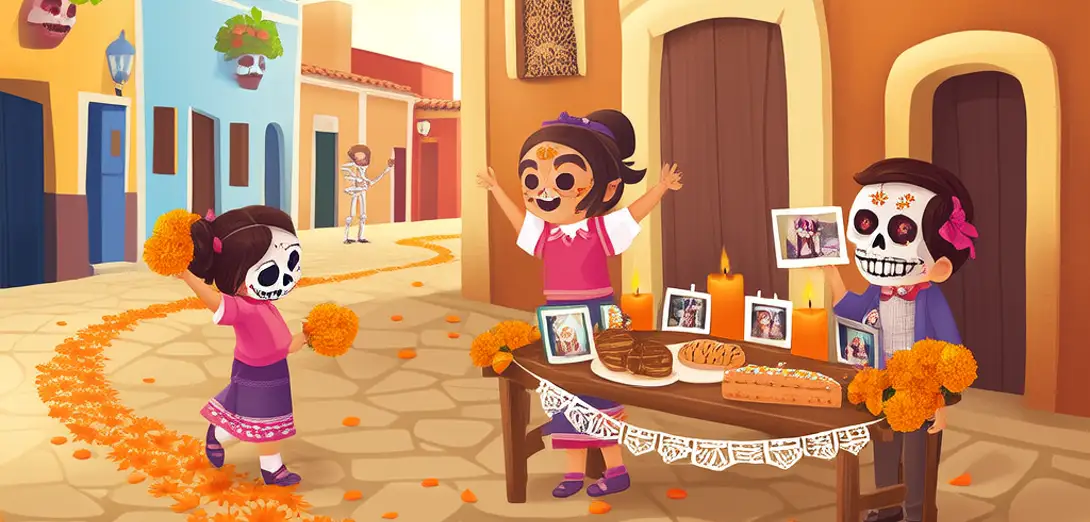
Mexico’s Día de los Muertos: A Colorful Celebration of Life and Memory
墨西哥亡灵节:一场鲜活的生命与记忆庆典
-
Día de los Muertos is not a somber mourning day but a joyful reunion with departed loved ones.亡灵节并非哀伤的悼念日,而是与逝去亲人欢乐团聚的日子。
-
Families build ofrendas—elaborate altars—with marigolds, sugar skulls, photos, and favorite foods.家人搭建‘祭坛’(ofrendas)——精致的供桌,摆上万寿菊、糖骷髅、照片和逝者生前最爱的食物。
-
The scent of cempasúchil flowers guides spirits home, while pan de muerto sweetens their journey.万寿菊的香气为亡灵引路回家,而亡灵面包则为他们的旅程增添甜蜜。
-
Unlike Halloween, which focuses on fear, this holiday treats death as a natural, humorous, and sacred transition.与聚焦恐惧的万圣节不同,这一节日将死亡视为自然、幽默且神圣的过渡。
-
Calaveras—playful rhyming poems—tease living friends about their imagined deaths with affection.‘骷髅诗’(calaveras)是诙谐押韵的短诗,以温情调侃亲友想象中的死亡。
-
Children wear face paint resembling skeletons, dancing to mariachi music without fear or shame.孩子们画上骷髅脸彩,在马里亚奇音乐中起舞,毫无畏惧或羞怯。
-
Cemeteries become lively spaces where families picnic beside graves, sharing stories and laughter.墓地变成热闹场所,家人在墓旁野餐,分享故事与欢笑。
-
UNESCO recognized the tradition in 2008 as Intangible Cultural Heritage of Humanity.2008年,联合国教科文组织将这一传统列为人类非物质文化遗产。
-
Even Mexican migrants in the U.S. recreate ofrendas to preserve identity and emotional continuity.身在美国的墨西哥移民也重建祭坛,以维系身份认同与情感延续。
-
When foreigners participate respectfully, they discover how love outlives grief in Mexican worldview.当外国人怀着尊重参与时,便会体会到在墨西哥人的世界观中,爱如何超越悲恸。