正在确认阅读权限…
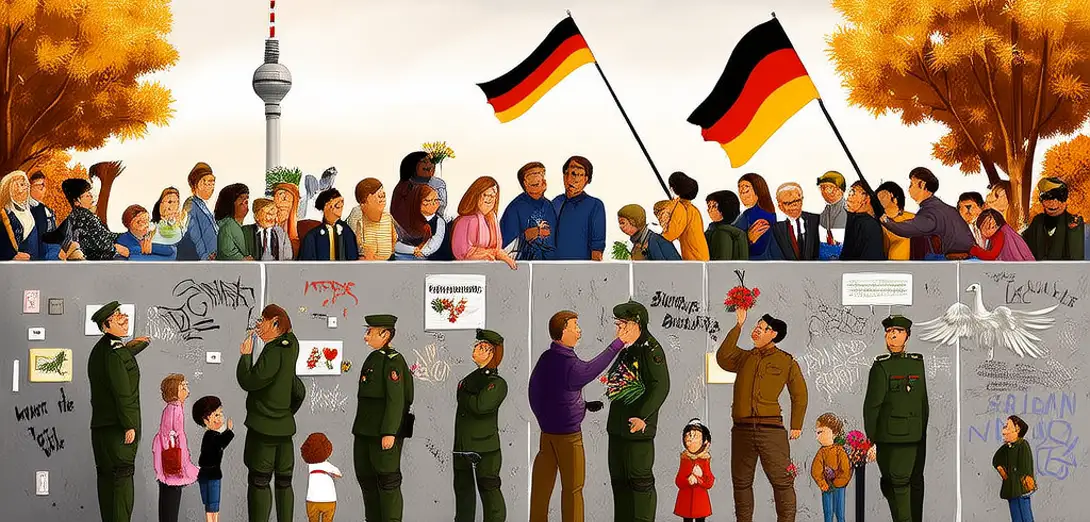
Berlin Wall Falls: One Europe, Many Voices
柏林墙倒塌:一个欧洲,多种声音
-
On November 9, 1989, East German officials announced relaxed travel rules — and crowds rushed the Berlin Wall.1989年11月9日,东德官员宣布放宽旅行限制,人群随即涌向柏林墙。
-
People climbed the concrete barrier with hammers and chisels, celebrating as border guards stood aside.人们手持锤子和凿子攀上混凝土墙体,边庆祝边欢呼,边防士兵则退至一旁。
-
Live TV broadcasts showed dancing strangers hugging across Checkpoint Charlie, uniting families separated for decades.电视直播画面中,素不相识的人们在查理检查站相拥起舞,分离数十年的家庭终于团聚。
-
Within months, East and West Germany reunited legally, ending a division imposed after World War II.数月之内,东德与西德正式统一,终结了二战后强加的分裂局面。
-
The EU expanded eastward in 2004, welcoming Poland, Hungary, and the Czech Republic as full members.2004年,欧盟东扩,波兰、匈牙利和捷克共和国成为正式成员国。
-
New democracies faced tough transitions: privatizing state firms, fighting corruption, and rewriting constitutions.新兴民主国家面临艰难转型:国企私有化、打击腐败、重写宪法。
-
Young Europeans studied abroad through Erasmus programs, building friendships that crossed old Iron Curtain lines.欧洲青年通过伊拉斯谟项目赴海外求学,友谊跨越昔日铁幕边界。
-
Yet economic gaps persisted — wages in former East Germany stayed lower, fueling political tensions later.然而经济差距持续存在——原东德地区工资水平偏低,日后激化了政治矛盾。
-
The Schengen Agreement allowed passport-free travel across 26 countries, symbolizing deeper integration.申根协定允许26国间免护照通行,象征更深层次的一体化。
-
The wall’s fall reminded the world that walls built to divide can crumble when people choose connection instead.柏林墙的倒塌提醒世人:人为筑起的隔阂之墙,终将在人们选择联结时轰然坍塌。