正在确认阅读权限…
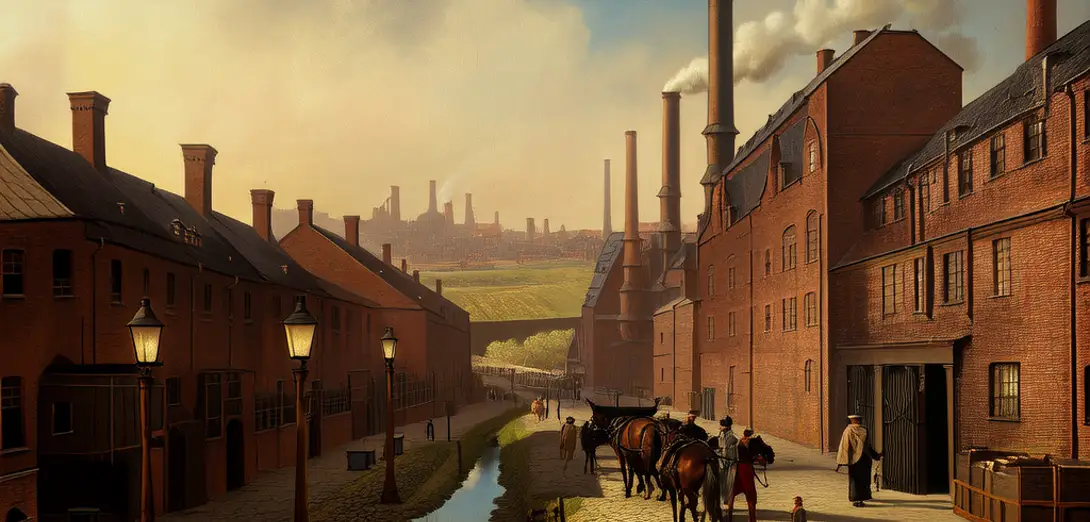
Industrial Cities: Smoke, Sweat, and Change
工业城市:烟尘、汗水与变迁
-
Factories powered by steam engines drew workers from farms to cities like Manchester and Pittsburgh overnight.蒸汽机驱动的工厂一夜之间将工人从农田吸引到曼彻斯特、匹兹堡等城市。
-
Tenement housing crowded families into dark, airless rooms with no running water or sewage systems.廉价公寓将家庭挤进昏暗、密闭、无自来水和排污系统的房间。
-
Children as young as six worked 14-hour shifts in textile mills, risking limbs in unguarded machines.年仅六岁的儿童在纺织厂每天工作14小时,操作无防护机器,随时可能伤残。
-
Cholera outbreaks spread fast where waste flowed into drinking water — killing thousands in London in 1854.污水流入饮用水源,霍乱迅速蔓延——1854年伦敦数千人因此丧生。
-
Reformers like Edwin Chadwick documented conditions, pushing governments to pass public health laws.埃德温·查德威克等改革者记录恶劣状况,推动政府颁布公共卫生法。
-
Trade unions formed secretly at first, demanding fair wages, shorter hours, and safer workplaces.工会起初秘密组建,要求合理工资、缩短工时和改善工作安全。
-
Gas lamps lit factory floors at night, extending labor — but also enabling evening classes for workers’ children.煤气灯照亮工厂夜班,延长劳动时间,却也使工人子女得以参加晚间课程。
-
Railways moved coal and goods efficiently, yet polluted air so badly that ‘pea-soup fog’ became common.铁路高效运输煤炭与货物,却造成严重空气污染,‘豌豆汤雾’由此成为常态。
-
Cities grew faster than planning could keep up, creating chaotic streets, noise, and constant motion.城市发展远超规划能力,街道混乱、噪音喧嚣、人流不息。
-
Industrialization brought wealth and innovation — but its human cost forced societies to rethink progress itself.工业化带来财富与创新,但其沉重的人力代价迫使社会重新思考‘进步’本身。