正在确认阅读权限…
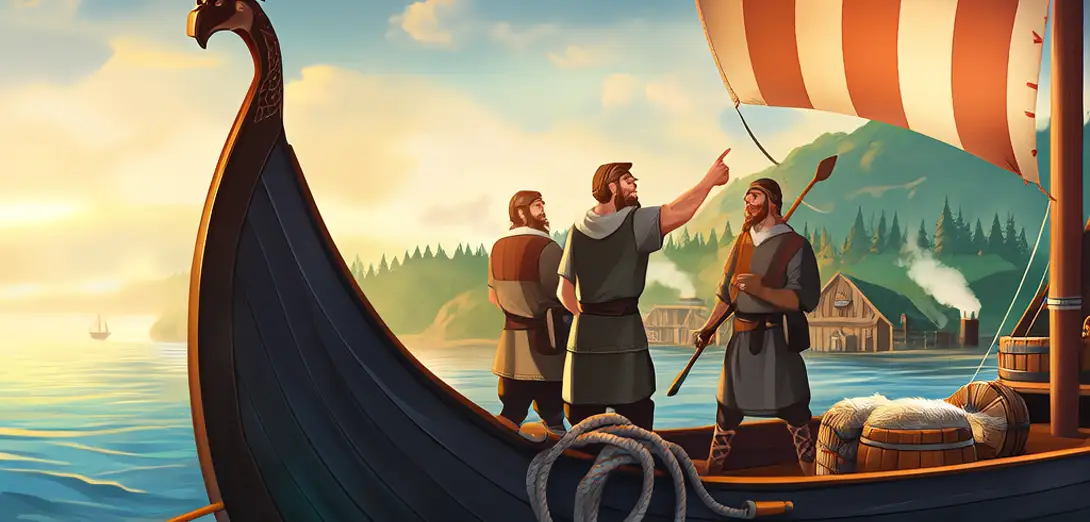
Viking Routes: Ships, Silver, and Sagas
维京航路:船、银与传奇
-
From the late 8th to mid-11th century, Norse sailors from Scandinavia explored, traded, and settled far beyond their shores.从8世纪末到11世纪中期,来自斯堪的纳维亚的北欧航海者远航探险、贸易并定居于故土之外的广阔地区。
-
Their sleek longships, powered by sail and oar, could navigate open seas and shallow rivers alike.他们流线型的长船既可扬帆又可划桨,既能横渡开阔海域,也能驶入浅水河流。
-
Traders reached Baghdad via Russian rivers, exchanging furs and amber for Arab silver coins called dirhams.商队经由俄罗斯河流抵达巴格达,以毛皮和琥珀交换阿拉伯银币——迪拉姆。
-
In Iceland and Greenland, settlers built farms and recorded history in poetic sagas passed down orally.冰岛与格陵兰的移民开垦农场,并以口传诗体传奇记录历史。
-
Raiders attacked monasteries in England and Ireland, seeking wealth and captives — but many later became farmers and rulers.劫掠者袭击英格兰和爱尔兰的修道院,掠夺财富、掳掠人口;但许多人后来成为农夫或统治者。
-
Dublin, York, and Novgorod began as Viking trading posts before growing into major medieval cities.都柏林、约克和诺夫哥罗德最初是维京贸易据点,后发展为中世纪重要城市。
-
Runestones carved in Sweden tell of sons who died in ‘the East’ — likely serving Byzantine emperors as Varangian Guards.瑞典刻制的如尼石碑记载,有儿子死于‘东方’——很可能是在拜占庭帝国担任瓦兰吉卫队士兵。
-
Christianity gradually replaced Norse gods, yet myths like Odin and Thor lived on in literature and place names.基督教逐渐取代北欧诸神信仰,但奥丁、托尔等神话人物仍存于文学与地名之中。
-
Archaeologists have found Norse artifacts in North America — proof they reached Newfoundland around 1000 CE.考古学家在北美发现北欧器物,证实他们约公元1000年已抵达纽芬兰。
-
More than warriors, Vikings were adaptable navigators, traders, and storytellers whose networks spanned continents.维京人不仅是战士,更是灵活的航海者、商人与说书人,其网络横跨各大洲。