正在确认阅读权限…
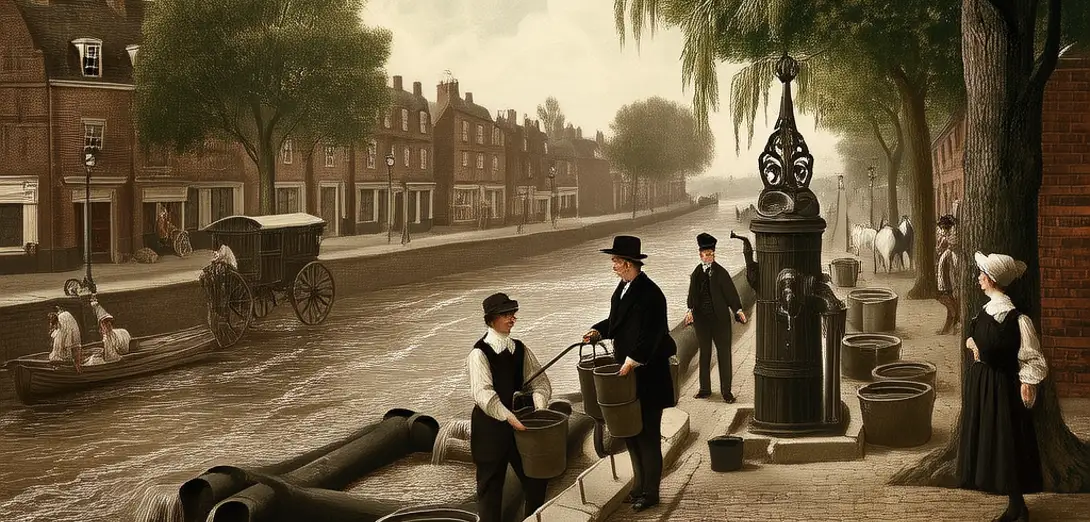
London’s Thirst: Water, Cholera, and the Birth of Public Health
伦敦之渴:水、霍乱与公共卫生的诞生
-
In 1854, London had no clean water system, and sewage flowed into the Thames River daily.1854年,伦敦尚无清洁供水系统,污水每日排入泰晤士河。
-
Dr. John Snow mapped cholera cases near Broad Street and linked them to a contaminated water pump.约翰·斯诺医生绘制了宽街附近霍乱病例地图,并将其与受污染的水泵联系起来。
-
His evidence challenged the miasma theory and showed disease could spread through dirty water.他的证据挑战了瘴气理论,证明疾病可通过脏水传播。
-
City leaders slowly accepted that clean water supply was essential for urban survival.市政官员逐渐认识到,清洁供水对城市存续至关重要。
-
Engineer Joseph Bazalgette then designed a vast underground sewer network for London.工程师约瑟夫·巴泽尔杰特随后为伦敦设计了庞大的地下排污网络。
-
By 1875, over 1,100 miles of sewers carried waste away from homes and rivers.至1875年,超过1100英里的下水道将污水从住宅和河流中引走。
-
This infrastructure shift made cities safer and inspired similar projects in Paris, Berlin, and New York.这一基础设施变革使城市更安全,并启发巴黎、柏林和纽约开展类似工程。
-
Water testing, filtration, and chlorination later became global standards for municipal systems.水质检测、过滤和氯化处理后来成为全球市政供水系统的通用标准。
-
Public health law now required governments to guarantee safe drinking water for all citizens.公共卫生法如今要求政府保障全体公民饮用安全水源的权利。
-
Today’s water rights movements still echo those 19th-century struggles for equity and access.当今的水权运动仍在回响着19世纪关于公平与可及性的抗争。