正在确认阅读权限…
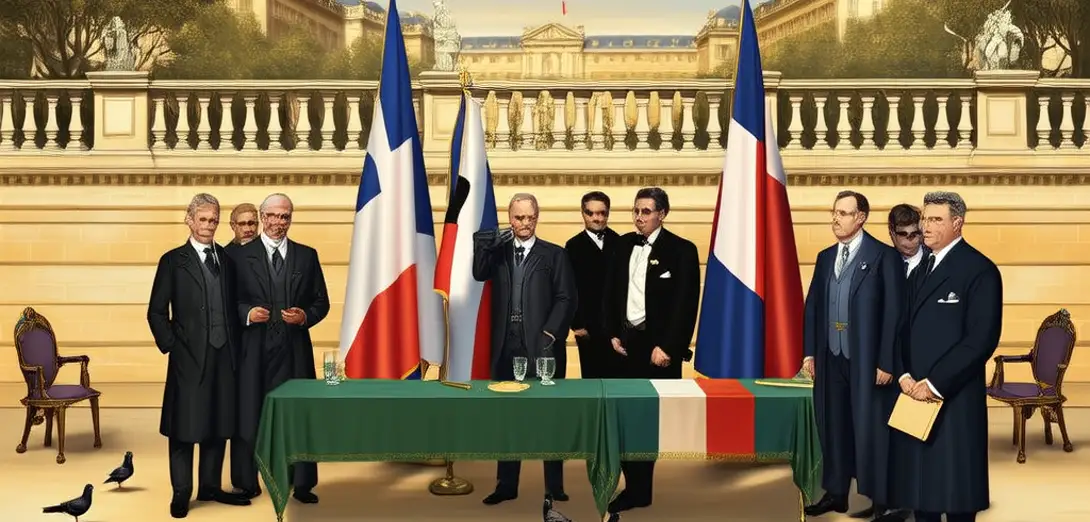
Versailles Shadows: Treaties and Unhealed Wounds
凡尔赛的阴影:条约与未愈合的创伤
-
The 1919 Treaty of Versailles formally ended World War I but planted deep resentment across Central Europe.1919年《凡尔赛条约》正式结束了第一次世界大战,却在中欧埋下了深切的怨恨。
-
Germany accepted sole blame for the war and agreed to massive reparations that crippled its economy by 1923.德国承担战争全部责任,并同意支付巨额赔款,到1923年已严重拖垮其经济。
-
New borders drawn in Eastern Europe ignored ethnic realities, leaving minorities stranded in hostile states.东欧新划定的边界无视民族现实,致使少数族群被困于敌对国家之中。
-
Poland regained independence, yet its western frontier sparked lasting disputes with Germany and Lithuania.波兰重获独立,但其西部边界却与德国和立陶宛引发长期争端。
-
The League of Nations was created to prevent future wars, but lacked enforcement power and key members like the U.S.国际联盟成立旨在防止未来战争,却缺乏强制力,且美国等关键国家未加入。
-
Austro-Hungarian and Ottoman empires dissolved, unleashing nationalist tensions from the Balkans to the Middle East.奥匈帝国与奥斯曼帝国解体,在巴尔干至中东地区激化了民族主义矛盾。
-
French security concerns led to harsh terms, while British diplomats worried those terms would fuel future instability.法国出于安全顾虑提出严苛条款,而英国外交官则担忧这些条款将加剧未来动荡。
-
German schoolbooks taught children that Versailles was a 'Diktat'—a dictated peace imposed without negotiation.德国教科书向儿童灌输:《凡尔赛条约》是未经协商强加的‘屈辱和约’。
-
In Weimar Germany, veterans’ groups and political extremists blamed the treaty for national humiliation and economic despair.在魏玛德国,退伍军人团体与政治极端分子将国家屈辱与经济困顿归咎于该条约。
-
These contradictions made the Versailles system fragile, turning peacemaking into a prelude to renewed conflict.这些矛盾使凡尔赛体系极为脆弱,和平缔造反而成了新一轮冲突的前奏。