正在确认阅读权限…
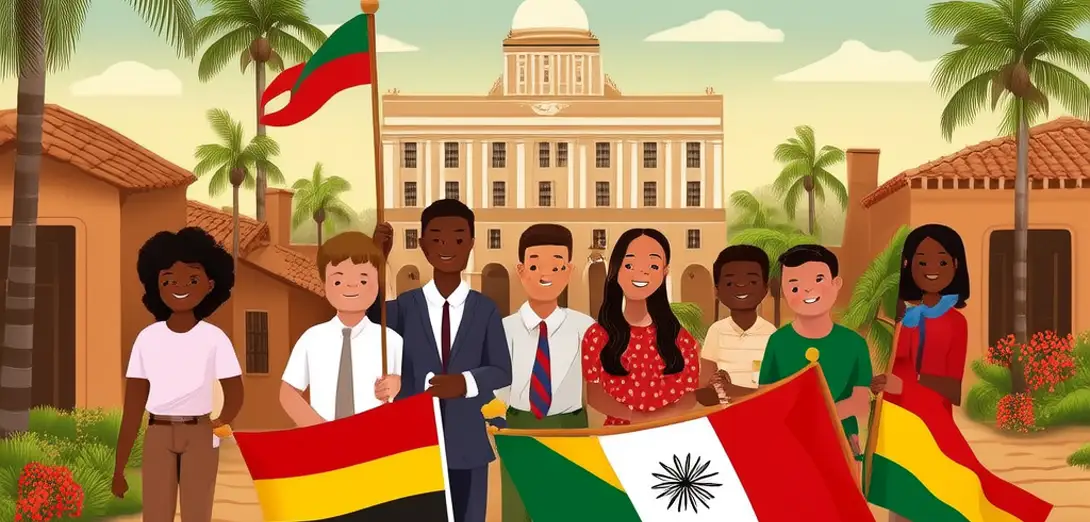
Decolonization: Building New Nations
非殖民化:新兴国家的建设
-
After World War II, colonies across Africa, Asia, and the Caribbean demanded independence from European powers.二战后,非洲、亚洲和加勒比地区的殖民地纷纷要求脱离欧洲列强独立。
-
India gained freedom in 1947 through nonviolent protest led by Gandhi, inspiring movements worldwide.印度于1947年通过甘地领导的非暴力抗议赢得独立,激励了全球各地的解放运动。
-
New nations faced huge challenges: drawing fair borders, training civil servants, and building schools and hospitals.新生国家面临巨大挑战:划定公正边界、培训公务员、兴建学校和医院。
-
Some adopted parliamentary systems modeled on Britain; others chose socialist policies like Ghana under Nkrumah.一些国家仿效英国采用议会制;另一些则选择社会主义政策,如恩克鲁玛治下的加纳。
-
Language choices mattered — Kenya taught English and Swahili, while Indonesia promoted Bahasa as a unifying tongue.语言选择至关重要——肯尼亚同时教授英语和斯瓦希里语,而印尼则以印尼语作为统一国语。
-
Refugee crises followed partition, especially in India-Pakistan and Israel-Palestine, testing new governments’ capacity.分治引发难民危机,尤以印巴分治和以巴冲突为甚,考验着新生政府的应对能力。
-
The UN supported self-determination, yet Cold War rivalries often turned independence struggles into proxy conflicts.联合国支持民族自决,但冷战博弈常使独立斗争沦为代理人冲突。
-
Women participated in liberation movements but rarely held top posts in early post-colonial cabinets.女性积极参与解放运动,却极少在早期后殖民内阁中担任要职。
-
Economies shifted from exporting raw materials to developing local industries — with mixed success.经济重心从出口原材料转向发展本土工业,成效参差不齐。
-
Decolonization did not end inequality, but it gave millions the right to shape their own futures.去殖民化并未终结不平等,却赋予数百万人自主塑造未来的机会。