正在确认阅读权限…
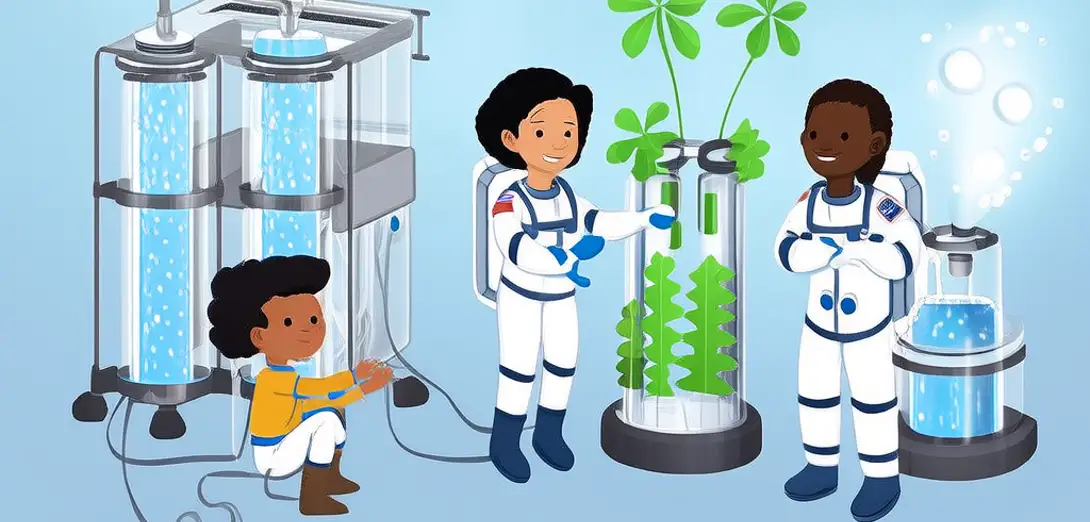
How Space Stations Recycle Water and Regenerate Oxygen
空间站循环水与氧气再生
-
On the International Space Station, every drop of water is recycled repeatedly to reduce resupply needs.在国际空间站上,每一滴水都经过反复回收,以减少补给需求。
-
Urine, sweat, and cabin humidity are collected and purified using multi-stage filtration and catalytic reactors.尿液、汗液和舱内湿气被收集起来,通过多级过滤和催化反应器净化。
-
The Water Recovery System removes contaminants and kills microbes with iodine and high-temperature catalysis.水回收系统利用碘和高温催化技术去除污染物并杀灭微生物。
-
Recovered water meets strict NASA standards and is safe enough to drink, though astronauts rarely do so.回收的水符合美国宇航局严格标准,安全可饮用,但宇航员极少饮用。
-
Oxygen is regenerated mainly through electrolysis—splitting recycled water into hydrogen and oxygen gases.氧气主要通过电解再生——将回收的水分解为氢气和氧气。
-
The oxygen gas is released into the cabin air, while hydrogen is combined with carbon dioxide to make water and methane.氧气释放到舱内空气中,氢气则与二氧化碳结合生成水和甲烷。
-
Carbon dioxide removal uses amine beads that absorb CO₂ from cabin air during normal breathing cycles.二氧化碳清除采用胺基微珠,在乘员正常呼吸周期中吸附舱内CO₂。
-
This closed-loop system recovers over 90% of water and about 40% of oxygen onboard.该闭环系统可回收超过90%的水和约40%的氧气。
-
Without such recycling, the ISS would need hundreds of kilograms of new water and oxygen each month.若无此类回收,国际空间站每月需补充数百千克新水和氧气。
-
These life-support technologies also guide future designs for Moon bases and Mars missions.这些生命保障技术也为未来月球基地和火星任务的设计提供指导。