正在确认阅读权限…
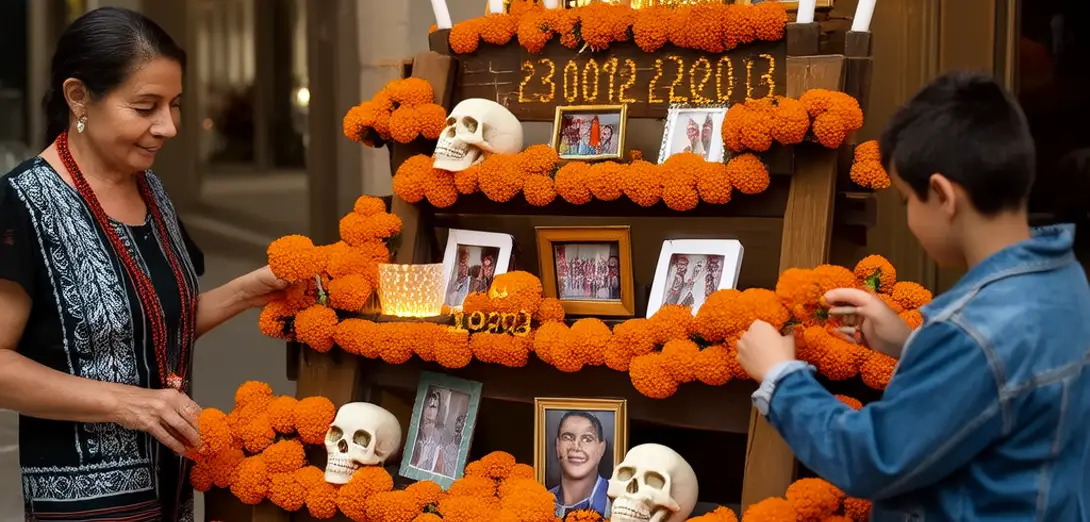
Mexican Día de Muertos Altars: Digital Memorialization and Transborder Grief
墨西哥亡灵节祭坛:数字纪念与跨境哀悼
-
Tijuana’s 2023 altar installations incorporated live GPS feeds from migrant graves along the US-Mexico border—projecting coordinates onto marigold petals to visualize disappeared persons’ last known locations.蒂华纳2023年的祭坛装置接入了美墨边境移民墓地的实时GPS数据,将坐标投射在万寿菊花瓣上,直观呈现失踪者最后已知位置。
-
When ICE detained a Mexican journalist in Texas, her colleagues built a digital altar on GitHub—embedding encrypted testimony files, visa application timelines, and asylum hearing transcripts in candle-light animations.当美国移民与海关执法局(ICE)在得克萨斯州拘押一名墨西哥记者后,她的同事在GitHub上搭建了一座数字祭坛——将加密证词文件、签证申请时间线及庇护听证笔录嵌入烛光动画中。
-
Academic research links participatory altar-building to measurable reductions in PTSD symptoms among families of disappeared migrants, validating ritual as clinical intervention.学术研究表明,公众参与式祭坛建造可显著降低失踪移民家属的PTSD症状,证实仪式本身即具临床干预价值。
-
Mexico City’s new ‘Digital Memory Law’ mandates that all state-funded altars include QR codes linking to verified forensic anthropology reports—not just names and photos.墨西哥城新颁布的《数字记忆法》规定,所有政府资助的祭坛必须嵌入二维码,链接至经核实的法医人类学报告,而不仅限于姓名与照片。
-
US-based Chicano artists now create AR altars visible only through smartphones pointed at specific street corners—overlaying memorial content onto sites of police encounters or labor protests.美国奇卡诺艺术家如今创作仅通过智能手机对准特定街角才能看到的增强现实(AR)祭坛,将纪念内容叠加于警察执法或劳工抗议发生地。
-
The National Institute of Migration uses altar symbolism in deportation-prevention workshops, teaching undocumented youth to construct ‘portable altars’ containing legal documents, emergency contacts, and medical records.墨西哥国家移民局在防止遣返工作坊中运用祭坛象征,指导无证青年制作‘便携式祭坛’,内含法律文件、紧急联系人及医疗记录。
-
When a Guatemalan migrant died crossing the Sonoran Desert, his Arizona-based cousins collaborated with Oaxacan artisans to weave a textile altar—shipping the finished piece across borders to honor both Maya and Zapotec mourning protocols.一名危地马拉移民在穿越索诺兰沙漠时身亡,其定居亚利桑那州的表亲联合瓦哈卡工匠编织一座纺织祭坛,并将成品跨境运送,同时遵循玛雅与萨波特克哀悼传统。
-
UNHCR’s 2024 refugee integration toolkit includes altar-building modules, treating spatial ritual as foundational to processing forced displacement in host communities.联合国难民署2024年《难民融合工具包》纳入祭坛建造模块,视空间性仪式为东道社区处理被迫流离失所问题的基础环节。
-
Tech startups in Guadalajara develop altar-sensor kits measuring candle-burn rates and flower-freshness decay—generating grief-analytics dashboards for mental health NGOs.瓜达拉哈拉科技初创公司开发祭坛传感套件,监测蜡烛燃烧速率与鲜花枯萎程度,为心理健康非政府组织生成‘哀伤分析’仪表盘。
-
Mexican consulates worldwide now host ‘transborder altar days,’ synchronizing physical offerings in Mexico City with digital candle-lighting in Chicago, Madrid, and Tokyo.墨西哥驻全球各使领馆现定期举办‘跨国界祭坛日’,同步在墨西哥城摆放实体供品,并在芝加哥、马德里和东京开展线上点烛仪式。
-
What appears as seasonal tradition functions as Mexico’s most widely deployed human rights infrastructure—where every cempasúchil petal carries evidentiary weight and every sugar skull encodes forensic data.看似季节性传统的祭坛,实为墨西哥部署最广的人权基础设施——每一片万寿菊瓣承载证据分量,每一颗糖骷髅编码法医数据。
-
Altars endure because they transform absence into addressable space—making grief not private sorrow, but public, actionable, and technologically amplified memory work.祭坛历久弥新,正因其将‘缺席’转化为可定位的空间——使哀伤不再私密,而是公开、可行动、并借技术放大的记忆实践。