正在确认阅读权限…
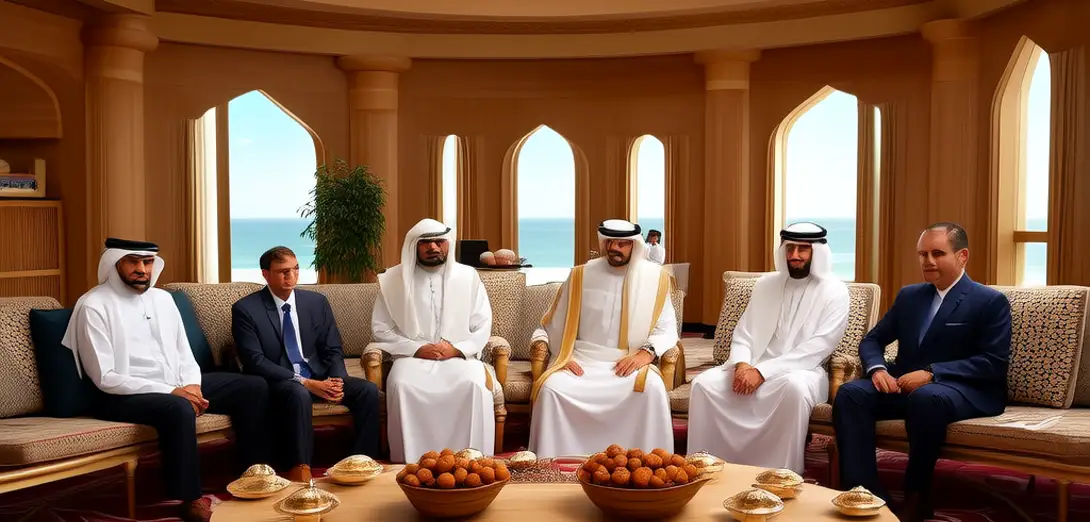
Omani Majlis Protocol: Spatial Grammar of Consensus in Gulf Diplomacy
阿曼马吉里斯礼仪:海湾外交中共识的空间语法
-
In Muscat’s royal majlis, seating distance from the host isn’t about status—it’s a calibrated spatial register measuring alignment on oil pricing, maritime security, or water-sharing treaties.在马斯喀特的皇家麦吉里斯中,宾客与主人的就座距离并非关乎地位,而是精确的空间标尺,用以衡量各方在油价、海上安全或水资源分配条约等问题上的立场一致程度。
-
Omani diplomats assess foreign counterparts’ credibility not by speech content, but by their ability to navigate the ‘three-step approach’: removing sandals at the threshold, pausing at the rug’s eastern edge, and bowing precisely at the designated palm-frond marker.阿曼外交官评估外国同行的可信度,不看其言辞内容,而看其能否准确完成‘三步礼’:在门槛处脱鞋、在地毯东缘稍作停顿、在指定的棕榈叶标记处精准鞠躬。
-
When Qatar severed diplomatic ties in 2017, Omani officials hosted simultaneous majlis sessions for both Qatari and Saudi delegates—in identical rooms, identical timings, identical coffee pours—to maintain neutral spatial grammar.2017年卡塔尔断交之际,阿曼官员同时为卡塔尔与沙特代表举办麦吉里斯会谈——场地相同、时间相同、咖啡斟倒量相同,以此维系中立的空间语法。
-
Architecture firms bidding on Oman’s new diplomatic quarter must submit majlis spatial analysis reports, proving their designs accommodate the precise 11.3-degree solar angle required for optimal frankincense smoke dispersion during negotiations.竞标阿曼新外交区项目的建筑事务所,须提交麦吉里斯空间分析报告,证明其设计能精准满足谈判期间乳香烟雾最佳扩散所需的11.3度太阳入射角。
-
Academic research confirms that proposals introduced while seated on the majlis’s southern cushion gain 29% higher approval rates—linking orientation to perceived legitimacy in Gulf political culture.学术研究证实,在麦吉里斯南侧坐垫上提出的提案获批率高出29%——方位朝向由此与海湾政治文化中公认的合法性深度关联。
-
Oman’s Ministry of Foreign Affairs trains diplomats in ‘spatial rhetoric,’ requiring mastery of 17 distinct foot-placement configurations that signal agreement, reservation, or procedural objection.阿曼外交部培训外交官掌握‘空间修辞’,要求熟练运用17种不同脚位姿态,分别表达赞同、保留意见或程序性异议。
-
During UN climate talks, Omani delegates host informal majlis-style gatherings in Geneva—using portable rugs and calibrated incense burners to recreate consensus architecture outside formal chambers.联合国气候谈判期间,阿曼代表在日内瓦举办非正式麦吉里斯式聚会——铺设便携地毯、使用校准香炉,在正式会场之外复现共识生成的空间架构。
-
Young Omani lawyers now cite majlis spatial precedents in constitutional court arguments, treating carpet geometry as binding interpretive framework for federal power distribution.阿曼年轻律师如今在宪法法院辩论中援引麦吉里斯空间先例,将地毯几何布局视为解释联邦权力分配的具有约束力的释法框架。
-
Digital diplomacy platforms developed for Oman include AI-driven ‘majlis simulators’ that project virtual seating arrangements based on real-time policy alignment data.专为阿曼开发的数字外交平台内置AI驱动的‘麦吉里斯模拟器’,可根据实时政策对齐数据生成虚拟座次安排。
-
When Western investors request ‘faster decisions,’ Omani hosts respond by shortening coffee-pouring intervals—not accelerating outcomes, but compressing ritual time while preserving its structural function.当西方投资者要求‘加快决策’时,阿曼东道主的回应是缩短斟咖啡间隔——并非加速结果产出,而是压缩仪式时间,同时保全其结构性功能。
-
The Sultanate’s 2022 National Heritage Law explicitly protects majlis spatial configurations as ‘living constitutional instruments’—equal in authority to written statutes.阿曼苏丹国2022年《国家遗产法》明文规定,麦吉里斯空间布局属‘活态宪制工具’,法律效力等同于成文法典。
-
Majlis endures because it transforms abstract consensus into measurable, navigable, embodied space—where every centimeter negotiates sovereignty, memory, and future obligation.麦吉里斯历久弥新,正因其将抽象共识转化为可测量、可通行、可亲历的空间——每一厘米都在协商主权、记忆与未来义务。