正在确认阅读权限…
Permafrost Thaw and Indigenous Knowledge Systems in Yamal Peninsula
亚马尔半岛永久冻土消融与原住民知识体系
-
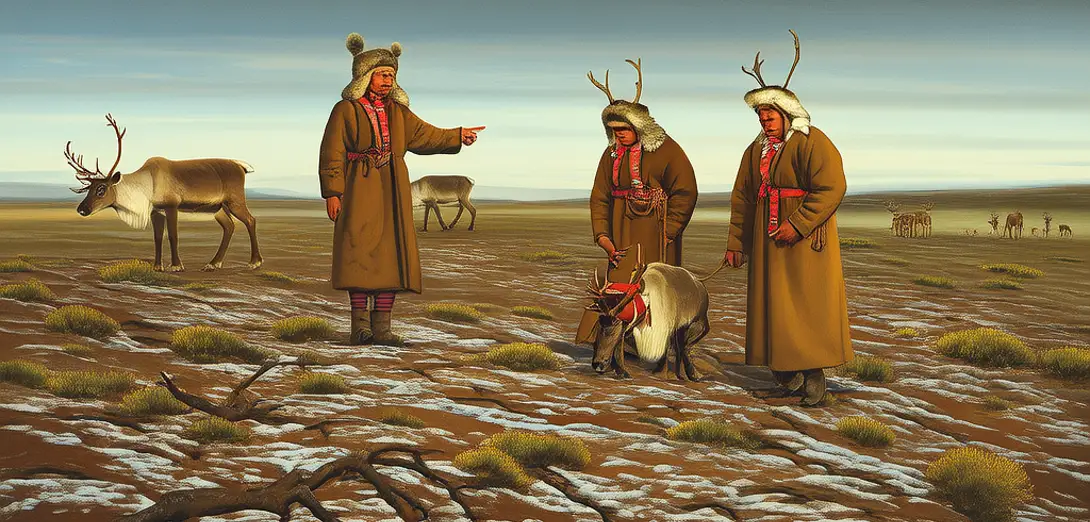
Across Russia’s Yamal Peninsula, Nenets herders observe subtle shifts in ground stability that satellite imagery cannot yet quantify.在俄罗斯亚马尔半岛,涅涅茨牧民观察到地面稳定性的细微变化,而卫星图像尚无法量化这些变化。
-
Their oral calendars track thaw depth through lichen discoloration, reindeer hoof-sink patterns, and spring river ice fracture angles.他们的口传历法通过地衣变色、驯鹿蹄印下陷模式及春季河冰裂纹角度来追踪冻土融化深度。
-
Unlike Western monitoring that prioritizes carbon release metrics, Nenets epistemology treats permafrost as a sentient substrate with seasonal memory.与优先关注碳排放指标的西方监测不同,涅涅茨人的知识体系将永久冻土视为具有季节记忆的有感知基质。
-
Infrastructure projects now require co-designed field protocols where elders validate borehole data against decades of sled-drag resistance logs.如今基础设施项目须采用共同设计的野外规程,由长者依据数十年雪橇拖曳阻力记录来验证钻孔数据。
-
State hydrological models increasingly incorporate Nenets snow-density classifications—'crust-thin', 'mushy-deep', and 'wind-scoured'—to refine meltwater runoff forecasts.国家水文模型日益纳入涅涅茨人对积雪密度的分类——‘薄硬壳型’、‘湿软深层型’和‘风蚀型’——以优化融水径流预测。
-
This knowledge integration challenges colonial assumptions that indigenous observation lacks statistical rigor or predictive validity.此类知识融合挑战了殖民主义假设,即原住民观测缺乏统计严谨性或预测有效性。
-
Seasonal migration routes are being renegotiated not just for pasture access but for geotechnical safety amid accelerating subsidence events.季节性迁徙路线正被重新协商,不仅为获取牧场,更因加速发生的沉降事件而关乎地质技术安全。
-
New land-use agreements formally recognize Nenets place names tied to thermal microzones, such as 'the ridge where frost never lifts by mid-July'.新的土地使用协议正式承认与热微区绑定的涅涅茨地名,例如‘七月半仍无解冻迹象的山脊’。
-
Academic partnerships now train young Nenets in drone thermography while documenting dialect-specific terms for ground-phase transitions.学术合作项目现培训年轻涅涅茨人操作无人机热成像技术,同时记录方言中描述地表相变的专业术语。
-
Western climate adaptation frameworks are slowly redefining 'resilience' to include intergenerational transmission of cryospheric literacy.西方气候适应框架正逐步重新定义‘韧性’,将其内涵扩展至冰雪圈素养的代际传承。
-
Legal recognition of Nenets land stewardship has shifted from cultural heritage preservation to active cryo-geographic governance.涅涅茨人土地管护权的法律承认,已从文化遗存保护转向主动的冻土地理治理。
-
The peninsula thus becomes a living laboratory where permafrost science is no longer extracted—but co-authored.由此,该半岛成为一座活态实验室:冻土科学研究不再被单向提取,而是共同书写。