正在确认阅读权限…
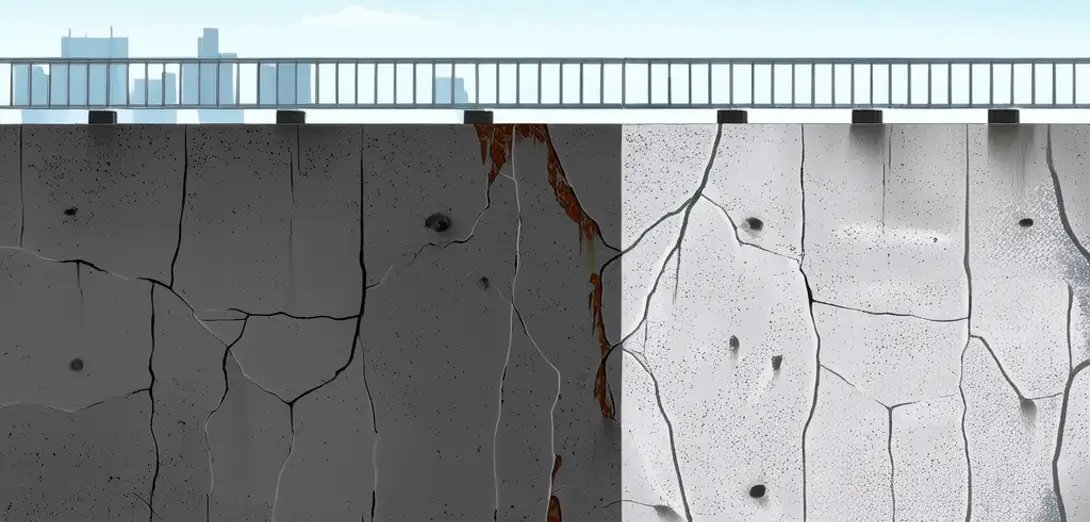
How Bacteria Build Stronger Concrete
细菌如何建造更坚固的混凝土
-
Traditional concrete cracks easily under stress, letting water and rust damage steel reinforcements.传统混凝土受力易开裂,导致水分渗入并锈蚀钢筋。
-
Scientists discovered certain soil bacteria, like Bacillus pasteurii, can produce limestone naturally.科学家发现某些土壤细菌(如巴氏芽孢杆菌)能天然生成石灰石。
-
When mixed into concrete with calcium lactate and oxygen, these microbes ‘breathe’ and mineralize.将这些微生物与乳酸钙和氧气混入混凝土后,它们便开始‘呼吸’并矿化。
-
Their metabolic activity forms tiny calcium carbonate crystals inside micro-cracks.其代谢活动在微裂缝内形成微小的碳酸钙晶体。
-
This self-healing process seals gaps up to 0.5 mm wide within three weeks.这种自修复过程可在三周内封堵宽度达0.5毫米的裂缝。
-
The repaired concrete regains up to 90% of its original strength without human intervention.修复后的混凝土无需人工干预即可恢复至原始强度的90%。
-
Unlike polymer additives, bacterial healing works repeatedly as new cracks appear.与聚合物添加剂不同,细菌修复可随新裂缝反复发生。
-
Field trials show bridges and tunnels using this bio-concrete last 20–30% longer.实地试验表明,采用这种生物混凝土的桥梁和隧道寿命延长20%–30%。
-
It also cuts long-term maintenance costs and reduces CO₂ emissions from repairs.它还能降低长期维护成本,并减少维修产生的二氧化碳排放。
-
Here, microbiology meets civil engineering in a quietly revolutionary way.在这里,微生物学与土木工程以一种静默而革命性的方式交汇。