正在确认阅读权限…
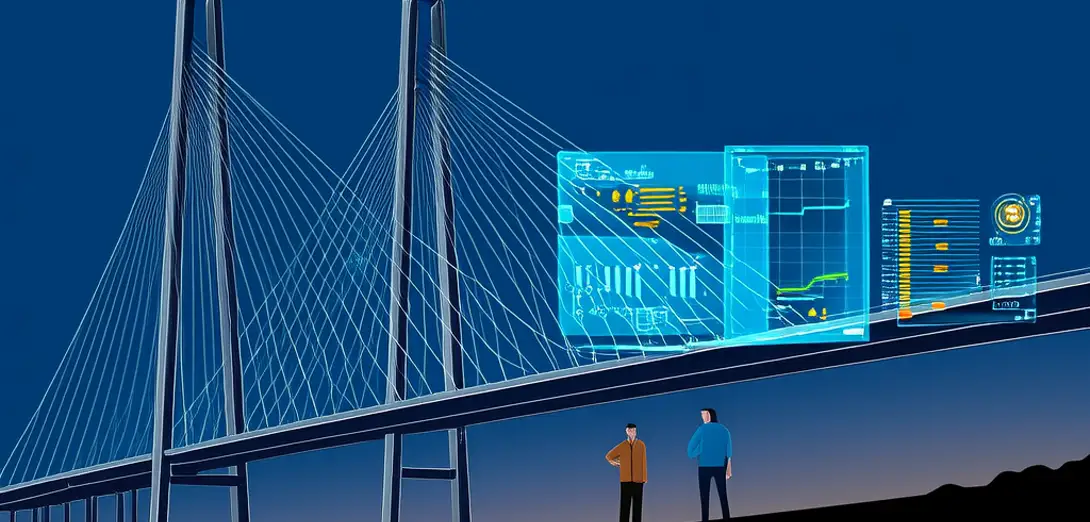
Digital Twins in Infrastructure Management: Synchronizing Physical Assets with Real-Time Sensor Networks
数字孪生在基础设施管理中的应用:物理资产与实时传感器网络的同步
-
A digital twin of a bridge isn’t a 3D model—it’s a live computational representation fed by strain gauges, accelerometers, and corrosion sensors, updating structural health indices every 12 seconds.桥梁的数字孪生体并非三维模型,而是由应变计、加速度计和腐蚀传感器实时驱动的动态计算模型,每12秒更新一次结构健康指标。
-
Synchronization fidelity depends on timestamp alignment across heterogeneous protocols: LoRaWAN sensors report with ±500 ms jitter, while fiber-optic strain monitors deliver microsecond-accurate timestamps—requiring probabilistic fusion algorithms.同步精度取决于异构协议间的时间戳对齐:LoRaWAN传感器报告存在±500毫秒抖动,而光纤应变监测器提供微秒级精准时间戳,需采用概率融合算法。
-
Model calibration must account for environmental confounders: temperature-induced expansion alters baseline strain readings, so twin updates apply thermal compensation coefficients derived from local weather APIs.模型校准须考虑环境干扰因素:温度变化引起的热胀冷缩会改变应变基准读数,因此孪生体更新需应用基于本地天气API生成的热补偿系数。
-
Predictive maintenance triggers emerge from anomaly detection in multi-parameter residuals—not isolated sensor thresholds—but false positives spike when vibration data coincides with nearby subway train schedules.预测性维护触发源于多参数残差中的异常检测,而非单一传感器阈值;但当振动数据与邻近地铁列车时刻表重合时,误报率显著上升。
-
Cybersecurity constraints limit edge processing: sensitive infrastructure twins run air-gapped on-premises servers, forcing compression of terabytes of sensor telemetry into sparse feature vectors before transmission.网络安全限制边缘计算能力:敏感基础设施的数字孪生体须在物理隔离的本地服务器上运行,迫使将TB级传感器遥测数据压缩为稀疏特征向量后再传输。
-
Regulatory audits now require provenance tracing: every predicted fatigue crack location must log the exact sensor readings, model version, and calibration certificate used in its derivation.监管审计现要求可追溯性:每个预测出的疲劳裂纹位置,都必须记录其推导所用的确切传感器读数、模型版本及校准证书。
-
Human-machine interface design is critical: civil engineers need intuitive visual overlays showing stress concentration gradients—not raw tensor outputs—projected onto photogrammetric point clouds.人机界面设计至关重要:土木工程师需要直观的可视化叠加图,将应力集中梯度(而非原始张量输出)投射到摄影测量点云上。
-
Lifecycle costing shifts from scheduled replacement to condition-based provisioning: a water main twin predicting 8.3 years until leak risk exceeds 65% triggers procurement 14 months early to avoid emergency contracts.全生命周期成本核算正从定期更换转向状态驱动配置:某供水主管道孪生体预测其泄漏风险将在8.3年后超过65%,从而提前14个月启动采购以规避应急合同。
-
Interoperability remains fractured: ASCE’s digital twin standards coexist with ISO 15926 and IFC schemas, requiring middleware that maps ‘structural member ID’ to ‘BIM element GUID’ across ontologies.互操作性仍支离破碎:美国土木工程师协会(ASCE)的数字孪生标准与ISO 15926及IFC标准并存,需中间件在不同本体间映射‘结构构件ID’与‘BIM元素GUID’。
-
The greatest value isn’t prediction—it’s counterfactual simulation: testing how flood-level scenarios would redistribute load paths across a century-old tunnel network before physical retrofitting begins.最大价值不在预测本身,而在反事实仿真:在百年隧道网络实施实体改造前,模拟不同洪水水位场景对其荷载路径的重新分布影响。